

Feeling off-balance? Head spinning? You might think it’s just dizziness-but it could be something more specific, and more serious. Vertigo and dizziness are often used interchangeably, but they’re not the same. Mixing them up can lead to months of misdiagnosis, unnecessary meds, and worsening symptoms. If you’ve been told it’s "just stress" or "aging," but you still feel like the room is spinning or you’re on a tilted floor, this is for you.
What Exactly Is Vertigo?
Vertigo isn’t just feeling lightheaded. It’s the illusion that you-or the world around you-is moving when you’re perfectly still. Imagine lying in bed, closing your eyes, and suddenly feeling like you’re tumbling sideways. That’s vertigo. It’s not a disease. It’s a symptom, and it almost always points to a problem in your vestibular system-the part of your inner ear that tells your brain which way is up.
When your inner ear’s semicircular canals or otolith organs get disrupted-by tiny calcium crystals breaking loose, inflammation, or fluid buildup-your brain gets conflicting signals. One side says you’re turning left. The other says you’re still. That mismatch? That’s vertigo. It often comes with nystagmus: involuntary, rapid eye movements that doctors can see with special goggles. These movements happen at 2 to 6 cycles per second and are a dead giveaway.
The most common cause? Benign Paroxysmal Positional Vertigo, or BPPV. It’s responsible for 20-30% of all vertigo cases. It happens when calcium crystals (otoconia) that normally sit in your inner ear get dislodged and float into the wrong canal. A quick head movement-like rolling over or looking up-triggers a spinning spell that lasts less than a minute. It’s not dangerous, but it’s terrifying. And it’s treatable. The Epley maneuver, a simple 10-minute head repositioning technique, fixes it in 80-90% of cases after one or two sessions.
What Is Dizziness Then?
Dizziness is the umbrella term. It’s the foggy, floating, faint, unsteady feeling-not spinning. You might feel like you’re about to pass out, or that your feet aren’t connected to the ground. It’s the kind of thing that happens when you stand up too fast, skip a meal, or get dehydrated. Unlike vertigo, dizziness doesn’t involve a false sense of motion.
Cardiovascular issues are a top culprit. A drop in blood pressure of 20 mmHg or more when standing-orthostatic hypotension-can trigger this. So can anemia, low blood sugar, or even anxiety. Medications like blood pressure pills, antidepressants, or sedatives can also cause it. In older adults, dizziness is often multi-causal: a little low blood pressure, a touch of dehydration, and some medication interaction. No single thing. Just a perfect storm.
Psychological factors play a role too. Chronic dizziness can become tied to anxiety, especially if it’s been going on for months. But that doesn’t mean it’s "all in your head." The brain can get stuck in a loop where vestibular damage from a past concussion or infection leads to fear of movement, which worsens imbalance, which feeds anxiety, which makes the dizziness worse. This is called Persistent Postural-Perceptual Dizziness (PPPD), and it’s real, measurable, and treatable.
Neurological Causes of Vertigo: When It’s Not Your Ear
Not all vertigo comes from the inner ear. Sometimes, it’s the brain. Central vertigo stems from neurological problems in the brainstem, cerebellum, or thalamocortical pathways. These areas process balance signals from the inner ear. When something goes wrong there-like a stroke, multiple sclerosis, or a tumor-the brain misinterprets the signals.
Stroke-related vertigo is rare, making up only 2-3% of cases, but it’s dangerous. If you suddenly feel dizzy and also have slurred speech, double vision, weakness on one side, or trouble walking in a straight line, don’t wait. Call 911. These are red flags. Most ER doctors miss stroke vertigo-research shows only 12% correctly identify it. That’s why the American Academy of Neurology says: if you have vertigo plus any other neurological sign, get imaging right away.
Vestibular migraine is another sneaky one. It affects 1% of the general population but makes up 7-10% of vertigo cases. People often mistake it for Meniere’s disease because both cause spinning and nausea. But vestibular migraine usually comes with headaches, light sensitivity, or aura. One study found over 30% of these cases were first misdiagnosed as sinus infections or anxiety. That’s a problem. Treating it with antibiotics or antidepressants won’t help. You need migraine-specific care.
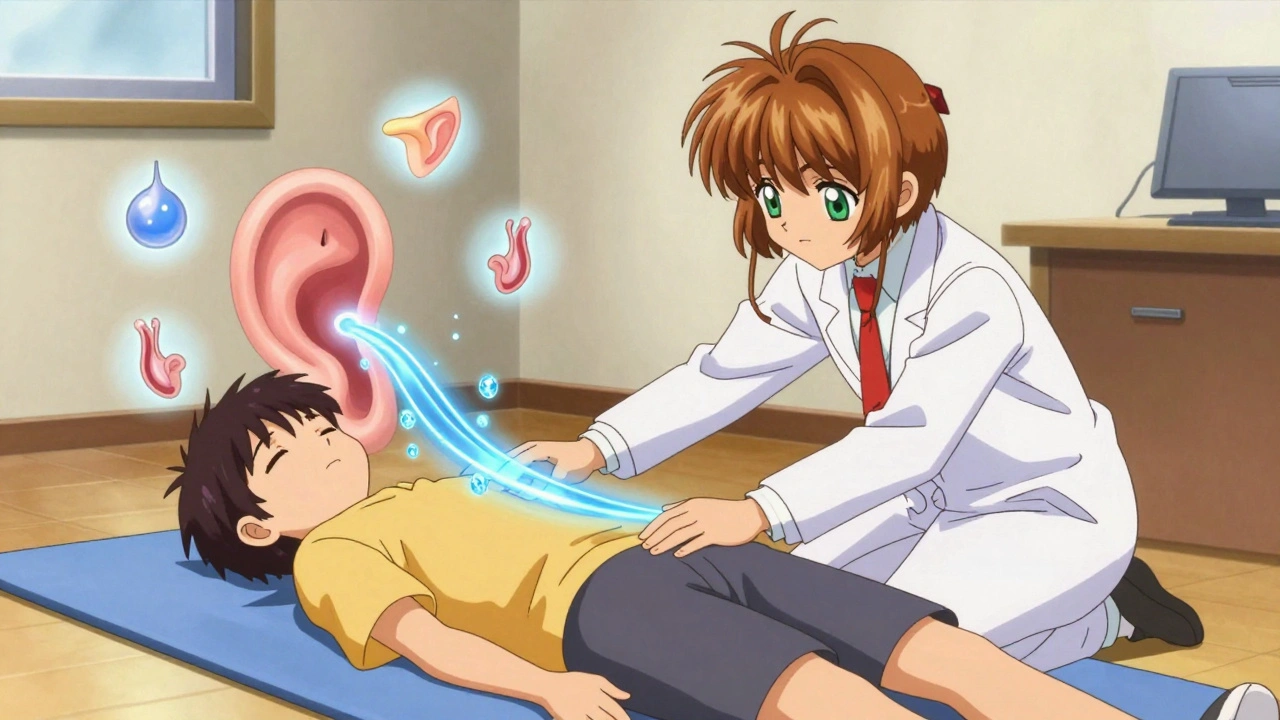
Vestibular Causes: The Inner Ear Culprits
Most vertigo starts in the ear. Here are the big three:
- BPPV: Caused by loose crystals. Quick, short episodes triggered by head movement. Easy to fix.
- Meniere’s disease: Involves fluid buildup in the inner ear. Causes spinning that lasts 20 minutes to hours, plus ringing in the ear, fullness, and hearing loss. It’s chronic. Treatments include low-salt diets, diuretics, and in severe cases, gentamicin injections into the middle ear.
- Vestibular neuritis or labyrinthitis: Usually follows a virus. Sudden, severe vertigo that lasts days, often with nausea and vomiting. No hearing loss in neuritis. Labyrinthitis includes hearing loss. Recovery takes weeks, but vestibular rehab helps speed it up.
Doctors use tests to tell them apart. Videonystagmography (VNG) records eye movements while you’re exposed to warm and cold air in the ear canal. It’s 95% accurate for detecting inner ear problems. Head impulse testing checks if your eye reflexes work properly during quick head movements. It’s great for spotting vestibular neuritis.
Diagnosis: Why It Takes So Long
On average, people wait 8.2 months to get the right diagnosis for vestibular disorders. Why? Because most primary care doctors aren’t trained in this. Only 12% feel confident diagnosing vertigo. They see dizziness, assume it’s anxiety or aging, and prescribe anti-anxiety meds or suggest rest. Meanwhile, the real problem-BPPV, vestibular migraine, or even a tiny stroke-keeps going untreated.
Patients report heartbreaking stories: years of antidepressants for "anxiety-related dizziness," only to find out later it was vestibular migraine. Or 18 months of being told "it’s stress"-until a VNG test showed BPPV. One person described it as "the most relief I’ve ever felt in 15 minutes."
Specialized vestibular clinics are growing, but they’re still rare. Only 42% of U.S. hospitals offer them. If you’ve been stuck for months, ask your doctor for a referral to a neurotologist or vestibular therapist. Look for someone certified by the Vestibular Disorders Association (VEDA). They know the tests, the maneuvers, and the red flags.

Treatment: What Actually Works
There’s no one-size-fits-all fix. But here’s what works based on the cause:
- BPPV: Epley maneuver or Semont maneuver. Done in a clinic or at home with proper instruction. Success rate: 85%.
- Vestibular neuritis: Short-term meds for nausea, then vestibular rehabilitation therapy (VRT). VRT retrains your brain to rely on other balance cues. It takes 6-8 weeks. 89% of patients see major improvement.
- Vestibular migraine: Avoid triggers (stress, caffeine, certain foods), use migraine preventatives like beta-blockers or topiramate, and do VRT. Don’t treat it like a sinus infection.
- Meniere’s disease: Low-sodium diet, diuretics, and in severe cases, transtympanic gentamicin (a chemical that gently disables the bad inner ear). Hearing preservation is a goal.
- PPPD: Cognitive behavioral therapy (CBT) combined with VRT. You’re not crazy. Your brain just got stuck in a loop. It can be rewired.
Home exercises are critical. But 35% of patients don’t stick with them. That’s why working with a therapist matters. They adjust the exercises as you improve. Static balance first-standing still with eyes open, then closed. Then slow head turns. Then walking while turning your head. Progress is slow but steady.
What’s New in 2025
Technology is catching up. In May 2023, the FDA approved the VRT-1 device-a wearable that guides patients through customized balance exercises at home. It connects to an app and gives real-time feedback. At Johns Hopkins, AI now analyzes nystagmus patterns from smartphone videos to tell peripheral from central vertigo with 85% accuracy. That could mean faster diagnosis in rural areas or ERs.
Research is also looking at regenerating damaged inner ear hair cells. Stanford started human trials in September 2023. If it works, it could one day reverse hearing loss and vertigo from inner ear damage.
Meanwhile, Medicare now pays $235 per vestibular test-up from $185 in 2020. That’s a sign insurers are finally recognizing how important these tests are.
When to Worry
Not every dizzy spell needs an MRI. But if you have any of these, get help immediately:
- Sudden vertigo with slurred speech or trouble walking
- Double vision or new numbness on one side
- Severe headache with vertigo
- Hearing loss in one ear with vertigo
- Vertigo that doesn’t improve after 2-3 days
These aren’t common. But when they happen, they’re emergencies.
For most people, vertigo and dizziness are manageable. The key is getting the right diagnosis. Don’t accept "it’s just stress" if you’re still spinning. Ask for VNG. Ask for a referral. Your balance system can heal-with the right help.
Is vertigo the same as dizziness?
No. Dizziness is a general feeling of lightheadedness, unsteadiness, or faintness. Vertigo is a specific sensation of spinning or movement-even when you’re still. Vertigo is a type of dizziness, but not all dizziness is vertigo.
Can anxiety cause vertigo?
Anxiety doesn’t directly cause vertigo, but it can worsen it. If you’ve had a prior vestibular issue-like an inner ear infection or concussion-your brain may become hypersensitive to movement. This can trigger chronic dizziness called PPPD, which feels like vertigo but is driven by anxiety. Treating the anxiety alone won’t fix it; you need vestibular rehab too.
How do I know if my vertigo is from my ear or my brain?
Inner ear (peripheral) vertigo usually comes with nausea, vomiting, and nystagmus that changes direction with gaze. It’s triggered by head movement. Brain (central) vertigo often comes with other neurological signs: trouble walking, double vision, slurred speech, or weakness. If you have any of those, get imaging. A VNG test or head impulse test can help your doctor tell the difference.
Can BPPV come back after treatment?
Yes. About 15-50% of people have a recurrence within five years. That’s why learning the Epley maneuver at home helps. If you feel the spinning return, do the maneuver again. It’s safe and effective. Recurrence doesn’t mean it’s worse-it just means your inner ear crystals are still a little loose.
Is there a blood test for vertigo?
No. There’s no blood test that diagnoses vertigo or dizziness. Blood work can rule out causes like anemia, low blood sugar, or thyroid issues-but it won’t tell you if you have BPPV or vestibular migraine. Diagnosis relies on symptom history, physical exams, and specialized tests like VNG or head impulse testing.
How long does vestibular rehabilitation take to work?
Most people start feeling better in 2-4 weeks, but full improvement takes 6-8 weeks. It’s not a quick fix. You need to do the exercises daily-even when you feel worse at first. That’s normal. Your brain is relearning balance. Skipping sessions delays recovery. Stick with it.
Should I get an MRI if I have vertigo?
Only if you have red flags: sudden hearing loss, double vision, weakness, slurred speech, or trouble walking. For most people with typical BPPV or vestibular neuritis, an MRI isn’t needed. Overuse of imaging leads to unnecessary stress and costs. The American Academy of Neurology says only 1-2% of vertigo cases require imaging.
James Moore
Look, I’ve lived in this country long enough to know that when the medical establishment says "it’s just stress," they’re not being honest-they’re being lazy. Vertigo isn’t some mystical anxiety ghost-it’s a biomechanical failure in your inner ear, and we’ve known this since the 1950s! Yet here we are, in 2025, still prescribing Xanax to people whose otoconia are floating like confetti in their semicircular canals. It’s a national disgrace. The Epley maneuver? A $10 fix that takes ten minutes. Why are we paying $800 for MRIs and antidepressants? Because the system is broken. And no, I’m not mad-I’m just disappointed in the collective intellectual surrender of American medicine.
Chris Brown
One must question the epistemological foundation of this article. The conflation of physiological symptoms with psychological interpretations, while seemingly pragmatic, risks reinforcing a Cartesian dualism that has long been discredited in neuroscientific circles. The brain does not "get stuck in a loop"-it adapts. To attribute PPPD to anxiety as a secondary phenomenon is to misunderstand the neuroplasticity of the vestibulo-thalamo-cortical circuitry. The author, though well-intentioned, operates within a reductionist paradigm that fails to account for the emergent properties of multisensory integration. This is not a matter of "rewiring"-it is a matter of recontextualizing perception within a dynamic, embodied framework.
Laura Saye
I’ve been dealing with PPPD for three years now. No one believed me until I found a vestibular therapist who didn’t roll her eyes when I said "I feel like the floor is tilted." The exercises felt impossible at first-just standing still with my eyes closed made me nauseous. But slowly, over weeks, my brain stopped screaming "DANGER!" every time I turned my head. It’s not magic. It’s neuroplasticity. And if you’re reading this and you’re still being told it’s "just anxiety," please-don’t give up. There are people who understand. You’re not broken. Your brain just needs a new map.
Krishan Patel
This is why India’s Ayurvedic medicine is superior. In Ayurveda, vertigo is Vata imbalance-caused by improper diet, stress, and modern life’s chaos. We don’t need fancy goggles or $235 tests. We use ginger tea, sesame oil massages, and breathwork. You think your brain is "misfiring"? No. Your doshas are out of sync. The West is obsessed with machines and drugs. We fix the root. You don’t need a VNG test-you need to stop eating processed sugar and sleep before midnight. This article is a capitalist scam dressed in neuroscience.
Carole Nkosi
They’re hiding something. The inner ear? The brain? Please. If you really want to know what causes vertigo, look at the EMF radiation from 5G towers. The WHO has been silent since 2018. The FDA approved that VRT-1 device? It’s a tracking tool. They want you dependent on tech so they can sell you subscriptions. And the "Epley maneuver"? It’s just a placebo trick to make you feel like you’re doing something. I’ve had vertigo since 2020. I stopped using my phone. I started sleeping on copper mats. Within weeks, the spinning stopped. No one wants to talk about this because it’s not profitable. Wake up.
Mark Curry
Wow. This is actually super helpful. I thought I was just getting older, but I’ve had this weird spinning when I roll over for months. I’m gonna try the Epley thing tonight. I found a video on YouTube. Thanks for not making it sound like I’m crazy. 🙏
Manish Shankar
Allow me to respectfully offer a perspective rooted in the clinical traditions of South Asia. The notion that vertigo is purely a biomechanical or neurological phenomenon neglects the holistic interplay of prana, diet, and circadian rhythm. In our Ayurvedic practice, we observe that individuals presenting with BPPV often exhibit kapha-vata imbalance, particularly following exposure to cold, damp environments or excessive mental exertion. While modern diagnostic tools such as VNG are commendable, they are most efficacious when integrated with dietary regulation, herbal formulations such as Ashwagandha, and daily yoga asanas that enhance proprioceptive awareness. To isolate the ear from the body is to misunderstand the nature of health.
Rupa DasGupta
Okay but what if it’s not your ear OR your brain? What if it’s the government? I had vertigo after the solar eclipse in 2024. Everyone was like "oh it’s stress" but I KNOW. I started seeing weird symbols in my peripheral vision right before the spinning. My neighbor said the same thing. They’re testing something. And the VRT-1 device? It’s got a chip. I’m not crazy. I’ve researched it. They’re using vestibular disruption to map neural responses. I’m not taking that thing. I’m going to a naturopath who uses crystals. 🌙✨
Marvin Gordon
Just wanted to say this is one of the clearest, most useful posts I’ve read all year. No fluff. No BS. If you’re reading this and you’ve been told "it’s anxiety"-go get a VNG test. Don’t wait. Find a vestibular therapist. They’re out there. I did it. Took 6 weeks. Now I can turn my head without feeling like I’m on a carnival ride. You’re not broken. Your body just needs the right tools. Keep going.
ashlie perry
So... you're saying if I don't get an MRI, I could be having a stroke? Like right now? I just felt dizzy after standing up. Should I call 911? I'm not joking. I'm scared. I think my brain is dying.
Juliet Morgan
Hey, I just wanted to say thank you for writing this. I’ve been through the same thing-years of being told I was "overthinking it." Then I found a vestibular therapist who didn’t treat me like a drama queen. The exercises felt stupid at first, but I did them every day-even when I wanted to quit. Now I can walk without holding onto walls. It’s not perfect, but it’s better. You’re not alone. And you’re not crazy. Keep going. 💪
Norene Fulwiler
In my village in Nigeria, when someone gets dizzy, we don’t go to a doctor-we go to the elder. They use herbs, chants, and sometimes a feather to "clear the air." I didn’t believe it until my cousin’s vertigo vanished after three days. Maybe the West is missing something. Not because we’re backward-but because we listen to the body, not just the machine. This article is great-but maybe the answer isn’t just in labs. Maybe it’s in tradition too.