

Ulcerative colitis isn’t just frequent diarrhea or occasional stomach cramps. It’s a chronic, unpredictable condition where your body turns against itself, attacking the lining of your colon and rectum. The result? Open sores, constant bleeding, and a life that can feel like it’s on hold between flare-ups. But here’s the truth: ulcerative colitis doesn’t have to control you. With the right approach, most people don’t just survive-they live full, active lives, often with years between flare-ups.
What Exactly Is Ulcerative Colitis?
- It only affects the colon and rectum-not the small intestine or other parts of the digestive tract.
- It doesn’t skip areas. If your rectum is inflamed, the inflammation spreads continuously upward, never jumping over healthy tissue.
- It only damages the innermost layer of the colon wall. This is different from Crohn’s disease, which can burrow through all layers and show up anywhere from mouth to anus.
- The inflammation causes ulcers, which bleed and produce mucus. That’s why blood in your stool is almost always present during a flare.
- Ulcerative proctitis: Limited to the rectum. Symptoms are often milder-maybe just rectal bleeding or a feeling of urgency.
- Proctosigmoiditis: Affects the rectum and the lower end of the colon (sigmoid). More frequent bowel movements, cramping, and bloody diarrhea.
- Left-sided colitis: Extends from the rectum up to the splenic flexure (near the spleen). Pain on the left side of your abdomen, weight loss, and more severe diarrhea.
- Pancolitis: Involves the entire colon. This is the most serious form-up to 10 or more bloody bowel movements a day, fever, fatigue, and significant weight loss.
- Rectal-sparing colitis: Rare. The rectum stays healthy while the rest of the colon is inflamed.
Why Does This Happen?
No one knows exactly what triggers ulcerative colitis. But we do know it’s not your fault. You didn’t eat too much junk food. You didn’t stress too hard. You didn’t do anything to cause it. What’s happening is your immune system gets confused. It thinks the lining of your colon is a threat-like a virus or bacteria-and starts attacking it. This is called an autoimmune response. It’s the same mechanism seen in conditions like psoriasis or rheumatoid arthritis. Some things increase your risk:- Being of Caucasian or Ashkenazi Jewish descent
- Having a close family member with IBD
- Having another autoimmune condition
- Being diagnosed between ages 15-30 or 50-70
What Do Flare-Ups Feel Like?
Flare-ups don’t always start with a bang. Sometimes, they creep in:- A sudden urge to go-right now-and you can’t hold it.
- Stools that are loose, bloody, and filled with mucus.
- A dull ache or sharp cramp on the left side of your belly.
- Tenesmus-the feeling that you’ve just gone, but you still need to go again. And again. And again.
- Fatigue so deep it doesn’t go away with sleep.
- Fever, nausea, or unexplained weight loss in more severe cases.
- Red, burning eyes
- Swollen, painful joints
- Red, tender lumps under the skin
- Sores in the mouth
How Is It Diagnosed?
No single test confirms ulcerative colitis. Doctors piece it together:- Colonoscopy: The gold standard. A camera is inserted into your colon to see the inflammation and take biopsies. This also helps rule out infections or cancer.
- Blood tests: Look for signs of inflammation (like CRP or ESR) and check for anemia or infection.
- Stool tests: Rule out parasites, C. diff, or other infections that mimic UC.
- Imaging: Sometimes CT or MRI scans are used to see how far the inflammation spreads.
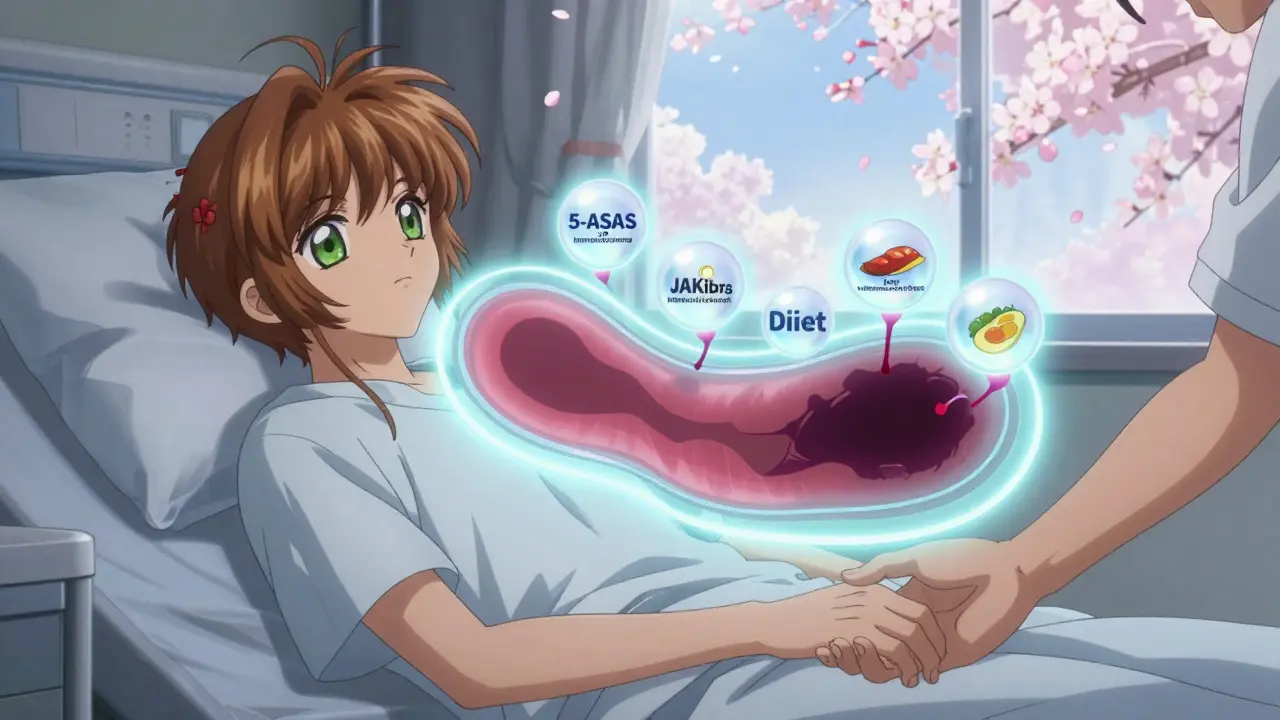
Remission Isn’t Luck. It’s Strategy.
The goal isn’t just to stop bleeding or reduce diarrhea. It’s to get your colon to heal-and stay healed. That’s remission. There are three main tools to get there:1. Medications: The Foundation
- 5-ASAs (mesalamine, sulfasalazine): First-line for mild to moderate cases. Taken as pills, suppositories, or enemas. They target inflammation right where it’s happening.
- Corticosteroids (prednisone, budesonide): Fast-acting for flares, but not for long-term use. Side effects like weight gain, mood swings, and bone thinning make them risky over time.
- Immunomodulators (azathioprine, 6-MP): These quiet your immune system over months. Used when 5-ASAs aren’t enough. Takes 3-6 months to work.
- Biologics (infliximab, adalimumab, vedolizumab): These are targeted drugs that block specific proteins driving inflammation. They’ve changed the game for moderate to severe UC. Many patients go into deep remission-no bleeding, no urgency, normal energy levels.
- JAK inhibitors (tofacitinib, upadacitinib): Newer oral options that work differently than biologics. Effective for those who don’t respond to other treatments.
2. Diet and Nutrition: Support, Not Cure
You can’t eat your way out of ulcerative colitis. But you can eat to reduce flare-ups. During flares:- Stick to low-fiber foods-white rice, bananas, eggs, cooked vegetables.
- Avoid dairy if it triggers gas or bloating.
- Limit spicy, fried, or highly processed foods.
- Drink plenty of water. Diarrhea dehydrates you fast.
- Gradually reintroduce fiber-oats, apples, legumes.
- Focus on omega-3s (fatty fish, flaxseeds) for their anti-inflammatory effects.
- Consider probiotics. Some strains (like VSL#3) show promise in maintaining remission.
3. Lifestyle: The Hidden Lever
Stress doesn’t cause UC-but it can turn up the volume on your symptoms.- Practice daily breathing or mindfulness. Even 10 minutes helps.
- Movement matters. Walking, yoga, swimming-anything that gets you moving without jolting your gut.
- Don’t smoke. Smoking worsens Crohn’s but may slightly reduce UC risk. Still, no one should smoke.
- Get enough sleep. Poor sleep increases inflammation.
When Surgery Becomes the Best Option
About 1 in 3 people with UC eventually need surgery. That doesn’t mean failure. It means freedom. The most common procedure is a colectomy-removing the entire colon and rectum. After that, you’ll have one of two options:- Ileoanal pouch (J-pouch): A new internal reservoir is built from your small intestine and connected to your anus. You still pass stool normally-just more frequently.
- Permanent ileostomy: Waste exits through a stoma on your abdomen into a bag.
Monitoring: Don’t Skip the Colonoscopies
People with pancolitis or those who’ve had UC for 8+ years have a higher risk of colon cancer. That’s why regular colonoscopies are non-negotiable. Your doctor will likely recommend one every 1-2 years after 8 years of diagnosis. Biopsies are taken to check for dysplasia-precancerous changes. If you’ve had UC for 15+ years, your cancer risk rises to about 5%. Early detection through surveillance cuts that risk dramatically.
What Does Long-Term Success Look Like?
It’s not about being symptom-free 100% of the time. It’s about:- Going months-or years-without a flare.
- Having energy to work, travel, exercise, and be with family.
- Knowing your triggers and how to respond before things spiral.
- Feeling in control, not at the mercy of your gut.
What to Do Next
If you’ve been diagnosed:- Find a gastroenterologist who specializes in IBD. Not just any GI-someone who treats UC daily.
- Ask about your disease extent and cancer risk. Know your type.
- Start tracking symptoms, diet, stress, and sleep. Use an app or notebook.
- Don’t stop meds just because you feel better. Remission needs maintenance.
- Join a support group. Talking to someone who gets it is powerful.
- Don’t brush off bloody stools as hemorrhoids.
- See a doctor before symptoms become severe.
- Get a colonoscopy. It’s the only way to know for sure.
Can ulcerative colitis be cured?
There’s no medication that permanently cures ulcerative colitis. But removing the entire colon and rectum (colectomy) eliminates the disease. For most people, this is the only true cure. However, many achieve long-term remission with medications and lifestyle changes, meaning they live symptom-free for years without surgery.
Does stress cause ulcerative colitis?
No, stress doesn’t cause ulcerative colitis. The disease is driven by genetics and immune dysfunction. But stress can trigger flare-ups by increasing inflammation and disrupting gut function. Managing stress through sleep, exercise, and mindfulness helps keep symptoms under control.
Can I still eat fiber with ulcerative colitis?
Yes-but timing matters. During a flare, high-fiber foods like raw veggies, nuts, and whole grains can worsen cramping and diarrhea. In remission, slowly reintroduce soluble fiber like oats, bananas, and cooked apples. It helps regulate bowel movements and supports a healthy gut microbiome.
Are biologics safe for long-term use?
Biologics are generally safe for long-term use and are often the best option for maintaining remission. They carry a small increased risk of infections or rare conditions like lymphoma, but the benefits usually outweigh the risks. Regular monitoring by your doctor helps catch any issues early. Most patients tolerate them well for years.
How often should I get a colonoscopy?
If you’ve had ulcerative colitis for 8 years or more, you should get a colonoscopy every 1-2 years to screen for colon cancer. The risk increases with disease duration and extent-especially with pancolitis. Biopsies taken during the procedure help detect precancerous changes early, when they’re easiest to treat.
Will I need to take medication for the rest of my life?
Many people do, but not everyone. Some patients with mild, limited disease may eventually stop medications under their doctor’s supervision. Others, especially those with pancolitis or frequent flares, need ongoing treatment to stay in remission. Never stop meds without talking to your doctor-stopping suddenly can trigger a severe flare.
evelyn wellding
This post literally saved my life. I was about to quit my job because of constant bathroom panic-now I’m back at work, hiking on weekends, and even dating again. 🙌 No more hiding. #UCWarrior
Bianca Leonhardt
People still think it’s just ‘bad digestion’? Bro. You don’t get it. This isn’t a diet problem. It’s your immune system trying to eat your insides. Stop blaming yourself.
Travis Craw
i just wanna say thanks for writing this. i’ve had uc for 12 years and no one ever explains it like this. the part about j-pouches? i cried. not because i’m sad-because i finally feel seen.
vivek kumar
Interesting how the article dismisses stress as a cause but acknowledges its role in flares. In Ayurveda, we call this 'ama'-toxic buildup from emotional stagnation. The body doesn’t lie. If your mind is in chaos, your gut will scream. Not magic. Biology.
Riya Katyal
Oh great. Another ‘you can live a full life’ pep talk. Cool. What about the people who’ve lost jobs, marriages, dignity because of this? Your ‘strategy’ doesn’t pay rent.
waneta rozwan
I’ve been in remission for 7 years on biologics. I used to cry in the bathroom at work. Now I run marathons. I’m not ‘brave’-I’m just stubborn. And I take my meds like they’re oxygen. Don’t stop. Don’t negotiate. Just take them.
Nicholas Gabriel
Don’t forget: colonoscopies aren’t scary-they’re lifesaving. I skipped mine for 3 years after my diagnosis because I was ‘fine.’ Turned out I had low-grade dysplasia. They caught it. I didn’t need surgery. Don’t be like me. Get checked. Please.
swarnima singh
i know people say stress doesnt cause it but... i had my first flare after my dad died. i stopped crying for 3 months. then my colon started bleeding. coincidence? maybe. but my body knew before my mind did.
Isabella Reid
To the person who said ‘your strategy doesn’t pay rent’-you’re right. And that’s why we need better healthcare access. This isn’t about willpower. It’s about systemic failure. Let’s fix that. But also-keep taking your meds. You’re worth it.
Jody Fahrenkrug
I started a food journal after reading this. Turns out, my flares spike after I drink almond milk. Who knew? Not me. But now I know. Small wins.
Corey Chrisinger
The fact that we’re even having this conversation means we’re winning. I used to think I’d die alone in a hospital. Now I’m planning a trip to Japan. My J-pouch is weird, sure. But it’s mine. And it lets me live. 🌸✌️
Chelsea Harton
biologics are expensive but worth it. i got mine through a patient assistance program. google it. you’re not alone. and yes, you can still have kids. yes, you can still be happy.