
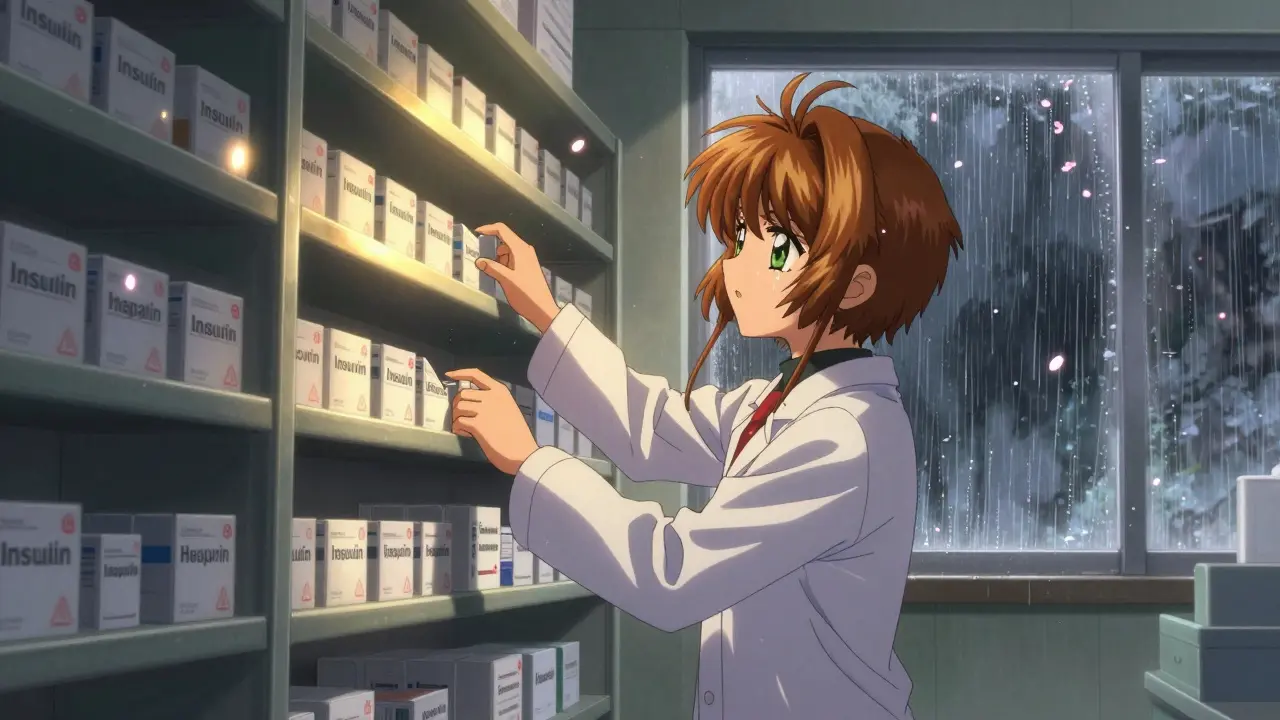
By March 2026, over 270 generic drugs remain in short supply across the United States - a number that’s higher than at any point in history. These aren’t niche medications. They’re the pills and injections millions of Americans rely on every day: antibiotics, chemotherapy drugs, IV fluids, insulin, and blood pressure meds. And the reason they’re disappearing isn’t because of a lack of demand. It’s because the system that delivers them is broken.
Why Generic Drugs Are the First to Go Missing
Generic drugs make up 90% of all prescriptions filled in the U.S. But they account for only 13% of total drug spending. That’s the core problem. These drugs are cheap - often under $5 per dose - which means manufacturers operate on razor-thin margins. When something goes wrong in production, there’s little financial room to absorb the loss. A factory shutdown, a quality issue, or a delayed shipment can push a company out of the market entirely. And once they leave, it’s hard to bring them back.Compare that to brand-name drugs. Companies like Pfizer or Merck invest heavily in inventory buffers, multiple manufacturing sites, and R&D. They can afford to lose a few months of production. Generic manufacturers can’t. When a single plant in India or China shuts down, it can knock out 80% of the country’s supply of a critical drug like cisplatin or heparin. There’s no backup. No redundancy. Just silence.
The Global Web That’s Too Thin to Hold
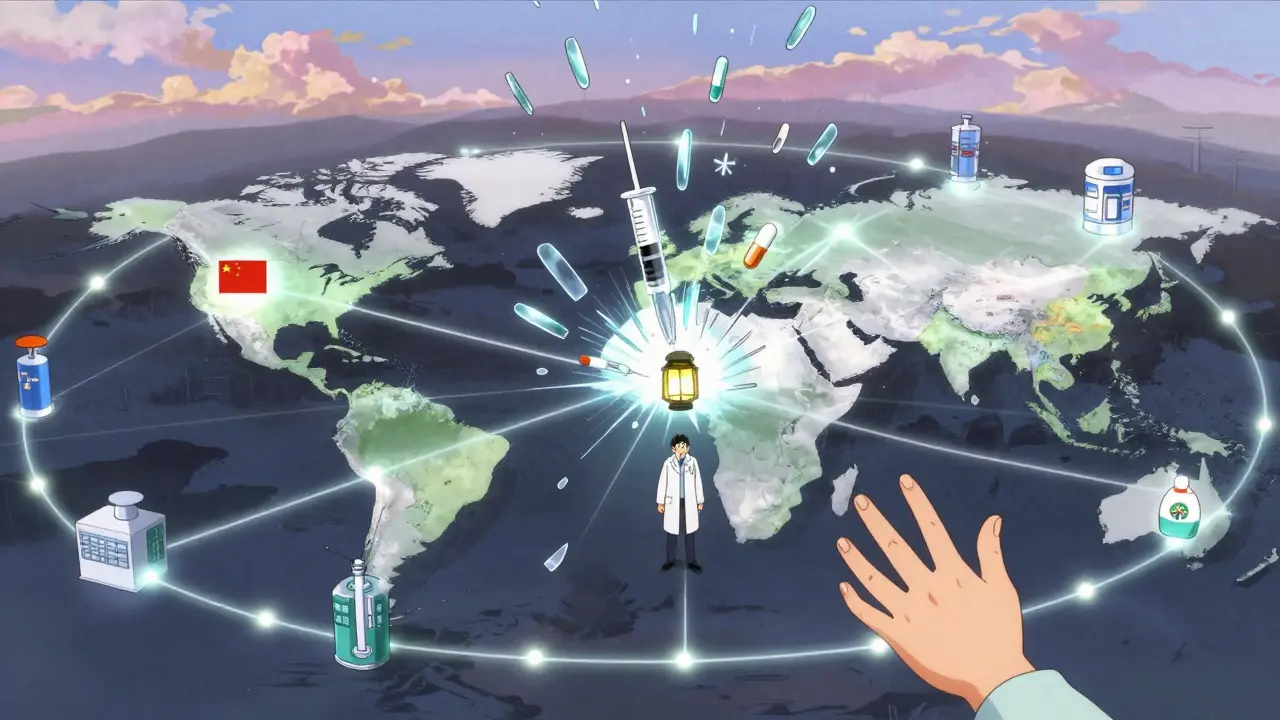
Almost 40% of the active pharmaceutical ingredients (APIs) used in U.S. drugs come from China. Another 30% come from India. The rest? Mostly from Europe. These aren’t just suppliers - they’re the backbone of the entire system. But here’s the catch: there are only a handful of factories making these ingredients. For some older generics, just one or two facilities worldwide produce the entire supply.In 2023, a tornado ripped through a Pfizer plant in Kentucky. It didn’t make headlines like a major hurricane. But it shut down production of 15 essential medications - all generics. No one had a spare line. No one had extra stock. Patients waited. Some skipped doses. Others were moved to riskier alternatives.
Same thing happened in India when the FDA flagged quality issues at a sterile injectable facility. Cisplatin, a chemotherapy drug used for lung and testicular cancer, vanished overnight. Hospitals rationed it. Doctors delayed treatments. Families scrambled. And it wasn’t an accident. It was predictable. The FDA has known for years that many foreign facilities don’t submit required documentation. Some don’t even respond to inspection requests. Yet we still rely on them for life-saving drugs.
Sterile Injectables: The Most Fragile Link
Not all drugs are created equal. Oral pills - tablets and capsules - are relatively simple to make. They don’t need clean rooms, sterile conditions, or high-pressure equipment. But sterile injectables? Those are a different story.IV fluids, epinephrine, heparin, antibiotics given in hospitals - these all require aseptic manufacturing. That means no dust, no microbes, no contamination. The equipment costs millions. The training takes years. The facility must pass constant FDA audits. And there are only about 15 plants in the entire world that can make them at scale.
That’s why sterile injectables make up over half of all drug shortages. When one plant fails, the dominoes fall fast. In 2024, 323 drugs were on the FDA’s shortage list - the highest number ever recorded. Nearly 70% of them were injectables. And the ones most affected? The cheapest ones. Saline. Sodium bicarbonate. Vancomycin. Drugs that cost less than a cup of coffee per dose.
Who Pays the Price?
You might think this is just a hospital problem. It’s not.Hospitals spend 20-30% of pharmacists’ time tracking down missing drugs. They’re calling distributors, switching to alternatives, compounding medications in back rooms, and praying nothing breaks down. Nurses are forced to use outdated protocols. Patients get delayed cancer treatments. Diabetics run out of insulin. Emergency rooms delay surgeries because they can’t get the muscle relaxants they need.
One hospital pharmacist in Ohio told a reporter: “I’ve had to tell a mother her child’s antibiotic isn’t available. I’ve had to tell a cancer patient we’re switching to a drug with more side effects. I’ve had to tell a nurse we’re out of epinephrine - the one thing that can save someone having a heart attack.”
And it’s not just patients. It’s the system. Hospitals pay more for substitute drugs - sometimes 10x the original price. Insurance companies pass those costs on. Out-of-pocket expenses rise. More people skip doses. More people end up back in the ER.
Why Tariffs Won’t Fix This
Some politicians argue the answer is tariffs - 50%, even 200% on imported drugs - to force manufacturing back to the U.S. It sounds simple. But it’s dangerously naive.Imposing tariffs on APIs from China or India would spike costs overnight. Manufacturers who already operate on 2-3% margins would vanish. More shortages. More price spikes. More patients without access. The CSIS analysis warns that tariffs could make the problem worse - not better.
And even if we wanted to rebuild domestic production, it’s not that easy. Building a single sterile injectable facility takes 5-7 years and $1-2 billion. You need trained chemists, engineers, regulators, and inspectors. The U.S. has lost most of that expertise over the last 30 years. We’ve outsourced the skills along with the manufacturing.
There’s also a regulatory gap. The FDA inspects fewer U.S. facilities than it used to. At the same time, it’s ramping up inspections overseas - but with limited resources and language barriers. A factory in China might be flagged for contamination, but if they don’t respond to the FDA’s request for a Drug Master File (DMF), there’s no way to verify if they’ve fixed it.
What Could Actually Help
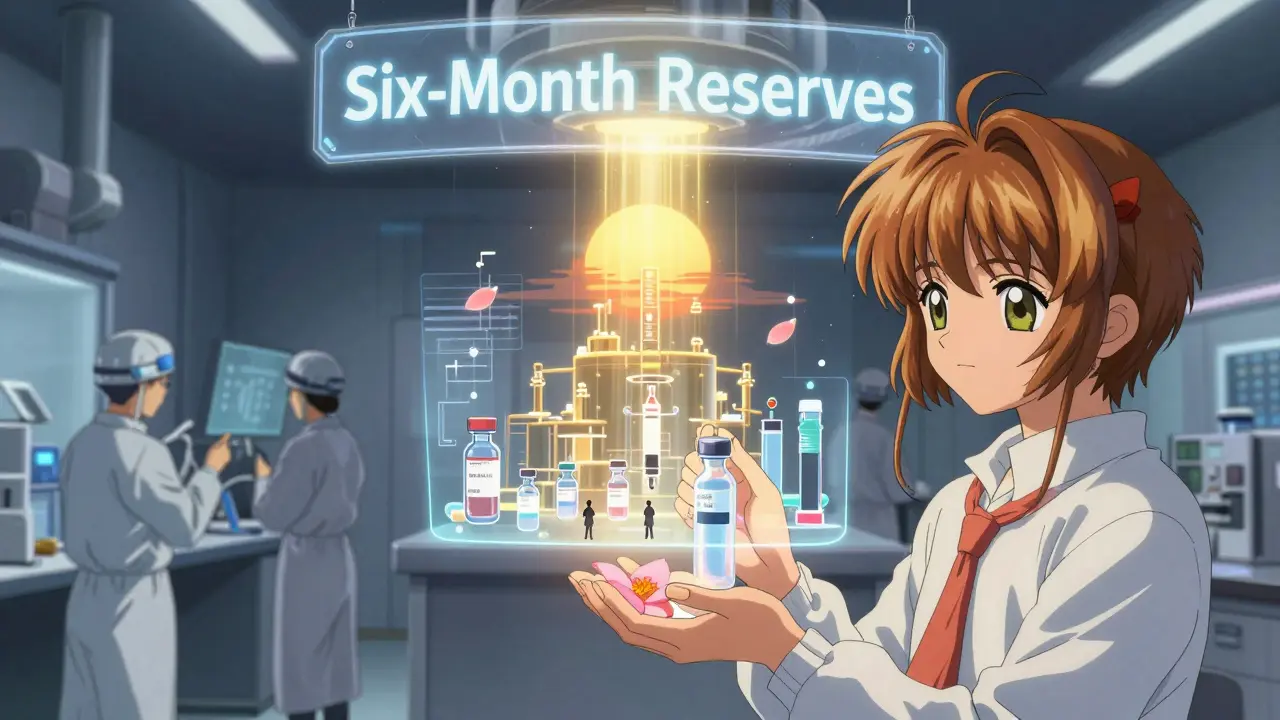
There are no magic bullets. But there are practical steps.- Require six-month reserves for critical generics - like IV fluids, insulin, and antibiotics. The proposed S.2062 bill would mandate this. It’s not about hoarding. It’s about creating a buffer so one factory shutdown doesn’t paralyze the system.
- Public-private partnerships to fund domestic production of high-risk drugs. Not for profit. Not for competition. For public safety. The government could guarantee minimum purchase volumes to make it financially viable.
- Transparent labeling on drug packages. Patients and doctors deserve to know where the API came from. If a drug is made with Chinese ingredients, it should say so. Not to scare people - to create accountability.
- Invest in workforce training. We need more pharmaceutical technicians, sterile processing experts, and quality control specialists. Community colleges could start programs. The government could fund them.
The Association of Accessible Medicines says it best: we need to make generic drug production sustainable. Not just cheap. Not just fast. But reliable.
The Future Isn’t Just About More Factories
The biggest threat ahead isn’t another pandemic. It’s a geopolitical shock - a war, a trade embargo, or a natural disaster that cuts off API flows from Asia. We’ve been lucky so far. The supply chain has held. But the risks are growing.The Brookings Institution warns that future shortages may not come from quality issues. They’ll come from politics. From borders closing. From supply lines being severed. And we’re not ready.
For now, hospitals are patching the system. Pharmacists are working overtime. Patients are taking risks. But we can’t keep doing this. A country that spends billions on defense and space exploration can’t afford to let its most basic medicines disappear.
The solution isn’t nationalism. It’s resilience. Not just more factories - but smarter ones. Not just cheaper drugs - but more stable ones. And not just hope - but policy, investment, and accountability.
Why are generic drug shortages getting worse?
Generic drug shortages are worsening because manufacturing has become dangerously concentrated in just a few foreign facilities, mostly in China and India. These drugs have extremely low profit margins, so companies can’t afford to invest in backup production, quality upgrades, or inventory buffers. When one plant shuts down - due to natural disasters, regulatory issues, or political tensions - there’s no alternative. The system was built for low cost, not resilience.
Which types of generic drugs are most at risk of shortage?
Sterile injectables - like IV fluids, antibiotics, chemotherapy drugs, and epinephrine - are the most vulnerable. They require complex, sterile manufacturing environments that are expensive to build and maintain. Only a handful of facilities worldwide can produce them. Oral medications like pills and capsules are less risky because they’re easier and cheaper to make in multiple locations.
Can the U.S. bring generic drug manufacturing back home?
Technically, yes - but it’s not practical in the short term. Building a single sterile injectable facility takes 5-7 years and costs $1-2 billion. The U.S. lacks the trained workforce and regulatory capacity to scale quickly. Even if we tried, the economics don’t work: generic drugs are too cheap to justify the investment without government support. The goal shouldn’t be to replicate everything domestically - but to secure critical supplies through strategic reserves and public-private partnerships.
Do pharmaceutical tariffs help solve the shortage problem?
No - they make it worse. Tariffs on imported active ingredients would raise costs for manufacturers who already operate on 2-3% margins. Many would stop producing low-cost generics entirely. That would trigger even more shortages. The CSIS and University of Wisconsin School of Pharmacy warn that tariffs could delay treatments, increase patient costs, and destabilize the supply chain further. The issue isn’t where drugs are made - it’s how little profit is left to maintain reliable production.
How are hospitals managing drug shortages right now?
Hospitals are using emergency workarounds: switching to more expensive alternatives, compounding drugs in-house, rationing doses, and delaying treatments. Pharmacists spend 20-30% of their time tracking down missing drugs. Some hospitals have created shortage response teams. But these are temporary fixes. They don’t solve the root problem - and they increase stress on staff and risk to patients.
Is there a way to predict which drugs will run out next?
Yes - and it’s not random. Drugs with the lowest prices, the fewest manufacturers, and the most complex production (like sterile injectables) are most likely to短缺. The FDA and USP track these patterns. A drug priced under $5 per dose with only one or two manufacturers is at high risk. If it’s an older generic with no competition, the risk is even higher. The pattern is clear: cheap + simple + single source = high chance of shortage.
Divya Mallick
Let’s be real - India and China are the backbone of this system, and now the US wants to play tough guy with tariffs? Pathetic. You think slapping on 200% duties is going to magically create a sterile injectable plant in Ohio? We’ve been making lifesaving APIs for decades. You don’t get it - we’re not the problem. You’re the problem. Your entire supply chain is built on fragile, zero-margin economics and now you’re blaming the suppliers? Wake up. The FDA doesn’t inspect our facilities because they know we’re clean. But you? You outsource your responsibility and then cry when the pills vanish. This isn’t a trade war. It’s a moral failure.
Pankaj Gupta
While emotional reactions are understandable, the structural issues are far more nuanced. The concentration of API production in a few global facilities is a consequence of decades of market-driven efficiency, not malice. Regulatory alignment between the FDA and foreign authorities is improving, albeit slowly. The real issue is not nationalism, but the absence of a coordinated public health strategy that values reliability over cost. Investment in diversified manufacturing, even if partially offshore, with guaranteed minimum purchase agreements, would stabilize supply more effectively than punitive tariffs. We must decouple public health from political theater.
Alex Brad
Simple truth: if a drug costs less than a coffee, no one will invest in backup systems. The market doesn’t reward resilience - it punishes it. We need government-backed reserves for critical injectables. Not tariffs. Not nationalism. Just common sense.
Renee Jackson
Every time a hospital pharmacist has to tell a mother her child’s antibiotic is unavailable, it’s not just a logistical failure - it’s a moral one. The system was designed to maximize profit, not patient safety. We must prioritize public health over quarterly earnings. A six-month strategic reserve for essential generics isn’t radical - it’s basic stewardship. We owe it to every patient who depends on these medications to act with urgency and integrity.
Shivam Pawa
The injectables are the weak link. One plant down, whole country in chaos. No one talks about how few people even know how to run a sterile line anymore. We lost the skill. Now we pay.
Diane Croft
It’s heartbreaking to see how many people don’t realize this isn’t about politics - it’s about survival. We need to invest in training, not blame. Communities can help. Pharm tech programs in community colleges could be the start of something real. Let’s build this back smarter.
Mariah Carle
We are all just temporary nodes in a fragile network. The illusion of control - that we can engineer perfect supply chains - is the real tragedy. Nature, geopolitics, and entropy don’t care about our spreadsheets. Maybe the answer isn’t more factories… but less dependency. Less hubris. Less belief that we can outsmart chaos.
Justin Rodriguez
There’s data behind every shortage. The FDA’s list shows drugs under $5 with one or two manufacturers are the most vulnerable. We know the pattern. We just refuse to act. A public-private reserve fund for sterile injectables - with clear triggers and funding - could prevent 80% of these crises. It’s not expensive. It’s just ignored.
Raman Kapri
You claim tariffs make things worse. That is the argument of the status quo. If manufacturing were relocated, prices would rise, yes - but so would quality, oversight, and accountability. Outsourcing to unregulated foreign entities is not innovation - it is negligence. The U.S. has the capital, the engineering talent, and the regulatory framework. We have chosen convenience over security. That is not a policy failure - it is a character failure.
Megan Nayak
Let’s not pretend this is about patient care. It’s about who gets to profit. The same CEOs who profit from brand-name drugs are the ones who let generic manufacturing collapse. They don’t care about cisplatin shortages - they care about their next earnings call. And now? They want you to believe tariffs are the enemy. No. The enemy is the system that lets a $3 saline bag vanish because no one had the guts to fund a backup line. This isn’t a supply chain crisis. It’s a corporate crime.
Tildi Fletes
While the systemic issues are deeply entrenched, the proposed solutions - strategic reserves, public-private partnerships, and workforce investment - are not only feasible but cost-effective when measured against ER overruns and delayed cancer treatments. The real barrier is political will, not technical capability. We have the knowledge. We have the tools. What we lack is the collective commitment to treat pharmaceutical access as a public good, not a commodity. This is not an economic problem - it is a governance failure.
Siri Elena
Oh, so now we’re supposed to feel bad for the pharmaceutical giants who can’t make a profit on $1.50 vials? Honey, if you can’t build a sustainable business model around life-saving drugs, maybe you shouldn’t be in the business of life-saving drugs. Let’s not romanticize ‘cheap generics’ - let’s demand that the companies who profit from the rest of the market actually pay for the infrastructure that keeps us alive. Or better yet - let the government make the drugs. They’ve got the money. They’ve got the power. They just don’t have the guts.