
Most people have never heard of Wilson’s disease - until it hits their family. It’s rare, affecting about 1 in 30,000 people, but when it shows up, it doesn’t play nice. This isn’t just a liver problem. It’s a silent copper overload that starts in the liver, creeps into the brain, and can wreck your nervous system if left unchecked. The good news? If caught early, it’s treatable. The bad news? It often gets missed for years.
What Exactly Is Wilson’s Disease?
Wilson’s disease is a genetic disorder where your body can’t get rid of excess copper. It’s not from eating too many nuts or shellfish - it’s because of a broken gene called ATP7B. This gene makes a protein that normally shuttles copper out of the liver and into bile so it leaves your body. When the gene is mutated, copper builds up like a clogged drain.
At first, the liver tries to protect itself by locking copper away in proteins like metallothionein. But once those storage tanks are full, copper spills into the bloodstream. That’s when things get dangerous. Free copper travels to the brain, kidneys, and eyes. In the eyes, it forms greenish-brown rings around the iris - called Kayser-Fleischer rings. These are a telltale sign, visible through a simple eye exam. In the brain, copper damages the basal ganglia, leading to tremors, stiffness, trouble speaking, or even psychiatric symptoms like depression and impulsivity.
People usually start showing symptoms between ages 5 and 35. Some first notice liver problems - fatigue, jaundice, belly swelling. Others stumble into the doctor because they can’t hold a spoon steady or their speech has become slurred. The problem? Many doctors don’t think of Wilson’s disease. A 2022 survey found that nearly 70% of patients were misdiagnosed at first - often with autoimmune hepatitis or even psychiatric disorders.
How Copper Builds Up: The Science Behind the Breakdown
Your body needs copper. It’s essential for making red blood cells, nerve function, and connecting tissues. You get it from food - shellfish, nuts, organ meats, chocolate, mushrooms. Normally, your liver absorbs what you need and flushes the rest.
In Wilson’s disease, the ATP7B protein is broken. It can’t load copper onto ceruloplasmin (the protein that carries 95% of copper in your blood), and it can’t pump copper into bile. So two things happen: your blood ceruloplasmin drops below 20 mg/dL (normal is 20-50), and your urine copper shoots up - often over 100 micrograms per day (normal is under 40). That’s the key diagnostic clue.
Here’s what makes Wilson’s different from other liver diseases: in chronic liver disease, copper builds up because the liver can’t drain bile - but ceruloplasmin stays normal. In Wilson’s, ceruloplasmin crashes. That’s why a simple blood test for ceruloplasmin and a 24-hour urine copper test are the first steps in diagnosis.
And it’s not just adults. Kids can get it too. But in children under 5, Kayser-Fleischer rings are rare, and ceruloplasmin can be low for normal reasons. That’s why genetic testing for ATP7B mutations is now part of the diagnostic criteria - it’s the only way to be sure.
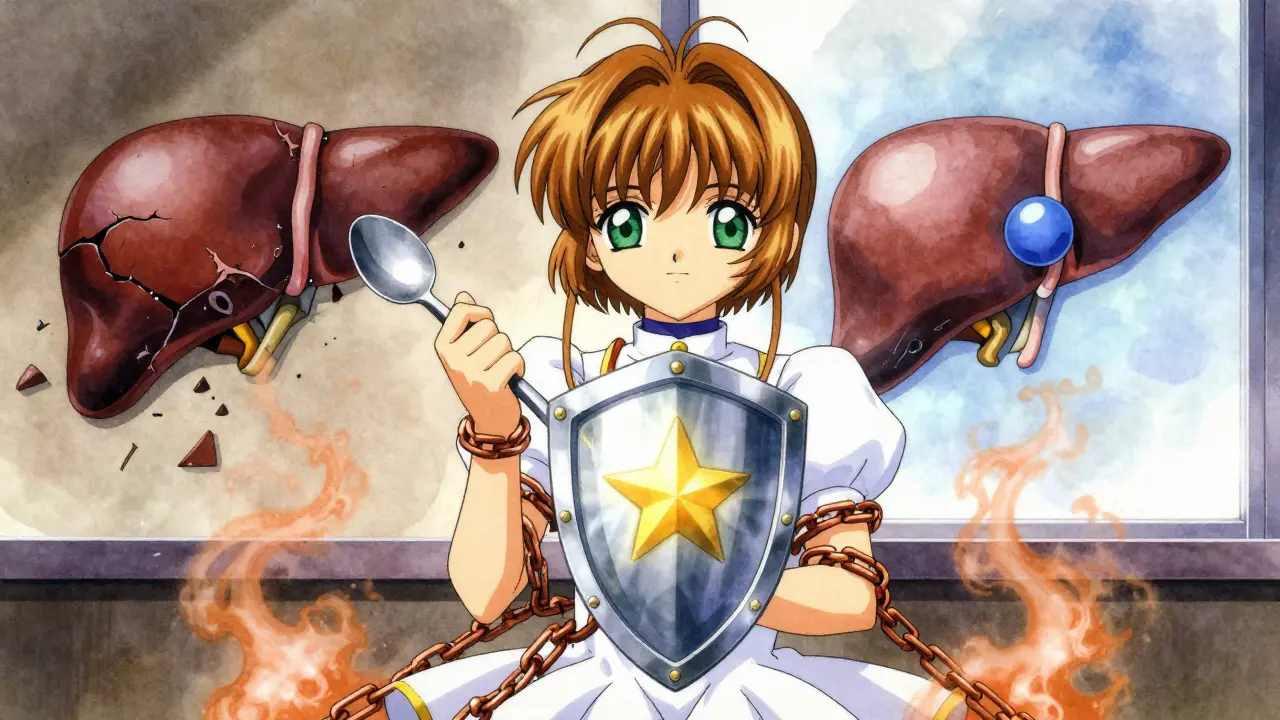
Chelation Therapy: How Drugs Pull Copper Out of Your Body
Once diagnosed, the goal is simple: remove the excess copper without starving your body of what it needs. That’s where chelation therapy comes in.
The first-line drug is D-penicillamine. It binds to copper in your blood and tissues, forming a compound your kidneys can flush out. But here’s the catch: in 20-50% of patients, symptoms get worse in the first few weeks. Tremors might spike. Speech might get worse. That’s because the drug pulls copper out of tissues so fast that it floods the brain temporarily.
To prevent this, doctors often add zinc. Zinc tells your gut to make a protein called metallothionein, which traps copper from food so it can’t be absorbed. It’s not a chelator - it’s a shield. Used together, zinc and penicillamine can reduce neurological worsening by up to 60%.
But penicillamine has a dark side. About 22% of users develop a lupus-like reaction. Others get kidney damage, skin rashes, or a persistent metallic taste. For those who can’t tolerate it, trientine is the alternative. It’s gentler on the brain and doesn’t cause as many autoimmune reactions. But it costs about six times more - nearly $1,850 a month in the U.S. compared to penicillamine’s $300.
Then there’s zinc acetate - not for initial treatment, but for life after. Once copper levels are under control, most patients switch to zinc alone. It’s safer, cheaper, and prevents copper from re-accumulating. Studies show it’s 92% effective at stopping neurological decline when serum free copper stays below 10 μg/dL.
What Patients Actually Go Through
Real people don’t follow textbook protocols. Take one Reddit user who spent seven years being told she had autoimmune hepatitis. Her liver enzymes were high, but no one checked her copper levels. When she finally got a 24-hour urine test, it showed 380 μg - more than triple the normal limit. She started penicillamine and within weeks, her tremors got worse. She couldn’t button her shirt. Her speech slurred. It took switching to trientine and adding zinc to stabilize her.
Another patient switched from penicillamine to zinc after developing kidney problems. Within six months, his ALT (a liver enzyme) dropped from 145 to 38. He says, “I’m not cured - but I’m alive. And I can hold a coffee cup without spilling it.”
But the hardest part? Diet. Patients must avoid foods with more than 1 mg of copper per day. That means cutting out liver, shellfish, nuts, chocolate, mushrooms, and even some whole grains. Many struggle to get enough iron or protein without hitting the copper limit. Iron deficiency from trientine is so common that 35% of users need supplements.
And adherence? Only 65% of patients take their meds as prescribed. Side effects, cost, and the sheer complexity - three doses a day, on an empty stomach - make it tough. Miss a dose, and copper creeps back.
New Hope: What’s on the Horizon
There’s light at the end of the tunnel. In 2023, a new drug called CLN-1357 showed it could slash free copper by 82% in just 12 weeks - without triggering neurological worsening. That’s huge. Another drug, WTX101, got FDA breakthrough designation after a 2022 trial showed 91% success in preventing brain damage - beating trientine’s 72%.
And then there’s gene therapy. Early trials are injecting a working copy of the ATP7B gene into the liver using a harmless virus. In six patients, the treatment was safe. It’s not a cure yet, but it’s the first real shot at fixing the root cause - not just managing the symptoms.
Europe is ahead of the U.S. in treatment access. In the U.S., only 65% of patients get guideline-recommended care. In Europe, it’s 85%. Why? Better awareness, faster testing, and insurance coverage for expensive drugs like trientine.
What You Need to Know If You Suspect Wilson’s Disease
If you or a loved one has unexplained liver issues, neurological symptoms, or psychiatric changes - especially under age 35 - ask for these tests:
- Serum ceruloplasmin
- 24-hour urinary copper
- Serum free copper (calculated from total copper and ceruloplasmin)
- Slit-lamp eye exam for Kayser-Fleischer rings
- ATP7B genetic testing
Don’t wait for a diagnosis. If your liver enzymes are high and no one can explain why, push for copper testing. Many patients are diagnosed after their first liver transplant - because they weren’t tested earlier.
And if you’ve been diagnosed? Stay on treatment. Even if you feel fine. Copper doesn’t care how you feel. It just keeps building. Lifelong monitoring is non-negotiable. Liver tests every 3 months. Urine copper every 6 months. Free copper every 3 months.
Wilson’s disease used to be a death sentence. Now, with early detection and consistent treatment, patients live full, normal lives. But that only happens if someone - a doctor, a patient, a family member - asks the right question: Could this be copper?
Can Wilson’s disease be cured?
No, Wilson’s disease cannot be cured - but it can be managed effectively for life. With consistent chelation therapy or zinc treatment, copper levels can be kept low enough to prevent organ damage. Most patients who stick to treatment live normal lifespans and have no symptoms. Stopping treatment, even for a short time, can lead to rapid copper re-accumulation and irreversible damage.
Is Wilson’s disease inherited?
Yes. Wilson’s disease is autosomal recessive, meaning you inherit two faulty copies of the ATP7B gene - one from each parent. If you have only one faulty copy, you’re a carrier and won’t develop the disease, but you can pass it on. About 1 in 90 people carry the mutation. If both parents are carriers, each child has a 25% chance of having Wilson’s disease.
Can you outgrow Wilson’s disease?
No. Wilson’s disease is a lifelong genetic condition. Symptoms may appear in childhood or adulthood, but the underlying gene defect doesn’t change. Even if someone has no symptoms for years, copper is still accumulating silently. Lifelong treatment and monitoring are required - no exceptions.
How do you know if chelation therapy is working?
Doctors track three key markers: 24-hour urinary copper (target 200-500 μg/day during active treatment), serum free copper (target under 10 μg/dL), and liver enzymes (ALT/AST). A drop in urinary copper and stabilization of liver enzymes show the treatment is removing excess copper. Neurological symptoms should improve or stop worsening. If urinary copper stays above 1,000 μg/day, the treatment isn’t working well enough.
Are there natural remedies for Wilson’s disease?
No. There are no proven natural remedies or supplements that can remove copper from the body in Wilson’s disease. Avoiding copper-rich foods helps, but it’s not enough on its own. Chelation drugs or zinc are medically necessary. Relying on diet or herbal supplements alone can lead to severe, irreversible brain or liver damage.
Can Wilson’s disease affect children?
Yes. Children as young as 2 can develop Wilson’s disease, though most show symptoms between ages 5 and 35. In kids, liver problems are more common than neurological ones. Symptoms may include fatigue, jaundice, abdominal swelling, or poor growth. Kayser-Fleischer rings are rare in young children, so diagnosis often relies on blood tests and genetic testing. Early treatment in children leads to the best long-term outcomes.
Melissa Taylor
Wilson’s disease is one of those conditions that should be taught in every med school. So many people suffer for years because doctors don’t think to check copper levels. I’m so glad this post exists - it could save someone’s life.
John Brown
I’ve got a cousin who was misdiagnosed for 5 years with ‘anxiety’ - turns out she had Kayser-Fleischer rings and copper levels through the roof. She’s on zinc now and can finally hold a cup without shaking. This isn’t just rare - it’s dangerously overlooked.
Jocelyn Lachapelle
Chelation therapy sounds terrifying but also kind of miraculous. Imagine your body hoarding poison you didn’t even know was there. And then a pill just pulls it out. No wonder people get worse before they get better. The brain doesn’t like sudden changes.
Sai Nguyen
India has better healthcare access than the US for this. We test copper early. You Americans wait until the liver fails.
Jake Sinatra
It’s staggering that only 65% of patients in the U.S. receive guideline-recommended care. This isn’t a matter of individual negligence - it’s systemic failure. Medical education must evolve to include metabolic disorders as routinely as diabetes or hypertension.
RONALD Randolph
STOP. STOP. STOP. There are NO natural remedies. NONE. I’ve seen people on YouTube trying ‘turmeric detox’ while their brains rot. This isn’t a wellness trend - it’s a genetic death sentence if ignored. Stop giving false hope.
Mike Nordby
The fact that trientine costs $1,850 a month while penicillamine is $300 is a moral outrage. Why is one drug so much more expensive if it’s clinically superior? This isn’t science - it’s corporate greed. Patients shouldn’t have to choose between neurological stability and bankruptcy.
John Samuel
Imagine if we treated Wilson’s like we treat HIV - early detection, universal access, lifelong monitoring, zero stigma. Instead, we treat it like a mystery illness whispered about in corners. We have the tools. We have the science. What we lack is the will.
Lisa Davies
My sister’s on zinc now and says the worst part isn’t the meds - it’s the food. No nuts. No chocolate. No mushrooms. She misses her trail mix more than anything. We all need to be more patient with people who have to live like this.
Benjamin Glover
Of course Europe is ahead. They’ve had universal healthcare for decades. The U.S. can’t even get basic blood tests covered. This isn’t a medical issue - it’s a political one.
Raj Kumar
my cousin in delhi got diagnosed at 12 cause his mom read about it online. here in usa, people wait till they can’t walk. it’s crazy.
Christina Bischof
I used to think copper was just in pennies and pipes. Didn’t realize it was in my almonds and dark chocolate. Now I read every label. It’s exhausting - but worth it.
Michelle M
It’s strange how medicine treats some diseases like emergencies and others like inconveniences. Wilson’s doesn’t scream for attention - it whispers. And by the time you hear it, it’s too late. Maybe the real cure isn’t a drug - it’s awareness.
Nupur Vimal
you think this is bad wait till you see how many people die from copper poisoning because they dont know what they are eating. its all about awareness. if you dont know you cant help
Cassie Henriques
Free copper <10 μg/dL is the target - not serum copper. So many clinicians confuse the two. That’s why treatment fails. Also, trientine isn’t just expensive - it’s underprescribed because insurance won’t cover it without prior auth for 3 months. The system is broken.