

Contraceptive Protection Calculator
Rifampin Protection Calculator
Determine your contraceptive risk period and safe methods while taking rifampin
When you're on birth control, you expect it to work. But if you're prescribed rifampin for tuberculosis or a stubborn staph infection, that assumption can put you at real risk. Rifampin doesn't just kill bacteria-it quietly sabotages your hormonal contraception, often without warning. This isn't a theoretical concern. It's a documented, life-changing interaction that has led to unintended pregnancies in women who followed their doctor's orders and took their pills exactly as prescribed.
How Rifampin Breaks Birth Control
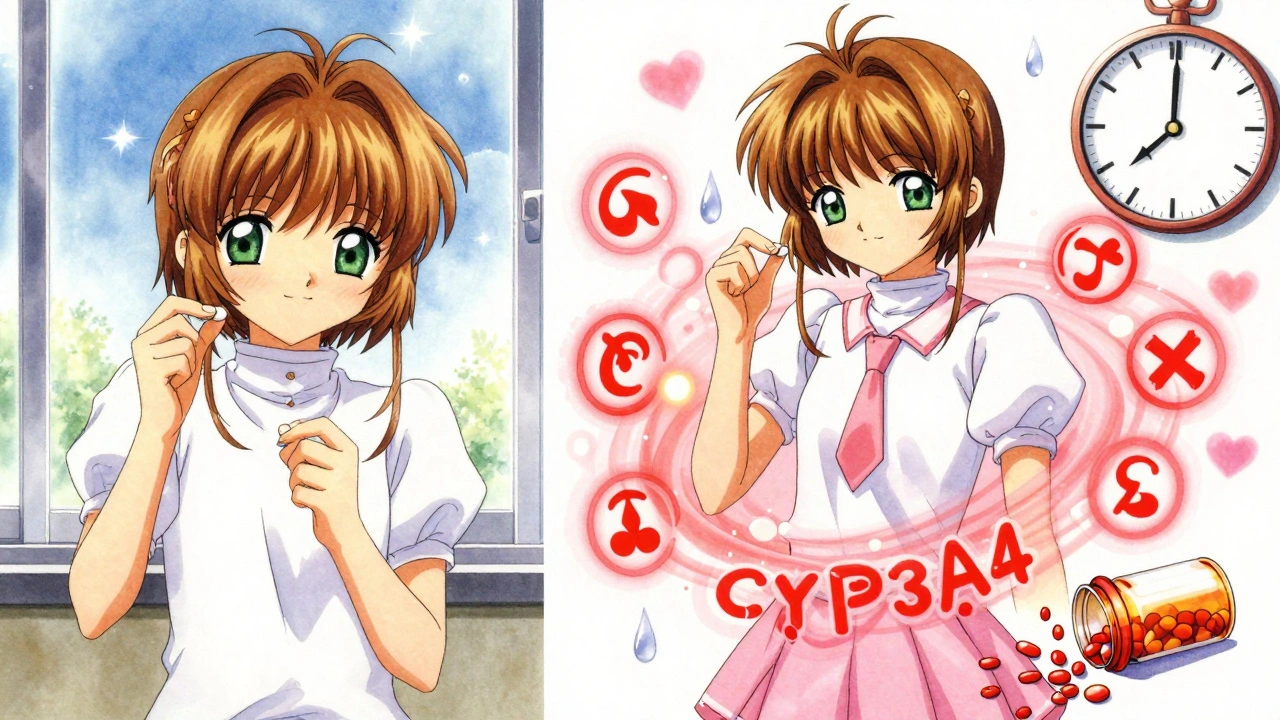
Rifampin is a powerful antibiotic, but it works differently than most. Instead of just attacking bacteria, it turns your liver into a hormone-processing factory on overdrive. It kicks off a chain reaction that ramps up your liver's production of enzymes-specifically CYP3A4-that break down estrogen and progestin, the two key hormones in most birth control pills. Within just 24 to 48 hours of starting rifampin, your body begins metabolizing those hormones faster than your pill can replace them.Studies show this isn't a small effect. In clinical trials, rifampin reduces ethinyl estradiol (the estrogen in most pills) by 37% to 67%. Progestin levels drop by 27% to 52%, depending on the formulation. That’s not a minor dip-it’s enough to drop hormone levels below the threshold needed to prevent ovulation. When your body starts ovulating again, you’re no longer protected, even if you haven’t missed a single pill.
The Only Antibiotic That Really Does This
You’ve probably heard warnings about antibiotics and birth control. Maybe your pharmacist told you to use condoms with every course of antibiotics. That advice is outdated and misleading. For nearly every antibiotic-penicillin, amoxicillin, azithromycin, tetracycline-there’s no solid proof they interfere with birth control. The U.S. Food and Drug Administration and the American College of Obstetricians and Gynecologists both confirm this. The only antibiotic with proven, consistent, and clinically significant interaction with hormonal contraception is rifampin.Even other antibiotics in the same family, like rifabutin, have a much weaker effect. Rifabutin, used for certain infections in people with HIV, lowers hormone levels by about 20% to 30%. That’s still a risk, but not nearly as dangerous as rifampin. In one study, half the women taking rifampin showed signs of ovulation. None of the women taking rifabutin did. And for every other antibiotic? Zero. No increase in ovulation. No drop in hormone levels. No pregnancies linked to the drug itself.
Why the Risk Lasts Longer Than You Think
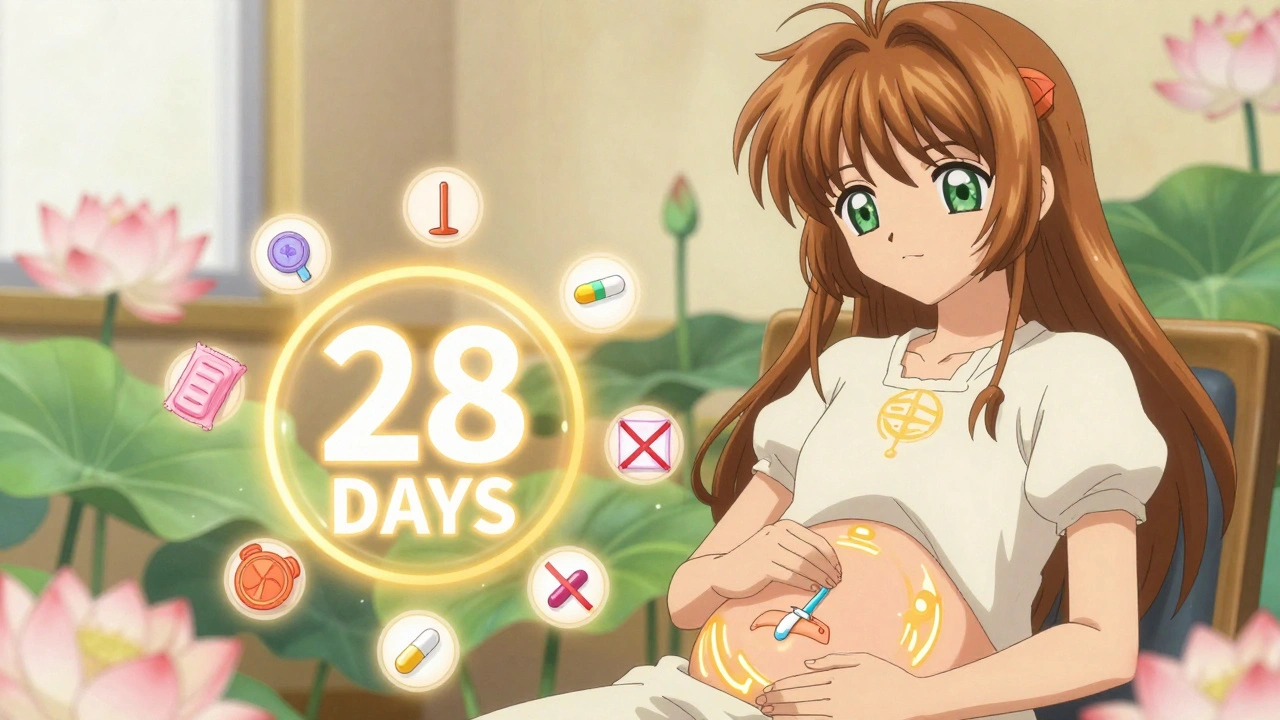
Here’s where most people get it wrong. Rifampin’s half-life is only 3 to 4 hours. That means it leaves your system quickly. But the enzyme induction it causes? That sticks around. Your liver keeps producing those extra enzymes for weeks after you stop taking the drug. That’s why stopping rifampin doesn’t mean you’re safe the next day.Guidelines from the CDC and the American Academy of Family Physicians are clear: you need backup contraception for the entire time you’re on rifampin and for 28 days after your last dose. That’s not a suggestion. It’s a requirement. If you stop rifampin on day 14 and go back to birth control on day 15, you’re still at risk. Your body hasn’t reset. Ovulation could still happen.
What Backup Contraception Actually Works
Not all backup methods are created equal. Condoms help, but they’re not foolproof. If you’re relying on them alone, you’re still taking a gamble. The best options are non-hormonal and don’t depend on your liver’s enzyme activity.- Copper IUD: This is the gold standard. It works for up to 12 years, doesn’t interact with any drugs, and is more than 99% effective. It’s also reversible and doesn’t affect your hormones.
- Progestin implant (Nexplanon): Early data suggests it may still work during rifampin use. A 2023 study followed 47 women using Nexplanon while on rifampin-none got pregnant. But the sample size was small, so experts still recommend adding a barrier method just in case.
- Condoms + spermicide: Less effective than IUDs or implants, but better than nothing if other options aren’t available.
Don’t switch to another hormonal method. A patch, ring, or shot still contains estrogen or progestin. Your liver will still break them down just as fast. Rifampin doesn’t care what form the hormones come in-it’s targeting the molecules themselves.
What Happens If You Get Pregnant?
This isn’t just about avoiding pregnancy. It’s about understanding the stakes. Women on rifampin are often being treated for tuberculosis, a serious disease that can be fatal if not managed properly. Pregnancy during TB treatment is dangerous for both mother and baby. TB can spread to the placenta, leading to preterm birth, low birth weight, or even stillbirth. Rifampin itself is not known to cause birth defects, but the stress of untreated TB on a developing fetus is far more dangerous.And if you’re not aware of the interaction, you might not even realize you’re pregnant until it’s too late. Breakthrough bleeding, spotting, or missed periods-common side effects of rifampin-are often mistaken for normal pill side effects. Many women assume they’re still protected. That’s how unplanned pregnancies happen.
Why Doctors Still Get This Wrong
Despite decades of research, a 2022 study in the Journal of Women’s Health found that 63% of women prescribed rifampin received no proper counseling about contraceptive risks. Why? Because many providers still believe the myth that all antibiotics interfere with birth control. A 2017 survey showed that 28% of primary care doctors told patients to use backup contraception for every antibiotic, not just rifampin. That dilutes the message. When everything gets flagged as risky, people tune out.There’s also a gap in training. Medical schools don’t always emphasize this interaction. Pharmacists may not have time to explain it during a quick prescription pickup. And patients? They’re often overwhelmed with information about their TB treatment and assume birth control is the least of their worries.
What You Should Do Right Now
If you’re taking rifampin:- Stop relying on birth control pills, patches, or rings.
- Get a copper IUD inserted or start using condoms with spermicide every time you have sex.
- Keep using backup contraception for 28 days after your last rifampin dose.
- Don’t switch to another hormonal method. It won’t help.
- Ask your doctor for a referral to a reproductive health specialist if you’re unsure what to do.
If you’re not on rifampin but might be prescribed it in the future-say, for a resistant infection-talk to your doctor before you start. Ask: "Is this antibiotic known to interfere with birth control?" If they say "probably not," ask for the evidence. If they mention rifampin, you’ll know they’re on the same page.
The Bigger Picture
This isn’t just a drug interaction. It’s a public health blind spot. In sub-Saharan Africa, where TB is common and access to IUDs or implants is limited, this interaction contributes to high rates of unintended pregnancy among women needing life-saving treatment. Pharmaceutical companies now test every new hormonal contraceptive against rifampin before approval. It adds millions to development costs and delays new options by over a year. That’s how seriously the industry takes this.There’s hope. New TB regimens are being tested that avoid rifampin entirely. One 4-month regimen using rifapentine and moxifloxacin showed promise in late-stage trials. If approved, it could eliminate this problem for future patients. But until then, the rule remains simple: rifampin and hormonal birth control don’t mix. Period.
Does rifampin affect all types of birth control?
No. Rifampin only affects hormonal birth control that relies on estrogen or progestin-like pills, patches, rings, and shots. It does not interfere with non-hormonal methods like the copper IUD, condoms, or diaphragms. Even progestin-only implants like Nexplanon may still work, but experts still recommend adding a barrier method for safety.
How long after stopping rifampin should I wait before using birth control again?
You need to use backup contraception for 28 days after your last dose of rifampin. Even though the drug leaves your system in hours, the liver enzymes it triggers take weeks to return to normal. Starting hormonal birth control too soon could leave you unprotected.
Are there any antibiotics that are safe to take with birth control?
Yes. Nearly all antibiotics-including penicillin, amoxicillin, azithromycin, doxycycline, and ciprofloxacin-do not interfere with birth control. The only antibiotics with proven interaction are rifampin and, to a lesser extent, rifabutin. You don’t need backup contraception for any other antibiotic.
I had breakthrough bleeding while on rifampin. Does that mean I’m not protected?
Yes. Breakthrough bleeding, spotting, or missed periods while taking rifampin are signs your hormone levels have dropped too low to prevent ovulation. This is not a normal side effect of birth control-it’s a red flag that your pill is no longer working. Use backup contraception immediately and talk to your doctor about switching to a non-hormonal method.
Can I just take a higher-dose birth control pill to make up for rifampin?
No. Increasing the dose of your current pill won’t solve the problem. Rifampin doesn’t just lower hormone levels-it speeds up how fast your body breaks them down. Even high-dose pills will be metabolized too quickly. The only reliable solution is to switch to a non-hormonal method like a copper IUD.
What if I’m on rifampin and I want to get pregnant?
If you’re planning pregnancy, you should stop using hormonal birth control and begin trying after rifampin is fully cleared from your system. Wait at least 28 days after your last dose before attempting conception. This gives your liver time to reset its enzyme production and ensures your hormones are back to normal levels. Always discuss your plans with your TB specialist and OB-GYN to coordinate care.
Kidar Saleh
Rifampin doesn't just mess with birth control-it rewires your entire hormonal landscape. I've seen patients on TB treatment assume their pill is still working, then show up in labor with no prenatal care. This isn't theoretical. It's clinical reality. And the 28-day buffer? Non-negotiable. Your liver doesn't clock out when the drug does.
Makenzie Keely
Let me just say-this is one of the most important posts I've read all year. So many women are misinformed. I work in OB-GYN, and I’ve had patients cry because they got pregnant while on rifampin, thinking their pill was enough. The copper IUD is the gold standard-not because it’s trendy, but because it’s physics-proof. No liver enzymes can touch it. If you’re on rifampin, get one. Now.
Vincent Soldja
Most antibiotics don't interfere. Only rifampin. End of story. Stop spreading fear about amoxicillin.
parth pandya
wait so rifabutin is less bad? i thought it was the same thing? maybe i read wrong
Chloe Madison
Parth, you’re right to double-check. Rifabutin is in the same family but way less aggressive-it only drops hormone levels by 20-30%, not 50%. That’s why some providers still consider it ‘maybe okay’ with extra caution. But even then, if you’re on it for TB, you’re already in high-risk territory. Don’t gamble. Use a copper IUD. It’s one appointment. It lasts a decade. You’ll thank yourself later.
Joykrishna Banerjee
Actually, the entire premise is flawed. Hormonal contraception is inherently unreliable. Why are we treating rifampin as the villain? It's just exposing the fragility of synthetic hormone dependency. If you're relying on a pill to control your biology, you're already playing Russian roulette. The copper IUD isn't a 'solution'-it's the only rational choice for anyone who values autonomy over pharmaceutical convenience.
sagar bhute
So what? You're telling me a woman on TB treatment shouldn't be allowed to use birth control? That's just eugenics wrapped in medical jargon. Rifampin is life-saving. Birth control is a luxury. If she gets pregnant, she gets pregnant. Her body, her choice. Stop pathologizing natural processes.
Katherine Gianelli
Hey, I get where you're coming from-but this isn't about control or luxury. This is about survival. TB treatment is brutal. Pregnancy during it? That’s a death sentence for the baby and a nightmare for the mom. We’re not saying don’t get pregnant-we’re saying don’t get pregnant by accident while your body is fighting for its life. The copper IUD doesn’t interfere with TB meds. It doesn’t add stress. It just works. That’s not elitism. That’s compassion with a backbone.
Francine Phillips
Just got prescribed rifampin yesterday. Didn't know any of this. Thanks for the post. Going to the clinic tomorrow for the IUD.