
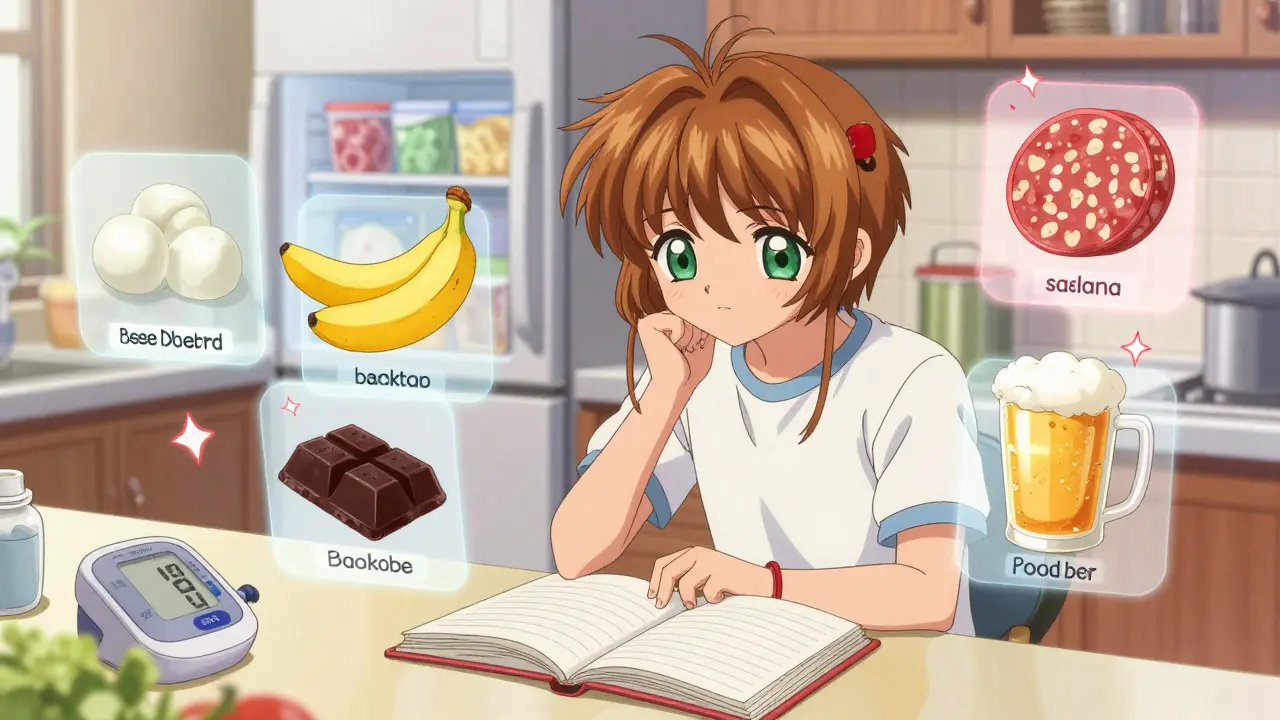
MAOI Diet Safety Checker
Check Food Safety
Enter the food item and portion size to see if it's safe for your MAOI diet
When you're on an MAOI antidepressant, food isn't just fuel-it can be a hidden risk. Monoamine oxidase inhibitors like phenelzine (a first-generation irreversible MAOI used for treatment-resistant depression, first approved in 1959), tranylcypromine (another irreversible MAOI that blocks both MAO-A and MAO-B enzymes), and isocarboxazid (a non-selective MAOI with similar risks to phenelzine) work by stopping your body from breaking down excess neurotransmitters. But they also stop your body from breaking down tyramine (a naturally occurring amino acid found in aged, fermented, or spoiled foods that can spike blood pressure when combined with MAOIs). That’s where things get dangerous.
What Happens When Tyramine Builds Up
Tyramine normally gets broken down by an enzyme called monoamine oxidase-A in your gut and liver. When you take an MAOI, that enzyme gets blocked. If you eat food with even moderate tyramine, it enters your bloodstream unchecked. Your body responds by releasing a flood of norepinephrine. Blood pressure spikes. Heart rate rockets. You might get a pounding headache, blurred vision, chest pain, or nausea. In the worst cases, it triggers a hypertensive crisis-systolic pressure over 180 mmHg-that can lead to stroke, heart attack, or death. The first documented case happened in 1964 when a patient eating cheddar cheese while on phenelzine had a fatal reaction. Since then, over 400 cases have been reported globally.It’s not just cheese. It’s not just one meal. It’s how much you eat, how it’s stored, and what else you’re eating with it. A single serving of properly aged cheddar might be fine. But if you eat that same cheese with a glass of tap beer and leftover sausage? That’s a recipe for trouble.
Which Foods Are Actually Dangerous?
The old advice-"avoid everything aged, fermented, or leftover"-was based on food from the 1950s. Today’s refrigeration, pasteurization, and packaging have changed everything. But some foods still carry risk.- Aged cheeses (over 6 months): Cheddar, blue cheese, parmesan, gouda. Tyramine levels jump from 1 mg/100g in fresh cheese to over 20 mg/100g in aged versions. Limit to 150g every 3 days.
- Tap and unpasteurized beer: These contain live yeast that produces tyramine. Pasteurized beer is safer. Stick to one 330ml serving per week.
- Dry fermented sausages: Salami, pepperoni, chorizo. These can contain 25-150 mg/100g. Avoid entirely.
- Improperly stored fish: Smoked salmon, pickled herring, or tuna left unrefrigerated for more than 48 hours can hit 200 mg/100g. Always eat fresh or frozen.
- Soy sauce and miso: Soy sauce ranges from 10-118 mg/100g. Avoid it. Tofu? Limit to 100g twice a week. Fresh tofu has under 5 mg/100g.
- Overripe bananas: The peel turns black? That’s tyramine forming. Eat only yellow, firm bananas.
- Leftovers and reheated meals: Tyramine increases 10-100 times after 48 hours in the fridge. Eat meals within 24 hours.
Good news? Many foods once thought to be risky are now safe. Mozzarella (fresh, not aged, contains under 1 mg/100g), cottage cheese (low-tyramine due to short aging), fresh chicken (properly stored, under 2 mg/100g), bananas (pulp only, under 1.5 mg/100g), and even dark chocolate (up to 30g per day, under 1 mg/100g) are generally okay if consumed in moderation.
Why Transdermal Selegiline Is Different
Not all MAOIs are the same. The Emsam patch (a transdermal delivery system for selegiline, approved by FDA in 2006) at the lowest dose (6 mg/24h) only blocks MAO-B in the skin and bloodstream. The MAO-A enzyme in your gut remains active, so it can still break down tyramine. That’s why people on 6 mg Emsam don’t need strict diet changes.But if you jump to the 9 mg or 12 mg patch? You’re now blocking gut MAO-A too. Then you’re back to the full diet restrictions. The dose matters. Always check your prescription label.

Your Personal Safety Plan
There’s no one-size-fits-all rule. Your risk depends on your MAOI, your dose, your metabolism, and even your genes. A 2023 pilot study at Massachusetts General Hospital found people with the MAOA-L genotype (a genetic variant linked to lower enzyme activity) had 27% higher blood pressure spikes from tyramine than others.Here’s what you need to do:
- Start with a food diary. Track everything you eat for the first 7 days. Note portion sizes and storage time. Use the USDA’s free tyramine database (updated 2023) to check values.
- Buy fresh, eat fresh. Never keep meat, fish, or cheese longer than 24 hours. Freeze leftovers immediately.
- Check labels. Avoid "aged," "fermented," "cured," or "smoked" unless you know the storage history.
- Monitor your blood pressure. Buy a home monitor. Check it before meals and 2 hours after. If your systolic pressure hits 180 mmHg or higher, take 0.2-0.4 mg sublingual nifedipine (keep it in your wallet) and call 911.
- Carry an MAOI ID card. The Mayo Clinic recommends this. Write your name, medication, dose, and emergency contact. Many ERs don’t know about MAOIs.
What About Stopping the Medication?
You can’t just quit. Stopping an irreversible MAOI like phenelzine or tranylcypromine doesn’t mean your body instantly restarts MAO-A enzyme production. It takes 2-3 weeks. That means your dietary restrictions don’t end when you stop taking the pill. You still need to avoid high-tyramine foods for at least 14 days, and ideally 21 days, after your last dose. Skipping this step has caused fatal reactions even after treatment ended.
The Bigger Picture
MAOIs are not first-line anymore. Only 1-2% of antidepressant prescriptions in the U.S. are for them. But for people who’ve tried five or six other meds with no luck? MAOIs work. Studies show 50-60% response rates in treatment-resistant depression, compared to 30-40% for SSRIs. That’s why specialized clinics still use them.The real problem isn’t the diet-it’s the fear. Many doctors still teach the 1960s version: "No cheese, no beer, no leftovers." But modern food science says otherwise. The 2023 Consensus Statement from the International Society for Psychiatric Neuroimaging calls for personalized plans, not blanket bans. You don’t need to live on plain rice and boiled chicken. You need to know what’s risky, how to store food, and how to read your body’s signals.
What’s Next?
New drugs are coming. Moclobemide (a reversible MAO-A inhibitor used in Europe and Canada) doesn’t cause dangerous tyramine buildup because it detaches from the enzyme when tyramine shows up. It’s not available in the U.S. yet, but clinical trials are underway. In the meantime, genetic testing for MAOA variants may soon become part of prescribing. If you have the low-activity gene, your doctor might start you on a lower dose or suggest a different drug.MAOIs are powerful. They can change lives. But they demand respect-not fear. Know your food. Know your body. Know your limits. And never stop monitoring.
Can I drink wine while on an MAOI?
It depends on the type and amount. Red and white wines typically contain 0-6 mg of tyramine per 100ml. A single 150ml glass (about 5 oz) is usually safe if it’s pasteurized and stored properly. Avoid fortified wines like sherry or port-they can have over 15 mg/100ml. Never mix wine with aged cheese or sausage. If you’re on a high-dose MAOI or have never tried it before, skip wine for the first 4 weeks.
Is it safe to eat pizza with aged cheese on an MAOI?
Not recommended. Most commercial pizzas use aged cheeses like mozzarella (which is usually fine) but often mix in parmesan or provolone, which can be high in tyramine. Plus, the pizza sits out for hours before eating, letting tyramine levels rise. If you must eat pizza, choose a fresh, thin-crust version with only fresh mozzarella and no added cured meats. Eat it immediately after it’s made.
Do I need to avoid all soy products?
No, but be careful. Soy sauce is a major risk-some brands contain over 100 mg/100g. Avoid it entirely. Tofu is safer if it’s fresh and unfermented. Limit to 100g (about 3.5 oz) twice a week. Tempeh and miso are fermented and should be avoided. Always check the ingredient list: if it says "fermented soy," skip it.
What if I accidentally eat something risky?
Don’t panic, but act fast. Check your blood pressure immediately. If it’s under 140/90, monitor for the next 2 hours. If it rises above 160/100, take your sublingual nifedipine (if prescribed) and call your doctor. If it hits 180/110 or higher, call 911. Symptoms like severe headache, chest pain, or vision changes mean emergency care is needed. Keep your MAOI ID card handy.
Can I take over-the-counter cold medicine with an MAOI?
Many OTC cold meds contain decongestants like pseudoephedrine or phenylephrine, which can cause dangerous spikes in blood pressure when combined with MAOIs. Even dextromethorphan (in cough syrups) can interact. Always check with your pharmacist before taking anything. Safe alternatives include acetaminophen for pain and saline nasal sprays. Never assume something is "natural" or "safe"-always verify.
How long do I need to follow the diet?
For irreversible MAOIs like phenelzine or tranylcypromine, you must follow the diet for as long as you take the medication-and for 14 to 21 days after you stop. That’s because your body needs time to rebuild the monoamine oxidase enzyme. For transdermal selegiline (Emsam) at 6 mg/24h, dietary restrictions are minimal. Always confirm with your prescriber based on your specific drug and dose.
If you’re on an MAOI, you’re not alone. Thousands of people manage this safely every day. The key isn’t perfection-it’s awareness. Know your food. Know your body. Know your limits. And don’t let fear stop you from getting the help you need.
Stephen Rudd
Let me be clear: this entire post is a dangerous oversimplification. You think tyramine levels are predictable? That’s laughable. Food manufacturing is a black box. That ‘fresh’ salmon you bought? Could’ve been sitting in a warehouse for weeks before it hit your fridge. And who’s monitoring that? Not the FDA. Not your grocer. You’re being sold a fairy tale that ‘if you just follow these rules’ you’ll be safe. The real risk isn’t cheese-it’s the false confidence this list gives people. I’ve seen three people in ERs because they trusted a blog post like this. Don’t be the fourth.
Erica Santos
Oh wow. A 10-page essay on how to not die from cheddar. How noble. Meanwhile, in the real world, people are choosing between rent and their MAOI because insurance won’t cover it. But sure, let’s all obsess over whether our tofu is ‘fresh’ while the system abandons us. You didn’t mention cost. You didn’t mention access. You didn’t mention that 70% of people on MAOIs can’t afford home BP monitors. This isn’t safety advice-it’s performative privilege wrapped in a USDA database.
Scott Easterling
So... let me get this straight. You’re telling me I can eat mozzarella... but not parmesan? What’s the difference? One’s a cheese. The other’s... more cheese. And you want me to track ‘storage time’? I’m not a food scientist. I’m a guy who just wants to eat a sandwich without a PhD in tyramine chemistry. This is why people stop their meds. Not because they’re reckless. Because this is insane. Who wrote this? A lab technician with a thesaurus?
rafeq khlo
It is imperative to underscore that the assertion regarding the safety of pasteurized beer is empirically unsound. The presence of residual yeast metabolites-even in trace quantities-may precipitate unanticipated tyramine accumulation, particularly in individuals with compromised hepatic metabolism. Furthermore, the claim that ‘fresh tofu’ is safe is misleading; enzymatic degradation during transit may elevate tyramine levels beyond thresholds established by the 2023 Consensus Statement. One must exercise rigorous quantification of all dietary inputs, and I would recommend cross-referencing with the WHO’s 2022 tyramine threshold guidelines, which are more conservative than the USDA’s.
Nicholas Gama
Anyone who eats pizza on MAOIs deserves what they get.
Mantooth Lehto
I’ve been on phenelzine for 8 years. I eat blue cheese every weekend. I drink wine. I have leftovers. I’ve never had a problem. My BP is lower than my husband’s. I think this whole thing is fearmongering. I’m not scared. I’m living. 🙃
George Vou
wait so like… is it just the cheese or the mold? like… what if i eat like… a little bit of blue cheese but like… i dont know… i dont chew it right? does that help? also i think the government is lying about this. i read on a forum that tyramine is a mind control chemical. like… why would they make us scared of cheese? just saying.
Melba Miller
My cousin’s husband died on MAOIs. He ate a sandwich. With salami. From the deli. He didn’t even know. They didn’t warn him. Now I don’t trust anything. Not the FDA. Not doctors. Not labels. I don’t eat out. I don’t accept food from friends. I cook everything myself. I freeze everything. I throw away leftovers after 12 hours. I don’t care if it’s ‘modern food science.’ I’m not burying anyone else. This isn’t a diet. It’s a prison.
Neeti Rustagi
Thank you for this comprehensive overview. The integration of genetic data, particularly MAOA-L variant implications, is a critical advancement in personalized psychopharmacology. I appreciate the emphasis on real-time blood pressure monitoring as a clinical tool rather than mere precaution. The 2023 Consensus Statement’s shift toward evidence-based thresholds-rather than blanket prohibitions-is precisely the paradigm shift required. I have shared this with my psychiatric team in Mumbai; we are revising our patient education materials accordingly.
Mary Beth Brook
MAOI compliance is non-negotiable. Tyramine load thresholds are pharmacokinetic, not anecdotal. The 6 mg Emsam transdermal patch has a bioavailability profile that spares gut MAO-A, but only if adherence is >95%. Any deviation-like a single glass of wine with aged cheese-triggers a non-linear noradrenergic cascade. This isn’t a suggestion. It’s a pharmacological fact. Your lifestyle must be engineered around this. No exceptions.
Jazminn Jones
How quaint. You assume everyone has access to a home BP monitor, fresh tofu, and the time to decode food labels. The average American works two jobs, lives in a food desert, and eats what’s on sale. This post reads like a brochure from a private psychiatric retreat in Vermont. Meanwhile, in the Bronx, someone’s eating leftover lasagna because it’s all they can afford. You’re not helping. You’re othering.
Katy Shamitz
I’m so glad someone finally said it. I’ve been on MAOIs for 6 years. I eat pizza. I drink wine. I have cheese in the fridge. I’ve never had a problem. My doctor says I’m fine. I think the fear is worse than the risk. You don’t have to live like a monk. You just have to be smart. And if you’re not? Maybe you shouldn’t be on an MAOI. But don’t scare people into quitting. That’s the real danger.
Dan Mayer
so wait… if i eat like… a little bit of salami and then take my med later… does that make it worse? or better? i think i read somewhere that the body can ‘build tolerance’ to tyramine? is that true? or is that just a myth? also… can i use apple cider vinegar? i like it on salads. is that fermented? i’m so confused.