
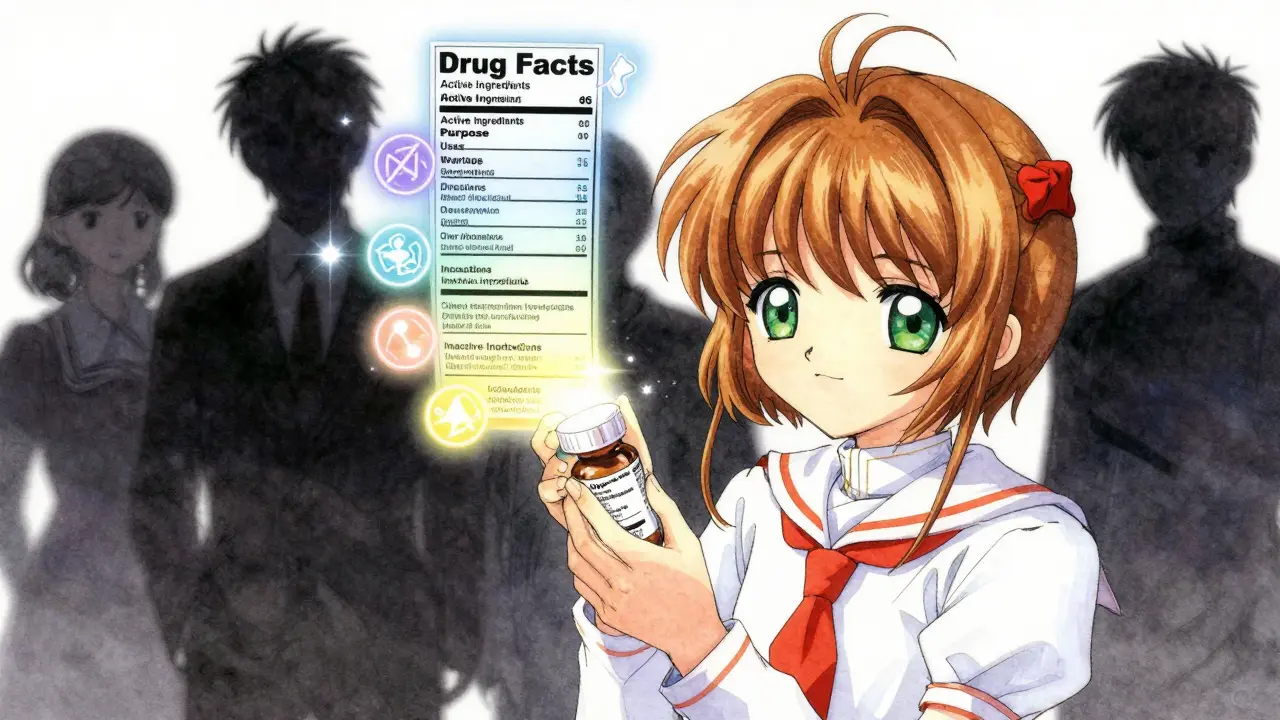
Every year, millions of Americans grab an OTC medicine without thinking twice - a headache pill, a cold syrup, a sleep aid. But here’s the problem: OTC drug facts labels aren’t designed to be skimmed. They’re designed to save your life. And if you don’t read them right, you could be risking serious harm - even death.
You’re not alone. Nearly half of all adults can’t tell how much of an active ingredient is safe to take in a day. Some people take two different cold medicines, not realizing both contain acetaminophen. Others give their child a dose based on age when the label says weight. And a surprising number don’t even know what “active ingredient” means.
Here’s the truth: You don’t need a pharmacy degree to understand these labels. You just need to know where to look - and what to look for. This guide breaks down the OTC drug facts label step by step, using real examples and simple language. No jargon. No fluff. Just what you need to use OTC medicines safely and confidently.
What’s on the OTC Drug Facts Label? The 7 Must-Know Sections
The U.S. Food and Drug Administration (FDA) made these labels standard in 2017. Before that, every brand had its own layout - some buried warnings, others used confusing terms. Now, every OTC medicine sold in the U.S. must use the same format. It’s not optional. It’s the law.
The label has seven sections, always in this exact order. Skipping one is like skipping a step in a recipe - you might still get something, but it won’t be safe.
- Active Ingredients
- Purpose
- Uses
- Warnings
- Directions
- Other Information
- Inactive Ingredients
That’s it. No marketing. No promises like “works faster!” or “doctor recommended.” Just facts. Let’s go through each one.
Active Ingredients: The Real Medicine in the Bottle
This is the most important section - and the one most people ignore. The active ingredient is the chemical that actually does the work. It’s not the brand name. It’s not the fancy packaging. It’s the substance that treats your symptom.
Look for this format: “Active Ingredient: Acetaminophen 325 mg”. That means each tablet or teaspoon contains 325 milligrams of acetaminophen. Some products have multiple active ingredients. For example, a cold medicine might list:
- Acetaminophen 325 mg (pain reliever/fever reducer)
- Dextromethorphan HBr 10 mg (cough suppressant)
- Phenylephrine HCl 5 mg (nasal decongestant)
Why does this matter? Because if you take two products with the same active ingredient - say, Tylenol and a nighttime cold medicine - you’re doubling your dose. And too much acetaminophen can cause liver failure. In fact, it’s the leading cause of acute liver failure in the U.S. The FDA says 41% of consumers still can’t identify the maximum daily dose from current labels. That’s not a typo. It’s a public health risk.
Pro tip: Always write down the active ingredient. If you’re taking more than one medicine, compare them. If they match, you’re doubling up. Stop. Choose one.
Purpose: What Does This Ingredient Actually Do?
This section explains the role of each active ingredient. It’s not fluff. It’s science. For example:
- “Pain reliever/fever reducer” = acetaminophen or ibuprofen
- “Cough suppressant” = dextromethorphan
- “Nasal decongestant” = pseudoephedrine or phenylephrine
This helps you avoid confusion. You might see “Tylenol” on the front and “acetaminophen” on the label. They’re the same thing. But if you don’t know that, you might think you’re taking two different drugs.
It also helps you pick the right product. If you have a stuffy nose but no fever, you don’t need a product with fever reducers. You just need a decongestant. This section tells you exactly what you’re getting - and what you’re not.
Uses: What Symptoms Will This Medicine Actually Help?
This section is strict. The FDA doesn’t allow vague claims. It must say exactly what the medicine is approved to treat. For example:
“Temporarily relieves these common cold/flu symptoms: sore throat, headache, body aches, fever, runny nose, sneezing, itching of the nose or throat.”
Notice the word “temporarily.” That’s intentional. OTC medicines don’t cure anything. They relieve symptoms. If your cough lasts more than 7 days, it’s not the medicine’s fault - it’s your body’s signal to see a doctor.
Don’t use this section to guess. If your symptom isn’t listed, don’t take it. That cold medicine with “sinus relief” won’t help your allergy. That pain reliever won’t treat a stomach ache caused by ulcers.
Warnings: The Red Flags You Can’t Afford to Miss
This is where lives are saved - or lost. The Warnings section is the most critical part of the label. Pharmacists say 89% of adverse events could have been prevented if people read this section.
Here’s what to look for:
- Do not use - This means you’re at high risk. Example: “Do not use if you have ever had an allergic reaction to acetaminophen.”
- Ask a doctor before use - You need medical advice. Example: “Ask a doctor before use if you are taking warfarin.”
- Liver warning - This appears on acetaminophen products. “Severe liver damage may occur if you take more than 4,000 mg in 24 hours.” That’s 12 extra-strength Tylenol tablets. Many people think “extra strength” means “better.” It means “more dangerous if you take too much.”
- Stomach bleeding warning - Found on NSAIDs like ibuprofen or naproxen. “Risk of stomach bleeding is higher if you’re over 60, take blood thinners, or have a history of ulcers.”
- Children - “Do not use in children under 12.” Or “Use only under adult supervision.”
Here’s a real story: A woman took DayQuil for her cold and also took a generic acetaminophen tablet for a headache. She didn’t know both had acetaminophen. She took 5,000 mg in 24 hours. She ended up in the ER with liver damage. She could have avoided it if she’d read the warning.
Directions: How Much, How Often, How Long?
This isn’t “take as needed.” It’s precise. It tells you:
- Exact dose (e.g., “2 caplets”)
- Frequency (e.g., “every 4 to 6 hours”)
- Maximum per day (e.g., “Do not take more than 12 caplets in 24 hours”)
- Age or weight limits
- Duration (e.g., “do not use for more than 10 days”)
Here’s where people mess up:
- Confusing “per 5 mL” with “per bottle.” A 4-ounce bottle of Children’s Motrin holds 118 mL. That’s 23.6 doses - not 8.
- Thinking “6 doses in 24 hours” means 6 pills. If the dose is 2 pills per use, then 6 doses = 12 pills. That’s double what you think.
- Using adult doses for kids. A 7-year-old weighing 50 lbs needs a different dose than a 12-year-old. Always check weight-based dosing if it’s listed.
Also, watch for “PM” versions. Those almost always contain diphenhydramine (38 mg per dose), an antihistamine that causes drowsiness. If you’re driving or operating machinery, avoid these.
Other Information: The Hidden Details
This section gets ignored - but it matters. It includes:
- Storage instructions: “Store between 68°F and 77°F.” If you leave it in the bathroom or car, it can break down.
- Sodium content: “Each caplet contains 2 mg sodium.” For people on low-sodium diets (like those with high blood pressure), this adds up.
- Alcohol content: Some liquid cough syrups contain up to 10% alcohol. Not safe for kids or pregnant women.
It’s small print - but it’s there for a reason. If you’re managing diabetes, heart disease, or kidney issues, this section can help you avoid dangerous interactions.
Inactive Ingredients: The Silent Triggers
These aren’t medicine. They’re fillers - things like dyes, preservatives, sugars, or starches. But for some people, they’re dangerous.
Example: A child with a peanut allergy took a liquid cold medicine. The label listed “soy lecithin” as an inactive ingredient. Soy is a legume - not a nut - but cross-reactivity is real. The child had a reaction. The pharmacy later changed the formula.
If you have allergies - especially to gluten, dairy, soy, or dyes - check this section. Some OTC medicines contain lactose, which can cause bloating or diarrhea in people with lactose intolerance.
And yes - some “sugar-free” products still contain artificial sweeteners like aspartame or sucralose. If you’re sensitive, you’ll know.
The 5-Point Check: A Simple System That Works
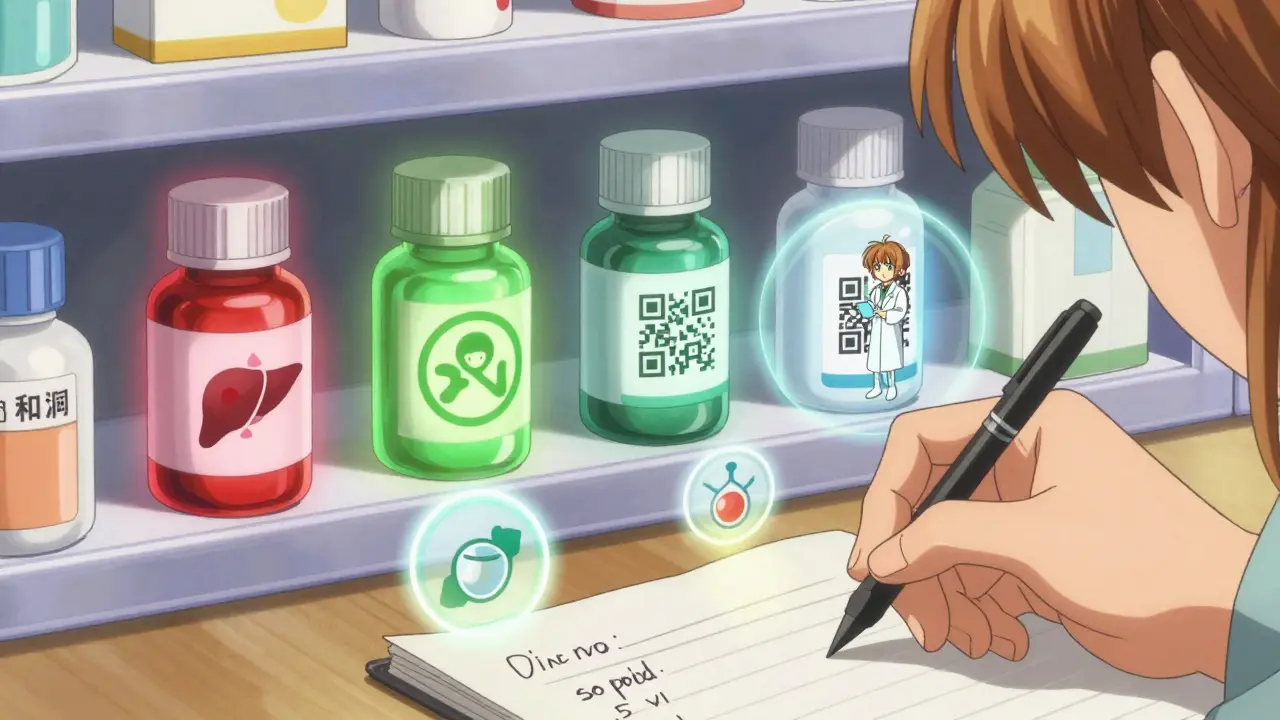
Pharmacists at CVS Health developed a 5-step method called the “5-Point Check.” It takes about 50 seconds - and it cuts medication errors by 68%.
- Identify active ingredients - Write them down. Cross-check with any other meds you’re taking.
- Verify uses match your symptoms - Don’t take a cold medicine for allergies. Don’t take a sleep aid for pain.
- Read all warnings - Especially liver, stomach, and allergy warnings. If it says “do not use,” don’t.
- Check directions for age/weight - Kids aren’t small adults. Dosing isn’t scaled down - it’s calculated.
- Review inactive ingredients - If you’re allergic to anything, this is your last line of defense.
Use this every time. Even if you’ve taken it before. Formulas change. Labels update.
What’s Changing in 2025? What You Need to Know
The FDA isn’t done. In 2024, Congress passed the OTC Drug Label Modernization Act. By December 31, 2025, all new OTC labels must have:
- Color-coded sections (red for warnings, green for uses, etc.)
- Standardized icons - like a skull for overdose risk, a heart for heart concerns
- 20% larger font for active ingredient concentrations
Some brands are already adding QR codes. Scan it, and you’ll get a video explaining the label. Johnson & Johnson and Bayer have rolled this out. It’s not a replacement - it’s a supplement.
Why does this matter? Because the goal isn’t just to sell medicine. It’s to prevent harm. And the data shows it works. Since 2017, pediatric acetaminophen overdoses have dropped 43%. ER visits from OTC errors have fallen by 37%.
When in Doubt, Ask a Pharmacist
You don’t have to figure this out alone. Pharmacists are trained to read these labels - and they’re free to ask. Walgreens reported a 40% increase in OTC consultations after launching their “Label Literacy” campaign in 2023.
Take your medicine to the pharmacy. Ask: “Is this safe with my other meds?” “Is this right for my child?” “Does this have something I’m allergic to?”
There’s no shame in asking. And there’s real risk in not asking.
Final Thought: This Label Is Your Shield
OTC medicines are powerful. They’re convenient. And they’re everywhere. But they’re not harmless. Every pill, every drop, every spray has consequences.
The Drug Facts Label isn’t bureaucracy. It’s your safety net. It’s your backup plan. It’s the one thing that stands between you and a preventable overdose.
So next time you pick up a bottle - pause. Read. Understand. Act. You don’t need to be a scientist. You just need to be careful.
Bridget Verwey
Y’all act like reading a drug label is rocket science. It’s not. It’s literally a checklist. Active ingredient? Check. Warnings? Check. Don’t mix with other stuff? DOUBLE CHECK.
My grandma reads these better than my brother reads his Netflix menu. You got two seconds. Use ‘em.
Andrew Poulin
Acetaminophen kills more people than opioids and nobody talks about it because it’s ‘over the counter’
That’s the system working as designed. Profit over prevention. Read the label or die trying.
Weston Potgieter
So we’re supposed to memorize every active ingredient like it’s a vocab test? Lol. Most folks just grab what’s on sale or what their buddy swears by.
And don’t even get me started on ‘natural’ OTC stuff. That’s just poison with a yoga pose on the bottle.
Vikas Verma
The FDA standardization is a significant milestone in public health pharmacovigilance. However, implementation gaps persist in low-literacy demographics.
Visual aids and multilingual labeling are imperative for equitable safety outcomes.
Sean Callahan
i just take what works and dont think about it lol
one time i took 2 diff cold meds and felt weird but then i slept for 14 hours so i guess it worked??
phyllis bourassa
Wow. So now we’re policing our own medicine choices like children? How about we stop making drugs so dangerous in the first place?
Also, ‘sugar-free’ doesn’t mean ‘safe for diabetics’? Really? Who knew.
William Minks
Just scanned a QR code on my ibuprofen bottle. Video showed a pharmacist breaking down the label in 90 seconds. Game changer.
👍
Jeff Mirisola
I used to think labels were boring until my cousin overdosed on acetaminophen.
Now I read every one. Like a religious ritual. And I teach my nieces to do the same.
It’s not paranoia. It’s protection.
Susan Purney Mark
My mom has arthritis and takes 5 different OTC meds. I sit with her every Sunday and we go through the labels together.
She says it’s the only thing that makes her feel safe anymore.
❤️
Ian Kiplagat
QR codes are a start but what about the elderly without smartphones?
Big font. Simple icons. Maybe even audio labels.
Design matters. Not just content.