

What Chronic Disease Self-Management Really Means
Living with a chronic disease isn’t just about taking pills or seeing a doctor every few months. It’s about showing up for yourself every single day-managing pain, tracking symptoms, adjusting your diet, moving your body, and still finding space to live. If you’ve ever felt overwhelmed by the sheer number of things you’re supposed to do just to stay stable, you’re not alone. The good news? There are proven tools that actually help people regain control without burning out.
The Chronic Disease Self-Management Program (CDSMP), developed at Stanford in the 1990s, was built on one simple idea: people with chronic conditions know their bodies better than anyone else. The program doesn’t tell you what to do-it teaches you how to figure it out for yourself. It’s not about curing anything. It’s about helping you function better, feel less alone, and make decisions that fit your life, not the other way around.
The Six Core Skills That Make a Difference
Forget generic advice like “eat better” or “exercise more.” Real change comes from learning six specific skills that turn passive suffering into active management. These aren’t theoretical-they’re practiced in workshops across 45 U.S. states and backed by data from over 1,000 studies.
- Problem solving: Instead of reacting to a flare-up with panic, you learn to ask: What triggered this? What worked last time? What small step can I take now?
- Decision making: You start weighing options like whether to push through fatigue or rest, or whether to try a new supplement after checking with your doctor.
- Using resources: You stop trying to do everything alone. That means finding local support groups, Medicare-covered programs, or even free apps that track symptoms.
- Partnering with providers: You learn how to ask better questions during appointments. Instead of “Is this normal?” you say, “I’ve had this symptom three times this week-what should I watch for?”
- Creating action plans: You write down one small, doable goal-like walking 10 minutes after breakfast-and track it. No grand promises. Just progress.
- Self-tailoring: Your plan doesn’t look like someone else’s. If you can’t stand the gym, you dance in your living room. If you’re too tired for meal prep, you batch-cook on Sundays.
These skills aren’t taught in a lecture. They’re practiced in group settings where people share real struggles-like forgetting to take meds because of brain fog, or feeling guilty for saying no to family events because they’re exhausted.
In-Person Workshops vs. Digital Tools: What Works Best
You have choices. And the right one depends on your life, not just your diagnosis.
In-person CDSMP workshops run for six weeks, two and a half hours each week, led by trained peer leaders-often people who’ve lived with chronic illness themselves. These sessions include group discussions, role-playing doctor visits, and hands-on practice with action plans. Completion rates hit 72%, according to the Self-Management Resource Center. Why? Because accountability matters. When you show up to a room of people who get it, you’re less likely to skip.
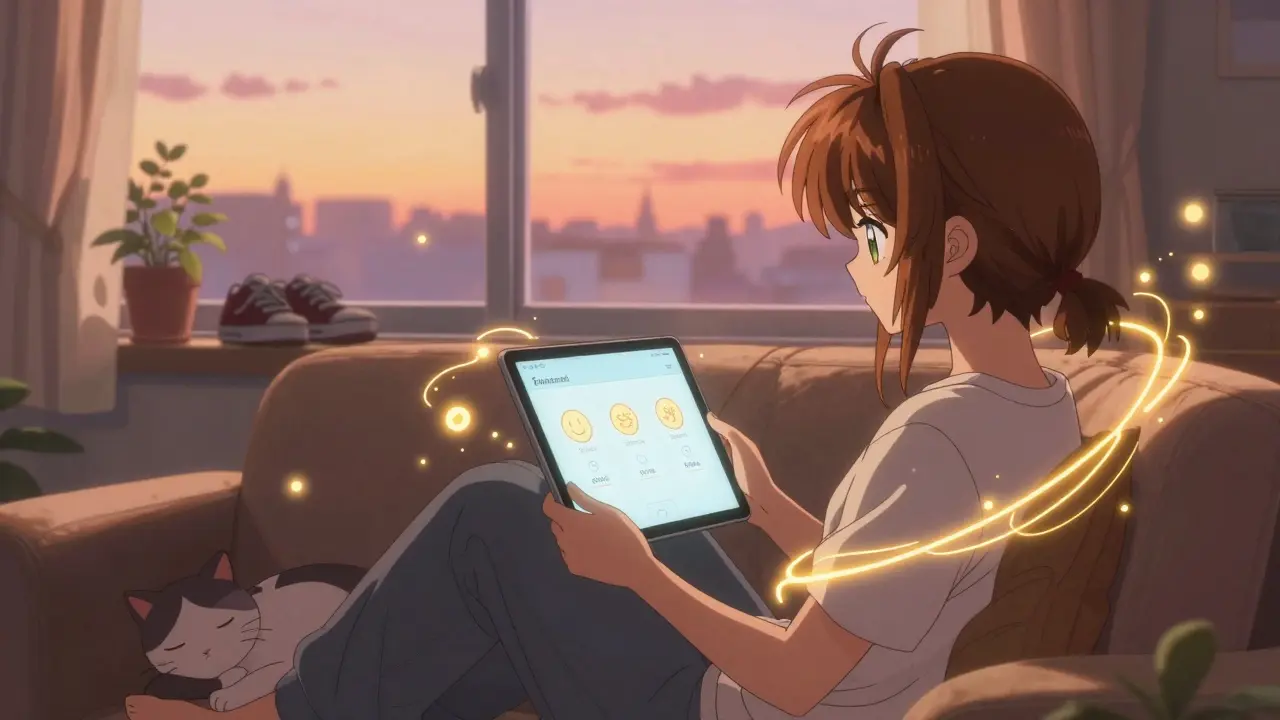
Digital programs like Better Choices, Better Health® offer the same content online, with weekly lessons and discussion boards. You can log in from your couch, which helps people in rural areas or with mobility issues. But completion rates drop to 58%. Why? Without face-to-face connection, it’s easier to quit when symptoms flare. One user on Reddit said, “I started the online course three times. Each time, I got to week three and gave up. I missed the group.”
Then there are newer tools like ProACT and Mun Health. ProACT connects your wearable devices, medication reminders, and symptom logs to a dashboard your doctor can see. Mun Health uses AI to chat with you daily, adjusting tone and content based on your mood and cultural background. Early pilots show 85% user satisfaction-especially among Black, Hispanic, and Asian American participants, who often feel left out of traditional programs.
But here’s the catch: digital tools struggle with health literacy. Nearly half of adults with chronic conditions have trouble understanding basic medical info. If an app uses terms like “hypertension” or “glycemic control” without explaining them, it’s useless. Stick to tools that break things down simply-like using “high blood pressure” instead of “hypertension.”
Real People, Real Results
Stories matter more than statistics. Here’s what people actually say after completing a self-management program:
- “I went from 1,200 steps a day to over 5,800 in eight weeks. My Fitbit didn’t lie.” - A participant in Oregon’s program
- “I stopped going to the ER for asthma attacks. I learned to recognize the early signs and use my inhaler before it got bad.” - A mother in Illinois
- “I used to feel like a burden. Now I tell my family, ‘I need 20 minutes alone after dinner to check my blood sugar.’ They get it.” - A man with type 2 diabetes in Tennessee
These aren’t outliers. The Oregon Health Authority found that 87% of participants felt more confident managing their condition after the program. Rural participants reported 78% reduction in feelings of isolation-a huge win when you live hours from the nearest clinic.
But it’s not all smooth sailing. Many people say the first few weeks felt impossible. “Checking my blood sugar, adjusting meds, foot care, diet-it all hit me at once,” said one participant. That’s why the program doesn’t ask you to fix everything. Week one is just about picking one small goal. Maybe it’s drinking one extra glass of water a day. Maybe it’s writing down your symptoms for three days. Progress isn’t linear. It’s messy. And that’s okay.
How to Get Started Without Getting Overwhelmed
You don’t need to join a program tomorrow. Start with this:
- Take a quick self-check: What’s the one thing that drains you the most? Is it forgetting meds? Constant pain? Feeling too tired to cook? Pick one.
- Find a tool that matches: If you like talking to people, look for a local CDSMP workshop. Search “Living Well with Chronic Conditions” + your state. If you prefer apps, try Better Choices, Better Health® (free through Medicare) or Mun Health (if available in your area).
- Write your first action plan: “I will walk for 10 minutes after breakfast, three days this week.” Not “I will exercise more.” Specific. Doable. Measurable.
- Use free resources: The CDC and Rural Health Information Hub offer printable workbooks and symptom trackers at a 6th-8th grade reading level. No jargon. No fluff.
Don’t try to do it all. One small win builds momentum. And momentum beats perfection every time.
What to Avoid
Not all tools are created equal. Here’s what to watch out for:
- Apps that demand too much: If you have to log 10 things a day just to get a sticker, you’ll quit. Look for apps that let you log only what matters to you.
- Programs that ignore emotions: Chronic illness isn’t just physical. If a program doesn’t address stress, anxiety, or loneliness, it’s incomplete.
- Overpromising: No tool cures diabetes or arthritis. Beware of anything claiming to “reverse” your condition. Real self-management is about living well with it-not pretending it’s gone.
- Skipping your doctor: Self-management doesn’t mean self-diagnosis. Use these tools to talk smarter to your provider-not replace them.
What’s Next for Self-Management
The field is changing fast. By 2025, the CDC wants doctors to refer patients to self-management programs as routinely as they prescribe meds. Medicare already covers Diabetes Self-Management Training for over a million people. And AI-powered tools are getting smarter-learning from your mood, sleep, and activity to give personalized nudges.
But the biggest shift? It’s no longer about fixing the patient. It’s about fixing the system. Programs are finally starting to design for real lives-people who work part-time, care for kids, live in rural towns, or speak languages other than English. The future isn’t just about better apps. It’s about better support.
Frequently Asked Questions
Can I join a chronic disease self-management program if I have more than one condition?
Yes. In fact, most people with chronic conditions have more than one. The CDSMP program was designed specifically for people managing multiple conditions like diabetes, arthritis, and heart disease. The skills you learn-like problem solving and action planning-work across all of them. Tools like ProACT even let you track symptoms for several conditions in one place.
Do I need to be tech-savvy to use digital self-management tools?
No. Programs like Better Choices, Better Health® are built for people who aren’t comfortable with technology. The interface is simple: click a lesson, watch a short video, write a comment. If you can use a smartphone to text or check email, you can use these tools. Many libraries and senior centers offer free tech help to get you started.
Are these programs free?
Many are. The in-person CDSMP workshops are often free or low-cost through local health departments, senior centers, or nonprofits. Online versions like Better Choices, Better Health® are completely free and covered by Medicare. Some digital apps have free versions with limited features. Always check if your insurance or Medicare covers self-management education-many do.
What if I can’t attend all six sessions of a workshop?
Missing a session doesn’t mean you fail. Many programs let you make up sessions or provide recordings. Even attending three sessions can give you useful tools. The goal isn’t perfection-it’s progress. If you’re struggling with symptoms, talk to the facilitator. They’ve been there.
How do I know if a program is evidence-based?
Look for programs endorsed by the CDC, the Self-Management Resource Center, or Medicare. These programs are tested in real studies and proven to improve symptoms, reduce hospital visits, and boost confidence. Avoid programs that make big claims like “cure” or “reverse” your disease. Real evidence-based tools focus on daily function, not miracles.
Solomon Ahonsi
This whole thing feels like a corporate wellness brochure written by someone who's never had a flare-up at 3 a.m. with no one to help. 'Just walk 10 minutes'? Try walking when your knees sound like a bag of gravel. This isn't motivation-it's gaslighting with a CDC stamp.
George Firican
There's a profound irony in the notion that self-management is about autonomy when the entire infrastructure of care is designed to disempower. The body becomes a problem to be optimized, not a lived experience to be honored. The six skills outlined are not tools for liberation-they're coping mechanisms for a system that refuses to heal. We are taught to manage our suffering, not to demand a world where suffering isn't inevitable. The real revolution isn't in logging steps or choosing apps-it's in dismantling the structures that make chronic illness a daily negotiation with exhaustion.
Matt W
I tried the online program twice. Third time, I joined a local group. The difference? Someone looked me in the eye and said, 'I get it.' No app can do that. I cried in that room. Not because I was broken-but because I finally felt seen. If you're on the fence, go to the in-person one. Even if you just sit there and don't talk. Just be there.
Anthony Massirman
Skip the fluff. Just do one thing. Today. That's it.
Gary Mitts
So you're telling me I need to join a group chat to manage my diabetes? Next they'll ask me to hold hands and sing kumbaya while checking my glucose. I'll take my app with push notifications over a circle jerk any day.
clarissa sulio
I don't need some fancy program to tell me how to live. I'm American. We fix things. We don't just 'manage' them. If you're tired all the time, maybe you're just lazy. Get up. Move. Stop making excuses.
Bridget Molokomme
I love how the article says 'no grand promises' but then goes on to say 87% of people felt 'more confident.' Like, what even is that? Confidence doesn't lower your A1c. Also, 'batch-cook on Sundays'? Bro, I can't even boil water on Sundays. This reads like a lifestyle blog written by a person who has a personal chef.
Vatsal Srivastava
Stanford developed this? Interesting. I'm sure the people who actually live with these conditions were consulted. Probably not. This is just another academic vanity project dressed up as empowerment. Real people don't have time for six-week workshops. We have jobs. Kids. Bills. This is performative compassion.
Brittany Marioni
I just want to say-thank you-for writing this. So many people don’t understand that it’s not about ‘being strong’ or ‘staying positive.’ It’s about showing up, even when you’re hollowed out. And if you’re reading this and thinking, ‘I can’t do this,’-you already are. You’re here. You’re reading. That’s the first step. Don’t let anyone tell you that your version of progress isn’t enough. It is. It always is.
Monica Slypig
I tried the app and it kept saying 'hypertension' and 'glycemic' and I was like what the heck is this? I'm not a doctor. And then it wanted me to log my mood and my sleep and my sodium intake and my pet's name? I deleted it. Also, why are all the success stories from Oregon? Is this some kind of west coast cult?
phara don
I'm curious-has anyone tried combining the in-person group with the AI app? Like, use the app to track, but go to the group for the emotional stuff? Just wondering if that's a thing or if I'm overcomplicating it.