
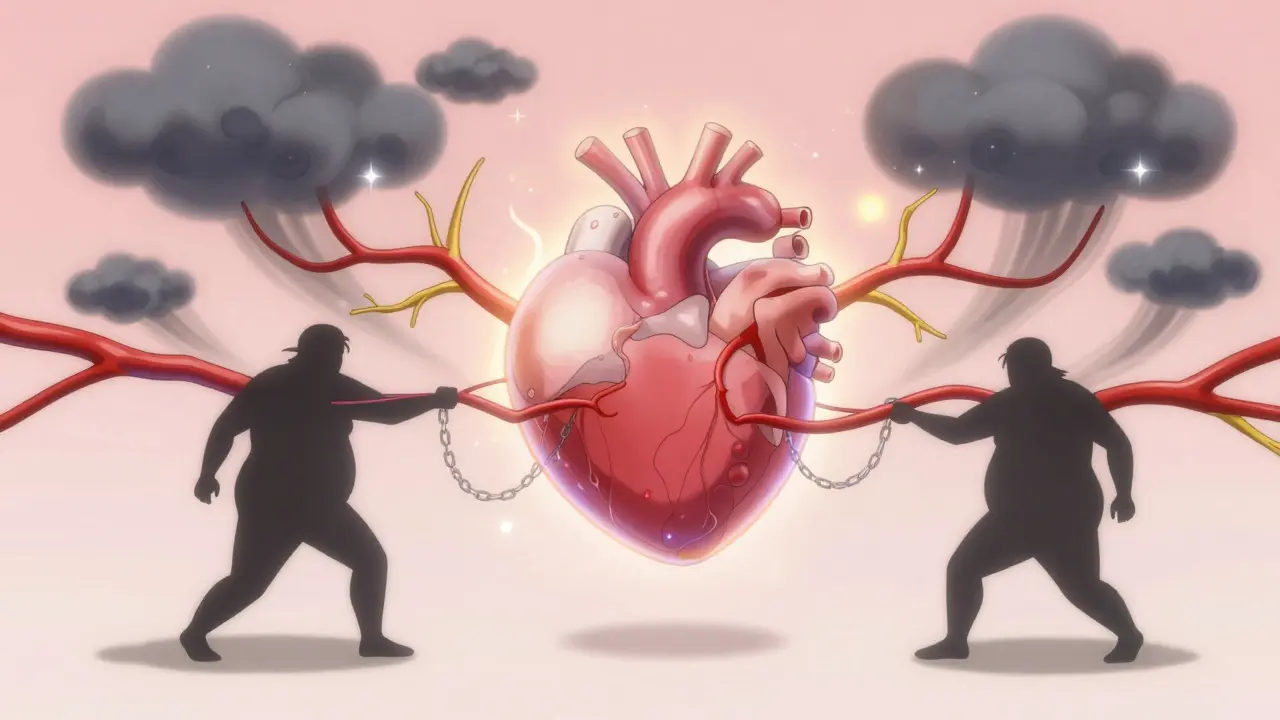
Cardiovascular disease isn't just one thing. It’s a group of conditions that strike the heart, brain, and blood vessels - often without warning. Every year, nearly 800,000 Americans die from heart disease alone. That’s one in every three deaths. Stroke takes another 100,000. And together, these conditions cost the U.S. over $444 billion annually. The good news? Most of these deaths and costs are preventable.
What Exactly Is Cardiovascular Disease?
Cardiovascular disease (CVD) covers a wide range of problems, but they all start with the same root issue: damaged blood vessels. The most common form is atherosclerotic cardiovascular disease (ASCVD), which includes heart attacks, strokes, angina, and blocked arteries in the legs or neck. It’s not just about clogged pipes - it’s about inflammation, high blood pressure, and sugar damage working together to weaken your system.
Coronary artery disease affects 18.2 million U.S. adults. Stroke hits nearly 800,000 people each year. Peripheral artery disease (PAD) - which causes leg pain and poor circulation - impacts 6.5 million. And heart failure, where the heart can’t pump well enough, affects 6.2 million. These aren’t rare conditions. They’re everyday threats.
The Real Risk Factors You Can’t Ignore
High cholesterol? Yes. But that’s just one piece. The real danger comes from how these factors pile up:
- Hypertension: 116 million U.S. adults have high blood pressure. Only about half have it under control.
- Diabetes: 11.3% of adults have it. And if you have diabetes, your risk of heart disease doubles.
- Obesity: Nearly 42% of U.S. adults are obese. Fat isn’t just weight - it’s active tissue that triggers inflammation and insulin resistance.
- Smoking: Even one cigarette a day raises your heart attack risk by 50%.
- Depression: People with depression are 30% more likely to develop heart disease. And if you’ve had a heart attack, you’re three to four times more likely to become depressed.
These aren’t separate issues. They feed each other. Diabetes leads to high blood pressure. Obesity causes inflammation. Depression makes it harder to take meds or eat right. The system breaks down as a whole - not one part at a time.
How Doctors Diagnose It Today
Doctors no longer just check cholesterol and call it a day. Modern diagnosis looks deeper:
- Coronary calcium scoring: A quick CT scan that shows calcium buildup in heart arteries. If your score is high, even with normal cholesterol, your risk is elevated.
- AI-powered risk tools: New calculators like PCE-AI use machine learning to predict your 10-year risk more accurately than older methods - improving accuracy by over 12%.
- Mental health screening: The European Society of Cardiology now recommends asking every heart patient: “Have you felt down or hopeless in the past two weeks?”
These tools help catch problems before they turn into emergencies. A calcium score of 100 or higher in someone with no symptoms means they need aggressive treatment - not just a statin, but lifestyle changes and possibly more.

Treatment Has Changed - Big Time
Forget just taking a statin. Today’s treatment is layered and personalized.
Statins are still the foundation. But now, doctors add drugs that do more than lower cholesterol:
- SGLT2 inhibitors (like empagliflozin): Originally for diabetes, they reduce heart failure hospitalizations by 30% and slow kidney damage.
- GLP-1 receptor agonists (like semaglutide): These help with weight loss, lower blood sugar, and cut heart attack risk by up to 20% - even in people without diabetes.
For someone who’s had a heart attack, doctors now often prescribe dual antiplatelet therapy (aspirin + another blood thinner) for a year. But only 28% of eligible patients get it. Why? Missed appointments, cost, or lack of follow-up.
The American Diabetes Association now recommends SGLT2 or GLP-1 drugs for anyone with type 2 diabetes and heart disease - regardless of A1C. That’s a huge shift. It’s not about sugar anymore. It’s about protecting the heart.
Why One-Size-Fits-All Doesn’t Work
Guidelines differ slightly between the U.S. and Europe, and for good reason.
The American College of Cardiology and American Heart Association say LDL cholesterol should be under 70 mg/dL for high-risk patients. The American Diabetes Association says: go lower - under 55 mg/dL. Why? Because people with diabetes have more aggressive plaque buildup.
Meanwhile, European guidelines put mental health front and center. They recommend screening for depression at every visit. Pilot programs in Germany showed that when depression was treated alongside heart disease, medication adherence jumped by 22%.
And in the U.S., the CDC’s Million Hearts initiative pushes the ABCS: Aspirin (when right), Blood pressure control, Cholesterol management, Smoking cessation. It’s simple. It’s proven. Between 2000 and 2019, it helped cut CVD deaths by 21.6% - even as obesity rose.

Prevention Works - If You Do It Right
Prevention isn’t just about diet and exercise. It’s about systems.
- Johnson & Johnson’s workplace wellness program cut employee CVD risk by 26% over 10 years.
- The National Diabetes Prevention Program reduced CVD events by 18% in people with prediabetes.
- Primary care clinics using the HEARTS package (hypertension control, healthy eating, tobacco cessation, team-based care) cut CVD deaths by 15-25% across 21 countries.
But here’s the hard truth: where you live matters more than your genes. Black Americans die from heart disease at 30% higher rates than White Americans - even when their blood pressure, cholesterol, and diabetes levels are the same. That’s not biology. That’s access. It’s transportation to appointments. It’s food deserts. It’s stress from systemic inequality.
The Future: Integrated Care, Not Silos
The future of heart health isn’t just cardiologists and endocrinologists working separately. It’s about seeing the whole person.
The new term is “cardiorenal metabolic syndrome” - a fancy way of saying heart, kidney, and metabolic problems are linked. You can’t treat one without the others. That’s why drugs like SGLT2 inhibitors are now first-line: they help the heart, kidneys, and weight - all at once.
AI will help predict who’s at risk before symptoms appear. Wearables will track blood pressure and heart rhythm at home. But technology won’t fix this alone. We need doctors who ask about depression. Pharmacies that deliver meds to homebound patients. Communities that offer affordable, healthy food.
What You Can Do Right Now
You don’t need a miracle. You need consistency.
- Get your blood pressure checked - at least once a year. If it’s over 120/80, talk to your doctor.
- If you have diabetes or prediabetes, ask about SGLT2 or GLP-1 medications. They’re not just for sugar.
- Stop smoking. Even cutting in half cuts your risk. Quitting cuts it by 50% in one year.
- Move more. Walk 30 minutes a day. That’s it. No gym required.
- Ask your doctor: “Have you checked my mental health lately?” If they haven’t, bring it up. Your heart depends on it.
The data is clear: when all risk factors are managed together, people with diabetes live as long as those without. That’s not a dream. It’s the new standard.
What’s the difference between heart disease and cardiovascular disease?
Heart disease refers specifically to conditions affecting the heart - like heart attacks, heart failure, or arrhythmias. Cardiovascular disease is broader: it includes heart disease plus problems in blood vessels, like stroke, peripheral artery disease, and aneurysms. All heart disease is cardiovascular disease, but not all cardiovascular disease is heart disease.
Can you reverse cardiovascular disease?
You can’t erase plaque completely, but you can stabilize it and prevent it from growing. Studies show that with aggressive lifestyle changes and medication, plaque can shrink slightly and become less likely to rupture - which is what causes heart attacks and strokes. The goal isn’t perfection - it’s preventing the next event.
Are statins safe for long-term use?
Yes, for most people. Statins have been used for over 30 years. Side effects like muscle pain are rare (under 5%) and often reversible. The risk of a heart attack or stroke without statins is far higher than the risk of side effects. For people with diabetes, a history of heart attack, or very high LDL, the benefits strongly outweigh the risks.
Do I need to take medication if I eat healthy and exercise?
Not always - but sometimes, yes. Genetics, age, and existing damage play a big role. Someone with a strong family history of early heart disease might need medication even with perfect habits. Others with borderline risk can manage with lifestyle alone. The key is working with your doctor to assess your personal risk - not just guessing.
Why is depression linked to heart disease?
Depression raises stress hormones like cortisol, which increase blood pressure and inflammation. It also makes people less likely to take meds, eat well, or move. In return, heart disease causes fatigue, fear, and isolation - which fuel depression. It’s a cycle. Treating one helps the other.
Is cardiovascular disease getting worse?
In some ways, yes. Obesity and diabetes rates are rising, which pushes more people into high-risk categories. But death rates have dropped 21% since 2000 thanks to better treatments and prevention programs. The challenge now is making sure those gains reach everyone - not just those with access to good care.
Jenci Spradlin
statins are fine but dont forget the real villain: processed carbs. i saw my LDL drop 40 points just by ditching bagels and cereal. no magic pills needed, just stop eating poison.
Jacob Paterson
Oh please. Another ‘eat less sugar’ sermon. You think people don’t know this? The system is rigged. Fast food is cheaper than kale, and your ‘lifestyle changes’ mean nothing when you’re working two jobs and sleeping four hours a night. Blame the people, not the structure.
Diana Stoyanova
Y’all are missing the point. It’s not about willpower, it’s about community. My aunt had a heart attack last year-she’s 62, diabetic, lived in a food desert. Her clinic started a weekly cooking class with local farmers. She lost 30 pounds, stopped crying every day, and now walks with her grandkids. No drug did that. People need connection, not just prescriptions. We’ve got to build circles, not just clinics.
Phil Kemling
Cardiovascular disease is the body’s scream against modern life. We’ve engineered sleeplessness, isolation, and chronic stress into the architecture of daily existence. The pills? They’re bandaids on a hemorrhaging artery. The real question isn’t ‘how do we treat it?’ but ‘how do we stop creating it?’ We’ve turned healing into a transaction-and the soul of medicine is dying with it.
tali murah
Oh wow, a 12% improvement in AI risk prediction? How revolutionary. Meanwhile, 40% of Americans can’t afford their statins. You’re optimizing the wrong thing. Fix the cost, then talk about algorithms. And yes, I know you’re going to say ‘but access is complex’-no, it’s corporate greed wrapped in a white coat.
Darren McGuff
Interesting piece, but you missed one key point: the UK’s NHS has been using team-based care with community health workers since 2018. They cut CVD hospitalizations by 19% in deprived areas-no fancy AI, just trained locals knocking on doors, checking meds, walking with patients. We don’t need more tech. We need more humans showing up.
Aron Veldhuizen
Let’s be honest-this whole ‘cardiorenal metabolic syndrome’ label is just Big Pharma’s way of selling more drugs. You’re rebranding three separate conditions as one ‘syndrome’ so you can push three pills in one prescription. It’s not science-it’s accounting.
Jeffrey Hu
Statins cause diabetes, you know. And GLP-1 drugs? They’re just fancy appetite suppressants with a 20% price hike. If you’re not eating a ketogenic diet, none of this matters. I’ve been keto for 7 years-my triglycerides are 42, BP 110/70, no meds. The system doesn’t want you to know this because keto doesn’t pay dividends.
Matthew Maxwell
It’s frankly embarrassing that we’re still debating whether depression affects cardiovascular outcomes. The data is overwhelming. The fact that we don’t screen routinely is not a gap in medicine-it’s a moral failure. If we treated mental health with the same urgency as cholesterol, we’d be saving hundreds of thousands of lives annually. This isn’t progressive thinking. It’s basic hygiene.
Catherine Scutt
My dad died of a heart attack at 54. He smoked. He was obese. He had diabetes. But he also worked 60-hour weeks, didn’t have insurance, and was too ashamed to ask for help. This isn’t about ‘bad choices.’ It’s about a country that lets people fall through the cracks and then blames them for bleeding out.
Micheal Murdoch
Listen-I’m not a doctor, but I’ve seen this play out in my neighborhood. The guy who walks his dog every morning? He’s not ‘healthy’ because he’s got willpower. He’s healthy because his block has sidewalks, streetlights, and a corner store that sells apples. You can’t tell someone to ‘move more’ if their street is unsafe and their fridge is empty. Prevention isn’t a personal project. It’s a public good.
Elisha Muwanga
Why are we letting Europe dictate our guidelines? They have universal healthcare and a population that walks everywhere. We have a culture of convenience. Stop trying to fix Americans with German protocols. We need solutions that work in a Walmart parking lot, not a Berlin café.
Heather Wilson
Let’s cut through the noise: 80% of CVD deaths are preventable. That means 80% of people are dying because they didn’t follow instructions. This isn’t systemic-it’s individual negligence. If you’re obese, diabetic, and smoking? You made choices. Don’t blame the system. Take responsibility.
Ashley Kronenwetter
Thank you for highlighting the disparity in outcomes by race. This isn’t about biology-it’s about trust. Many Black patients avoid care because they’ve been mistreated, dismissed, or experimented on. No algorithm fixes that. Only consistent, respectful, culturally competent care can. We need more providers who look like the communities they serve-and we need to listen to them.