
Warfarin-Amiodarone Interaction Calculator
Amiodarone Interaction Calculator
Amiodarone significantly increases warfarin's effects, potentially causing dangerous bleeding. This calculator helps determine the appropriate warfarin dose adjustment and monitoring frequency when adding amiodarone to therapy.
Imagine you’re managing a patient with atrial fibrillation. They’re on warfarin to prevent strokes, digoxin to control their heart rate, and now their doctor adds amiodarone to keep their rhythm stable. Sounds logical, right? But here’s the catch: amiodarone doesn’t just sit quietly alongside these drugs. It turns them into ticking bombs.
Why This Combination Is a Silent Killer
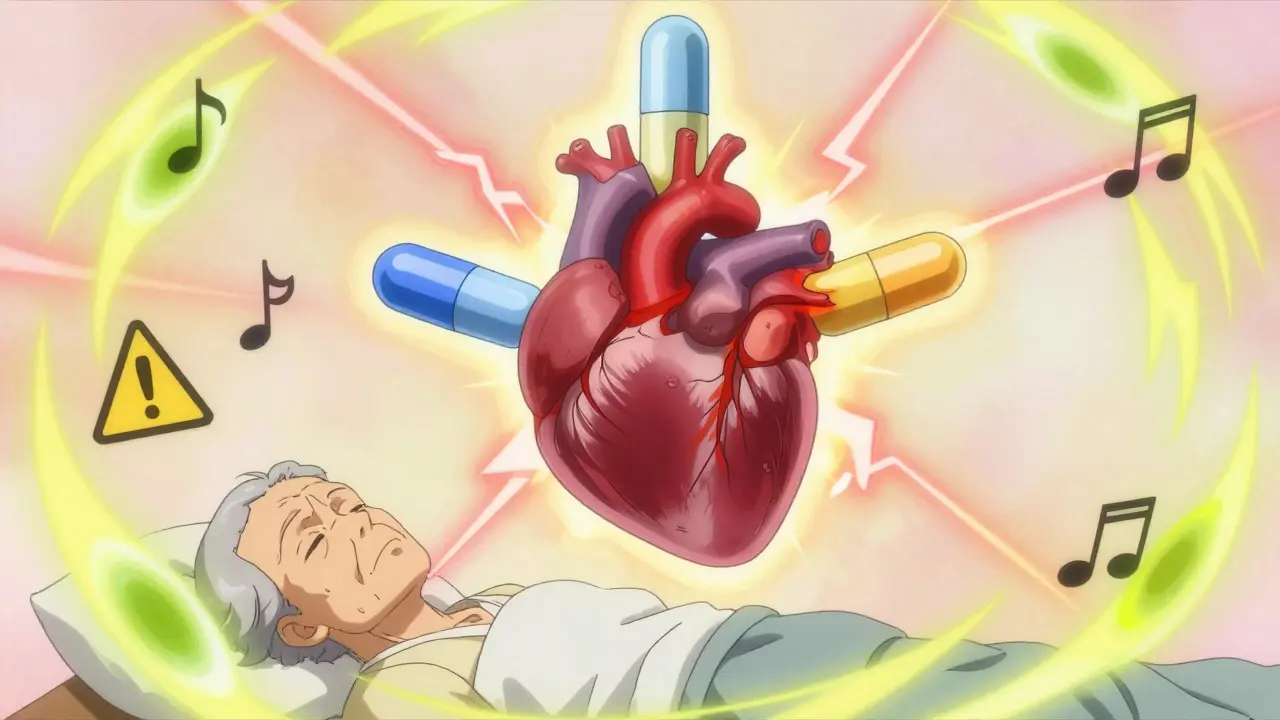
Amiodarone, digoxin, and warfarin are each powerful drugs on their own. Used together, they create a perfect storm. Amiodarone doesn’t just interact with one of them-it amplifies the effects of both, and it does so in ways that are slow, silent, and deadly.Let’s break it down. Digoxin helps slow down a racing heart in atrial fibrillation. But when amiodarone enters the picture, it blocks the body’s ability to clear digoxin. The result? Digoxin levels can spike by 40% to 100% within just a week. That’s not a minor bump-it’s a jump into toxic territory.
What does digoxin toxicity look like? Nausea, vomiting, blurry yellow-green vision, confusion, and worst of all, dangerous heart rhythms like ventricular tachycardia. In elderly patients, even a digoxin level above 1.2 ng/mL can trigger these effects. And because amiodarone’s half-life is 25 to 100 days, this danger doesn’t go away when you stop the drug. It lingers for weeks.
Warfarin Gets a Dangerous Boost
Now add warfarin into the mix. Warfarin works by thinning the blood, measured by the INR (International Normalized Ratio). A normal therapeutic range is 2.0 to 3.0. Go above 4.0, and bleeding risk skyrockets. Above 6.0, and you’re in emergency territory.Amiodarone doesn’t just nudge warfarin up-it slams the gas pedal. It blocks the liver enzymes (CYP2C9 and CYP3A4) that break down warfarin, especially the more potent S-warfarin form. Studies show this cuts warfarin clearance by up to 55%. That means a patient on a stable 5 mg dose of warfarin could suddenly have an INR of 8 or higher after just 10 days of adding amiodarone.
Real cases back this up. One patient in Massachusetts General Hospital had an INR of 12.4-so high they needed four units of fresh frozen plasma and a massive dose of vitamin K to survive. The FDA reports over 2,100 serious adverse events and nearly 400 deaths linked to this triad in 2022 alone. And those are just the reported cases.
It’s Not Just the Drugs-It’s the Body’s Response
There’s another layer. Digoxin is 40% bound to albumin in the blood. When its levels rise due to amiodarone, it can push warfarin off those protein binding sites. That means even more free, active warfarin is floating around-no dose change needed, no warning signs. Just sudden, unexplained bleeding.This isn’t theoretical. A 2020 study of over 12,000 patients on warfarin found that adding amiodarone made it 4.2 times more likely for their INR to spike above 4.0. Major bleeding risk jumped 180%. And the worst part? The highest danger window is the first 30 days after starting amiodarone. That’s when most of these disasters happen.

What Doctors Are Supposed to Do
The American College of Cardiology’s 2022 guidelines are clear: if you’re adding amiodarone to a patient already on digoxin and warfarin, you don’t just add a pill-you overhaul the whole plan.- Reduce the digoxin dose by 50% immediately-don’t wait for symptoms.
- Check serum digoxin levels within 72 hours of starting amiodarone.
- Reduce warfarin by 30-50% before even giving the first dose of amiodarone.
- Check INR every 48 to 72 hours for the first two weeks, then weekly.
- Keep monitoring INR for at least 4 to 6 weeks after stopping amiodarone. Yes, even after you’ve stopped giving it.
One hospital network in England cut adverse events by 78% just by enforcing these steps. That’s not luck-that’s protocol.
Why This Keeps Happening
You’d think with all this data, doctors would know better. But here’s the problem: amiodarone is often added in a rush. A patient goes into atrial fibrillation, gets admitted, and the team throws in amiodarone because it works fast. Digoxin and warfarin were already there. No one pauses to think about the interaction.And it’s not just busy ERs. Primary care doctors managing chronic atrial fibrillation patients often don’t realize how long amiodarone sticks around. They think, “I stopped amiodarone last week, so the interaction is gone.” Nope. It’s still in the tissues. The half-life isn’t hours-it’s months.
Electronic health records can help. A 2022 JAMA study showed that hospitals with clinical decision support flags for this triad reduced prescribing errors by 65%. But not every system has it. And even when they do, alerts can be ignored if they’re too frequent or vague.
Genetics Play a Role Too
Not everyone reacts the same way. A 2023 study in Clinical Pharmacology & Therapeutics found that people with a specific genetic variant (ABCB1 C3435T TT genotype) had nearly 92% higher digoxin levels when taking amiodarone. Those with the CC genotype saw only a 58% rise. That’s a massive difference.Genetic testing isn’t routine yet. But if you’re treating an older patient with a history of digoxin toxicity or unexplained bleeding on warfarin, and they’re on amiodarone-consider this. Their genes might be making them far more vulnerable.

Is There a Better Way?
Yes. Direct oral anticoagulants (DOACs) like apixaban, rivaroxaban, and dabigatran have replaced warfarin in most new atrial fibrillation cases. In 2022, 82% of new patients started on a DOAC, not warfarin.But here’s the catch: amiodarone still interacts with DOACs-especially dabigatran-by blocking P-glycoprotein, the same transporter it blocks for digoxin. So switching from warfarin to a DOAC doesn’t eliminate the risk. It just changes it.
And for patients with mechanical heart valves? Warfarin is still mandatory. No DOACs are approved for them. So that group-about 4.3 million Americans by 2030-will keep needing this dangerous combo.
What You Need to Watch For
If you or someone you know is on this triad, here’s what to look for:- Digoxin toxicity: Nausea, vomiting, loss of appetite, dizziness, seeing halos around lights, or new palpitations.
- Warfarin over-anticoagulation: Unexplained bruising, nosebleeds, blood in urine or stool, severe headaches, or sudden weakness.
- Both: Any fall or head injury becomes a medical emergency. Even a minor bump can cause a brain bleed.
Don’t wait for symptoms. If you’re on amiodarone and one of the other two drugs, ask your doctor: “Have you checked my digoxin level and INR since I started this?” If they say no, push for it. Your life might depend on it.
Bottom Line: This Isn’t Just a Warning-It’s a Red Flag
This triad isn’t rare. It’s common. And it’s lethal if ignored. Every year, thousands of patients are put on this combination without proper adjustments. Every year, people die from bleeding or arrhythmias that could have been prevented.The science is clear. The guidelines are clear. The data is clear. What’s missing is vigilance. If you’re managing this combination, don’t assume it’s safe. Don’t assume your doctor knows. Ask. Check. Monitor. Adjust.
This isn’t about being paranoid. It’s about being informed. And in medicine, that’s the only thing that can save you when the drugs you trust turn against you.
Robin Williams
man i just had my grandpa on this combo and he nearly died from a brain bleed after a tiny fall. no one told us the amiodarone was still lurking in his system like a ghost. they just said 'we stopped it' like that was the end of it. it’s not. it’s a slow poison with a 100-day hangover. if you’re on this triad, you’re not just taking meds-you’re playing russian roulette with your own organs.
Angel Molano
This is why people die in hospitals. Not from disease. From lazy doctors who think 'it worked before' means 'safe now.' Stop being complacent.
Gregory Parschauer
Let’s be brutally honest: this isn’t a 'drug interaction'-it’s a systemic failure of clinical governance. Amiodarone’s pharmacokinetics are a nightmare wrapped in an enigma, yet we still prescribe it like it’s aspirin. The fact that 2,100+ adverse events were reported in a single year isn’t a statistic-it’s a massacre disguised as medical practice. We need mandatory EHR flags, mandatory pharmacist review, and mandatory re-education for every prescriber who dares to touch this triad without a protocol. And yes, I’m talking to you, Dr. 'I’ll just reduce the warfarin by 20%.' You’re not a doctor-you’re a gambler with a stethoscope.
Kimberly Mitchell
Why is this even still a thing? We have DOACs. We have algorithms. We have decision support tools. And yet, here we are, 2025, still losing people to a 1980s-era prescribing habit. Lazy. Complacent. Dangerous.
Vinaypriy Wane
My father was on this combo for 18 months. He never had a single INR check after the first month. He collapsed at home. They found his INR at 11.2. He survived, barely. But the trauma? Unbearable. I’ve spent years fighting the system since. If you’re on amiodarone, demand weekly INR for the first month. Demand digoxin levels. Don’t trust 'it’s fine.' It’s never fine.
Diana Campos Ortiz
i know someone who died from this. she was 72. she had a pacemaker, was on warfarin and digoxin for afib, then got amiodarone after a scare. no one told her to get blood tests. she started bleeding internally after a coughing fit. they found her 3 days later. her INR was 14. it’s not just about the drugs-it’s about the silence around them. please, if you’re reading this, ask your doctor for the numbers. don’t wait for the emergency.
Jesse Ibarra
Oh wow, another 'medical horror story' from someone who clearly doesn't understand pharmacology. Amiodarone is a lifesaver for refractory arrhythmias. If you can't manage the interactions, maybe you shouldn't be prescribing. This post is fearmongering dressed as education. People die from strokes too-did you forget that? This triad is manageable. It's not a death sentence. Stop sensationalizing.
Randall Little
So… let me get this straight. You’re telling me that a drug with a half-life longer than most marriages can turn two otherwise benign medications into a lethal cocktail-and yet, we still don’t have a national alert system for this? In 2025? I’m not surprised. We’ve optimized for speed over safety since the 90s. Next up: prescribing lithium with NSAIDs and telling patients to 'just drink more water.' Classic.
jefferson fernandes
As a nurse who’s seen this play out in the ICU too many times: the moment amiodarone is added, the clock starts ticking. Every 48 hours, the INR climbs. Every 72 hours, the digoxin creeps into toxic range. And the patient? They feel fine. That’s the worst part. They don’t feel sick until they’re on the verge of cardiac arrest or intracranial hemorrhage. We need a checklist. A mandatory one. Signed by the prescriber, pharmacist, AND patient. No exceptions. No 'I thought it was fine.' It’s not fine. It’s a ticking bomb.
sam abas
ok but like… has anyone considered that maybe the real problem is that we’re still using warfarin at all? like, DOACs exist. they’re easier. they’re safer. why are we still clinging to this 70-year-old anticoagulant like it’s a family heirloom? and digoxin? that’s basically medieval medicine with a modern label. amiodarone’s the only thing here that’s even remotely modern, and even it’s a walking toxicity parade. maybe the real answer isn’t managing the triad… it’s not creating it in the first place. just sayin’. also, i think the FDA stats are inflated because they count every ER visit as a death. just saying.
vishnu priyanka
Man, this hits different in India. We don’t have the same monitoring systems. I saw a guy in a rural clinic on all three meds, no labs, no follow-up. He had a stroke. The doctor said, 'He was on blood thinner, right? That’s why.' No one checked the amiodarone. No one even knew it could do this. We need global awareness, not just US guidelines. This isn’t a niche problem-it’s a global blind spot.
Angel Tiestos lopez
bro this is wild 😳 like… imagine your meds are secretly having a party in your liver and inviting death to join. amiodarone is the bouncer who lets digoxin and warfarin in but then locks the door and throws away the key. 🤯 and it sticks around longer than your ex’s texts. if you’re on this combo, get your labs done like your life depends on it… because it does. 🩸❤️🩹
Alan Lin
As a clinical pharmacist with over 18 years of experience in anticoagulation management, I can confirm with absolute certainty that the scenario described in this post is not only accurate-it is underreported. In our hospital system, we implemented a mandatory pre-amiodarone protocol: reduced warfarin by 40%, digoxin by 50%, baseline INR and serum digoxin levels, then repeat INR at 48, 72, and 168 hours. We also mandated pharmacist-led patient education. The result? A 91% reduction in INR >6.0 and zero cases of digoxin toxicity over 14 months. The science is settled. The solution is simple. The barrier is culture. Change begins when clinicians stop assuming and start verifying. Every single time.