
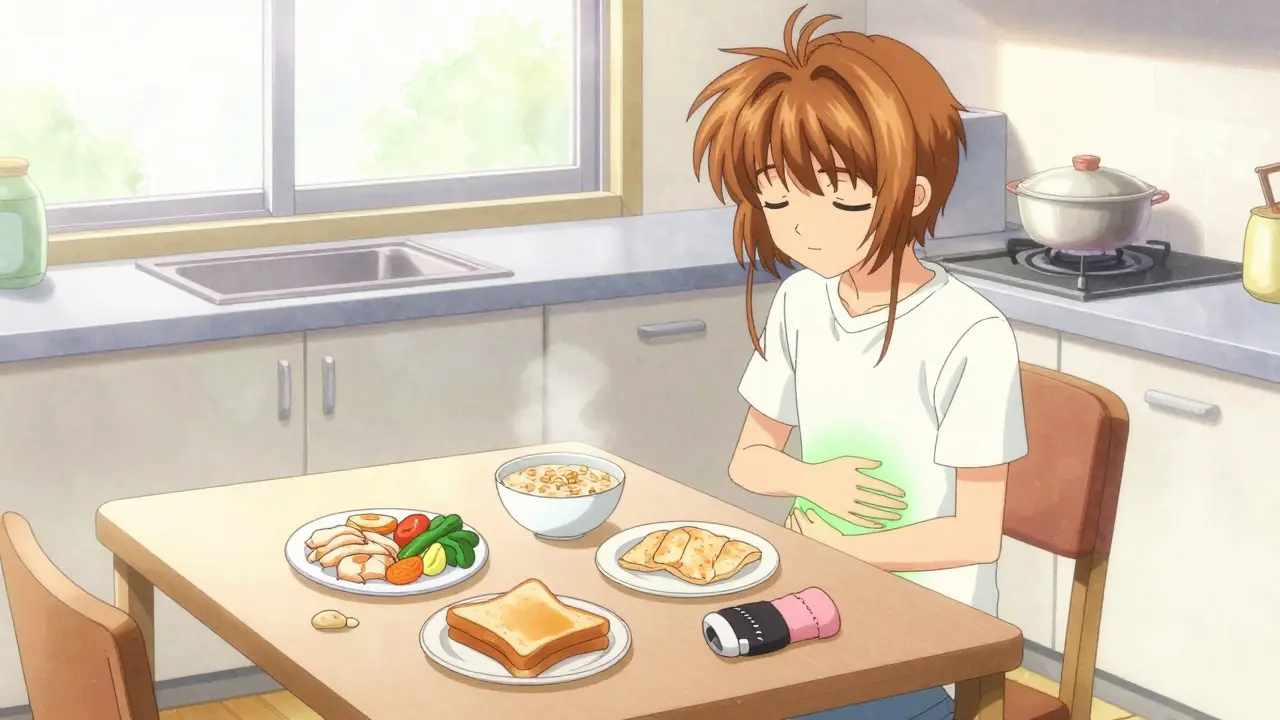
Small Meal Tracker
Ideal Meal Size Guide
According to the article, small meals (300-400 calories) reduce nausea by preventing stomach overload. Try 4-6 mini-meals daily.
Recommended: 300-400 calories per meal
Example: 1 palm-sized protein + 1 cup veggies + small carb serving
Example: 1 palm-sized protein + 1 cup veggies + small carb serving
If you're taking a GLP-1 medication like Ozempic, Wegovy, or Mounjaro and feel nauseous, you're not alone. About 40% of people on these drugs experience nausea, especially in the first few weeks. It’s the #1 reason people stop taking them. But here’s the good news: most of the time, it gets better. And you don’t have to just suffer through it. With the right tweaks to how you eat, how fast you increase your dose, and a few simple tricks, you can keep taking your medication without feeling sick all the time.
Why GLP-1 Medications Cause Nausea
GLP-1 drugs work by mimicking a natural hormone that tells your body to slow down digestion. That’s actually helpful for controlling blood sugar and helping you feel full longer. But slowing down your stomach also means food sits there longer. That’s what causes the queasiness. It’s not an allergy. It’s not something wrong with you. It’s just how the medicine works - especially when you first start or when your dose goes up. Studies show nausea hits hardest during the first 4 to 5 weeks. For most people, it fades on its own within 8 days of starting. But if you rush the dose increases, or eat the wrong things, it can stick around much longer. In fact, one study found that 80% of nausea cases resolve within 8 weeks - if you give your body time to adjust.Small Meals Are Your Best Friend
Big meals = big nausea. It’s that simple. When your stomach empties slower, large portions of food, especially fatty or greasy ones, sit like a heavy rock. That triggers nausea, bloating, and even vomiting. Instead, try eating smaller portions more often. Aim for 4 to 6 mini-meals a day instead of 3 big ones. Keep each meal around 300 to 400 calories. That’s about the size of a palm of protein (chicken, fish, tofu), a cup of veggies, and a small serving of carbs like rice or toast. Avoid high-fat foods like fried chicken, cheese plates, creamy pasta, or buttery baked goods. They’re harder for your slowed-down stomach to handle. Stick to lean proteins, vegetables, and simple carbs. Toast, crackers, oatmeal, and plain rice are all safe bets - especially in the morning if you get nausea right after waking up. Also, don’t drink fluids with meals. Water, coffee, or tea during meals can fill your stomach faster and make nausea worse. Instead, sip water 30 to 60 minutes before or after eating. That gives your stomach room to process food without getting overloaded.Slow Titration Is the Secret Weapon
Most prescription guides say to increase your GLP-1 dose every 2 to 4 weeks. But that’s too fast for many people. The real secret? Stay on each dose longer. Doctors at Rentia Clinic found that extending the time between dose increases by 50% to 100% - meaning staying on each step for 4 to 6 weeks instead of 2 to 4 - dropped nausea-related discontinuation rates from 12% down to under 4%. That’s a huge difference. If your doctor says to jump from 0.25 mg to 0.5 mg after two weeks, ask if you can wait three or four weeks. If you’re on 1.7 mg of Wegovy and ready to go to 2.4 mg, don’t rush. Wait 8 to 12 weeks. Give your stomach time to adapt. The weight loss and blood sugar benefits still happen - you just get there more comfortably. One patient on Drugs.com reported nausea lasting 11 weeks after rushing her dose increase. She only felt better after going back to the lower dose and waiting longer. Don’t be her. Be the person who gets results without the misery.Try Ginger, Peppermint, and Acupressure Bands
When nausea hits, reach for natural fixes before pills. Ginger works. A 2022 meta-analysis showed ginger reduced nausea in 62% of users. Try ginger chews, ginger tea, or even ginger capsules. Keep a pack of ginger chews in your bag or desk. Suck on one when you feel the first wave of nausea. Peppermint is another quiet hero. Small studies show it helps about 55% of people. Sip peppermint tea or chew peppermint gum. The scent alone can calm your stomach. And don’t laugh at acupressure wristbands. They’re not just for motion sickness. A 2023 pilot study with 31 people on GLP-1 meds found that these bands provided relief within 5 to 20 minutes in 80% of nausea episodes. They’re drug-free, reusable, and cost under $10. Wear them during meals or when you feel queasy. Some patients say they’re the only thing that helps.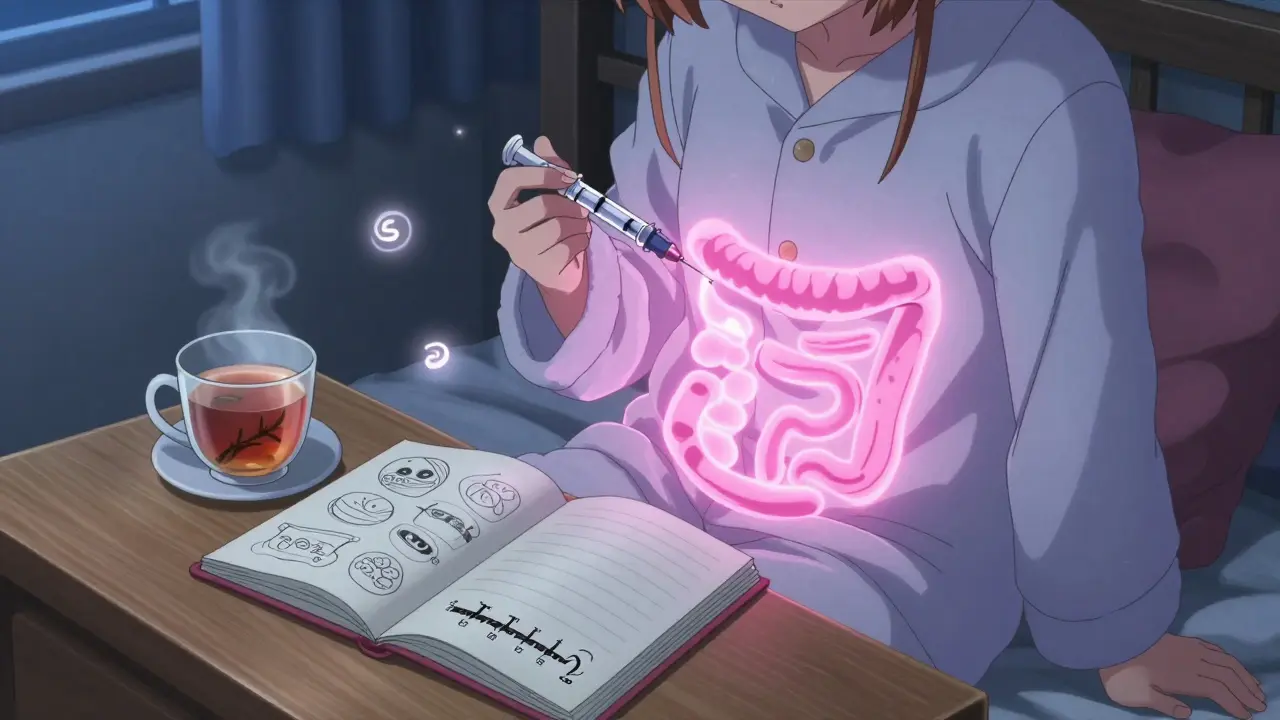
When You Need Medicine for Nausea
If diet and timing don’t cut it, talk to your doctor about anti-nausea meds. But don’t just grab something over the counter. Domperidone is the top choice among experts. It helps your stomach move food along faster without the brain-side effects that metoclopramide can cause. Dose: 10 to 20 mg, taken 3 to 4 times a day, 30 minutes before meals. It’s not FDA-approved in the U.S. for this use, but many doctors prescribe it off-label because it’s safer for long-term use than other options. Ondansetron (Zofran) is another option, especially for sudden flare-ups. The 4 mg orally disintegrating tablet works in 15 to 20 minutes and helps 76% of patients in clinical reports. It’s good for occasional use, not daily. Important: If you’re taking anti-nausea meds for more than a month after reaching your final GLP-1 dose, it’s time to talk about lowering your GLP-1 dose. Long-term nausea isn’t normal - it’s a sign your body isn’t adapting.Track Your Food, Feelings, and Timing
Keep a simple journal for two weeks. Write down:- What you ate (and how much)
- When you ate it
- What you drank and when
- Your nausea level (1 = fine, 10 = vomit-worthy)
- Any other symptoms (bloating, dizziness, vomiting)
Take Your Shot at Night
If you get morning nausea, try injecting your GLP-1 medication at bedtime instead of in the morning. Sleep helps your body ignore discomfort. One study found that 63% of people who switched to nighttime injections reported less morning nausea. It’s a simple change - but it works.
Red Flags: When to Call Your Doctor
Most nausea fades. But some signs mean something more serious:- Vomiting more than 3 times in 24 hours
- Can’t keep fluids down for 12+ hours
- Lost more than 5% of your body weight in one week
- Nausea lasts longer than 8 weeks without improvement
Carolyn Rose Meszaros
OMG YES. I was on Wegovy and thought I was gonna puke every morning 😭 Switched to nighttime injections and ginger chews? Life changed. Now I’m 4 months in and actually excited to see my scale. 🙌
Greg Robertson
This is actually really helpful. I was about to quit because I thought it was just me being weak, but the part about slow titration makes total sense. I’m gonna ask my doc to extend my dose intervals. Thanks for laying it out so clearly.
thomas wall
I find it profoundly concerning that pharmaceutical companies are now marketing nausea as a "feature" to be managed rather than a signal that the drug may be too aggressive for human physiology. We have normalized chemical suppression of natural bodily signals. This is not health. This is corporate pharmacology dressed as wellness.
Paul Barnes
Minor correction: it's 'gastroparesis,' not 'gastro-paresis.' Also, 'domperidone' isn't FDA-approved for this use, but that's not the same as saying it's illegal. You're conflating regulatory status with medical validity. Just saying.
kumar kc
Ginger works. No debate.
Thomas Varner
I tried the acupressure bands... honestly? I thought they were a scam... until I wore them during lunch and the nausea just... faded? Like, within 12 minutes? I didn’t even realize it was gone until I reached for my fork and didn’t feel like throwing up. Weird? Yes. Effective? Also yes. I’m now wearing them to meetings. My coworkers think I’m into energy healing. I don’t correct them.
clifford hoang
Let’s be real - GLP-1s are just the latest Big Pharma psyop. They know people want to lose weight fast, so they create a drug that makes you sick, then sell you ginger chews, wristbands, and dietitians to "manage" the side effects they engineered. Meanwhile, real nutrition? Exercise? Sleep? Nah. That’s too expensive. They’d rather sell you a $1000/month pill and a $20 band. Wake up. This isn’t medicine - it’s a monetized misery loop. 🤡
Arlene Mathison
YOU CAN DO THIS. I was on Ozempic for 3 months and thought I’d never make it past week 2. Then I started eating 5 tiny meals a day - like, seriously, half a banana + 2 eggs at 9am, then a handful of almonds at 11am. No more giant dinners. No coffee with food. And guess what? I didn’t just survive - I thrived. I lost 28 lbs. I feel stronger than ever. You’re not broken. You’re just adjusting. Keep going. You got this. 💪❤️