
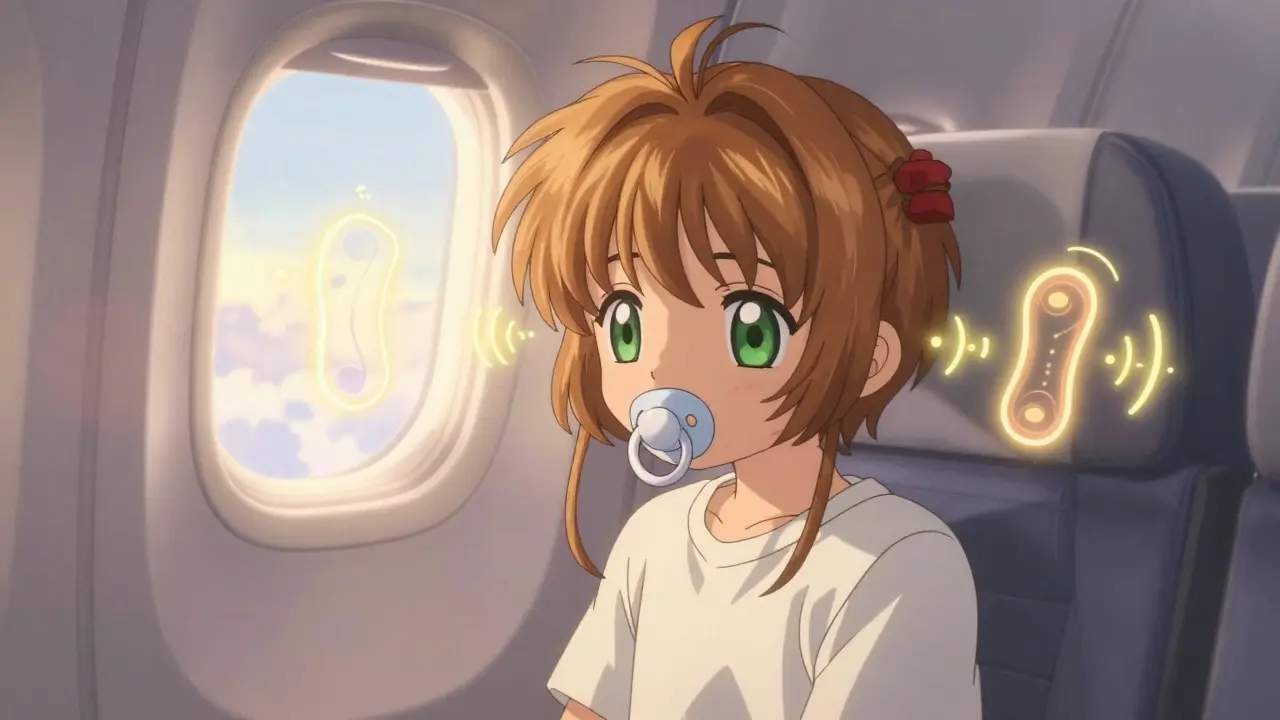
Nothing ruins a flight faster than that sharp, stabbing pain in your ear during takeoff or landing. If you’ve ever felt like your ears are stuffed with cotton, or worse, like someone’s squeezing your eardrums, you’re not alone. This is airplane ear-a common, painful condition caused by pressure imbalance between your middle ear and the cabin. It’s not just annoying; it can lead to temporary hearing loss, dizziness, or even a ruptured eardrum if ignored. The good news? You can prevent it. And you don’t need magic pills or expensive gadgets-just the right timing and a few simple moves.
Why Your Ears Hurt When You Fly
Your ears have a tiny tube called the Eustachian tube that connects the middle ear to the back of your throat. Its job? To balance pressure. When you swallow or yawn, it opens briefly and lets air flow in or out. But during a flight, cabin pressure changes fast-especially on descent. As the plane drops, pressure outside your ear increases faster than your Eustachian tube can adjust. Your eardrum gets pulled inward, causing pain, muffled hearing, and sometimes a popping sound.Children are more vulnerable. Their Eustachian tubes are shorter and more horizontal-just 17-18mm long-making them harder to open. That’s why babies and toddlers often cry during landing. Adults with colds, allergies, or sinus congestion are at higher risk too. When nasal passages swell, the tube gets blocked. Studies show up to 34% of people with seasonal allergies experience severe ear pain during flights.
The Best Equalization Techniques (And Which Ones to Avoid)
Not all methods are created equal. Some work great. Others can actually hurt you.Swallowing and yawning are the safest, most natural options. Do them often during descent-every few minutes. Chewing gum helps. Sipping water works too. This simple habit alone helps 65% of people avoid pain.
The Toynbee maneuver is next in line. Pinch your nose shut and swallow. This pulls air into the middle ear without forcing it. It’s safer than blowing and works well for kids. Success rate? Around 68%.
The Valsalva maneuver-pinching your nose and gently blowing-is the most popular. But here’s the catch: blow too hard, and you risk damage. Doctors at Johns Hopkins say 27% of inner ear injuries from flying come from people forcing this move. The key? Gentle pressure. Think: blowing through a straw, not a balloon. Hold for 3-5 seconds. Stop if you feel pain. Success rate: 82%, but only if done right.
The Lowry technique combines both. Pinch your nose, swallow, and blow gently at the same time. It’s the most effective-89% success rate-but hard to master. Most people need to practice it on the ground before trying it mid-flight.
Voluntary Tubal Opening sounds like sci-fi, but it’s real. You tense the muscles at the back of your throat while pushing your jaw forward. It’s 92% effective for trained users. But it takes weeks of daily practice. Not practical for casual flyers.
And here’s what you should never do: sleep during descent. It’s the #1 reason kids get ear pain. You’re not swallowing. You’re not yawning. Your Eustachian tube stays shut. Set an alarm. Wake up 30 minutes before landing.
Earplugs, Sprays, and Pills: Do They Help?
There’s a whole industry built around ear pressure. But not all products deliver.Filtered earplugs like EarPlanes slow pressure changes by 37%. They work by letting air leak through a ceramic filter instead of rushing in all at once. In trials, they helped 76% of users. But if you have chronic Eustachian tube dysfunction, their success drops to 42%. Worth a try-$4.99 a pair is cheap insurance.
Nasal decongestant sprays (like Afrin) shrink swollen tissue in minutes. They’re 85% effective when used 30-60 minutes before descent. But they’re not for everyone. If you’re over 40 or have high blood pressure, they can raise your heart rate. The FDA warns about cardiovascular risks in 12% of adults.
Oral decongestants like Sudafed (pseudoephedrine) last longer-8-12 hours. Same risks. Avoid if you have heart issues. And never give them to kids under 6. There are rare but documented cases of fast heartbeat in young children.
Nasal steroid sprays (like Flonase) are newer. They don’t shrink tissue fast, but they reduce inflammation over days. University of Pennsylvania research shows using them for 3-5 days before flying improves equalization success by 33%. Great for frequent flyers with allergies.
The Otovent device is a nasal balloon you inflate with your nose. It’s FDA-approved and works by gently popping open the Eustachian tube. Clinical trials show 88% effectiveness. It’s safe for kids and adults. Available over the counter.

Special Tips for Kids and Babies
Babies don’t swallow on command. So you need to help them.Feed during descent. Bottle-feeding is 43% more effective than sipping from a cup because the sucking motion triggers stronger, more consistent swallowing. Breastfeeding works too. Even a pacifier helps.
Wiggle the jaw. Gently move your child’s jaw side to side while they’re swallowing. Studies show this boosts success rates by 22%.
Don’t wait for crying. If your baby is already screaming, it’s too late. Start feeding or offering the pacifier as soon as the plane begins its descent. Set a timer for 30 minutes before landing.
When to See a Doctor
Most cases of airplane ear go away in hours. But if you still have pain, muffled hearing, ringing, or dizziness after 24-48 hours, see an ENT specialist. Chronic Eustachian tube dysfunction is treatable. New procedures like balloon dilation-where a tiny balloon is inflated in the tube to widen it-have a 76% long-term success rate. Stents are also in trials and show 92% effectiveness in early results.If you fly often and always have ear pain, you’re not just unlucky. You likely have an underlying issue. Don’t ignore it. A simple office exam can reveal if your tubes are blocked or weak.

What Airlines Are Doing to Help
You’re not just fighting biology-you’re fighting aircraft design. Older planes keep cabin pressure at 8,000 feet altitude. Newer ones like the Boeing 787 maintain 6,000 feet. That’s a 25% lower pressure drop. Delta Airlines now uses a gentler 3-degree descent angle instead of 3.5 degrees. That reduces pressure change by 14%.All major U.S. airlines now train crew to recognize ear pain and advise passengers. The FAA requires it. And in 2025, new aircraft will be required to keep cabin altitude below 6,500 feet during descent. That’s a big win for anyone with ear problems.
Pre-Flight Prep That Actually Works
Don’t wait until you’re in the air. Start preparing days ahead.- Use a nasal steroid spray (Flonase) daily for 3-5 days before flying.
- Drink extra water. Dehydration thickens mucus and blocks tubes.
- Do daily swallowing exercises: swallow 10 times every hour for 10 minutes before bed. One study showed this cut ear pain by 57%.
- Take a decongestant only if you’re congested-and only 30-60 minutes before landing.
- Carry EarPlanes or Otovent if you’re prone to pain.
- Set a phone alarm for 30 minutes before landing. Don’t rely on your memory.
Remember: pain means you’re too late. Equalization isn’t a reaction-it’s a routine. Do it before you feel anything. Swallow every few minutes on descent. Keep your jaw moving. Stay hydrated. And if you’ve got kids, feed them. That’s the real secret.
Can airplane ear cause permanent hearing loss?
In rare cases, yes-if pressure buildup is extreme and left untreated. Tympanic membrane perforation (a ruptured eardrum) happens in about 0.02% of flights, according to Divers Alert Network data. Most people recover fully, but if pain, ringing, or hearing loss lasts more than two days, see an ENT. Permanent damage is uncommon but possible without proper care.
Is it safe to fly with a cold or sinus infection?
It’s risky. Swollen nasal passages block the Eustachian tube, making equalization nearly impossible. Studies show 34% of people with active allergies or colds experience severe ear pain. If you’re congested, use a nasal steroid spray for 3-5 days before flying. Avoid decongestant sprays if you’re over 40 or have heart issues. If you’re coughing, feverish, or feeling very unwell, consider rescheduling.
Do earplugs really work for airplane ear?
Yes-but not for everyone. Filtered earplugs like EarPlanes slow pressure changes by 37%, giving your ears more time to adjust. They help 76% of users. But if you have chronic Eustachian tube dysfunction, their effectiveness drops to 42%. They’re best used with other techniques, like swallowing or jaw movement. They’re not a cure, but a helpful tool.
Why does my ear pop on takeoff but not landing?
On takeoff, cabin pressure drops, so air inside your ear pushes outward. Your Eustachian tube opens easily to release it-that’s the pop. On landing, pressure increases outside, pulling your eardrum inward. Your tube has to open against pressure, which is harder. That’s why most people feel pain during descent, not ascent. That’s why you need to be proactive before landing.
Can children use decongestants before flying?
No. The FDA and American Academy of Pediatrics warn against using oral or nasal decongestants in children under 6. There are documented cases of rapid heartbeat and seizures in young kids. Instead, use feeding, pacifiers, or Otovent. For older kids, consult a pediatrician before using any medication.
What’s the fastest way to equalize ear pressure mid-flight?
The fastest reliable method is the Lowry technique: pinch your nose, swallow, and blow gently at the same time. But it’s hard to do correctly. For most people, the safest and quickest is just swallowing repeatedly-chewing gum, sipping water, or yawning. Do it every 300-500 feet of descent. Start early, don’t wait for pain.
Are there long-term treatments for chronic ear pressure problems?
Yes. For people who fly often and always have ear pain, balloon dilation is now a proven option. A tiny balloon is inserted into the Eustachian tube and inflated to widen it. It’s done in a doctor’s office under local anesthesia. Success rates are 76% after one year. Stents are in late-stage trials and show 92% effectiveness. These aren’t quick fixes, but they’re life-changing for chronic sufferers.
Kayleigh Campbell
Man, I used to think airplane ear was just part of flying until I tried chewing gum on descent and it was like my ears suddenly remembered how to work. No more pain, no more panic. Just me, my sour patch kids, and a peaceful descent. Why didn’t anyone tell me this sooner?
Billy Poling
While the article presents a comprehensive overview of Eustachian tube physiology and pressure equalization techniques, it is noteworthy that the clinical efficacy of many of the recommended maneuvers has not been subjected to rigorous, double-blind, placebo-controlled trials. The statistical claims-such as the 92% success rate of voluntary tubal opening-are largely derived from self-reported data or small cohort studies, which introduces significant selection bias. Furthermore, the omission of any discussion regarding the role of cranial fascial tension or cervical spine alignment in Eustachian tube patency represents a critical gap in the biomechanical analysis. A truly holistic approach would integrate osteopathic principles with otological science.
Josias Ariel Mahlangu
People these days treat their ears like they’re disposable. You don’t need gadgets or tricks. Just don’t fly when you’re sick. Simple. But no-everyone wants a quick fix instead of taking responsibility for their own health.
Joanna Ebizie
Wow. So basically, if you’re not a medical nerd who does swallowing exercises before bed, you’re just asking for a ruptured eardrum? Cool. I’ll just keep sleeping through landings and hoping for the best. Thanks for the guilt trip.
Elizabeth Bauman
Did you know that the FAA’s new 6,500-foot cabin pressure rule is a direct result of American innovation? Other countries still let their planes drop like rocks. We’re not just leading in tech-we’re leading in ear health. If you’re flying on a foreign airline and your ears hurt, that’s on them. Not us. We built this.
Ron Williams
My grandma used to chew gum on flights. She never talked about Eustachian tubes or pressure differentials. She just said, ‘Swallow like you mean it, honey.’ Turns out, she was right. Sometimes the oldest advice is the smartest. No gadgets needed.
Aditya Kumar
Too much info. I just want to know if I should bring earplugs or not.
Souhardya Paul
That Lowry technique sounds like a workout for your face. I tried it once on a flight and ended up looking like I was trying to sneeze through a sock. But hey, it worked. Still, I think the real MVP here is just staying hydrated. My ears don’t care about maneuvers-they care if I’ve drunk water since breakfast.
anthony epps
So… if I’m not sick and I chew gum, I’m good? No other stuff needed?
Dan Padgett
You know, this whole thing about ears and pressure… it’s kinda like life. Sometimes you gotta let the air out slow, or you blow your whole damn lid. We rush, we fight, we force. But the quiet swallow? That’s the peace. That’s the wisdom. Just breathe, swallow, and let the world adjust around you.
Hadi Santoso
Wait so the Otovent thing is like a nose balloon? That sounds like something my kid would play with and then cry when it pops. But… i tried it last flight and it actually worked. weird. also, i spelled ‘Eustachian’ wrong twice. sorry.
Andrew Sychev
They don’t want you to know this, but airlines know that ear pain keeps people from complaining about cramped seats. That’s why they don’t fix the cabin pressure. They profit from your suffering. They’ve been doing this since the 70s. The ‘new’ 6,500-foot rule? A PR stunt. The real solution is grounding all planes until they fix the root cause-corporate greed.