

For people with severe asthma, oral corticosteroids (OCS) have long been the go-to rescue when breathing gets dangerous. But for many, these pills have become a constant shadow - effective, yes, but at a cost that wears down the body over time. It’s not just about side effects. It’s about survival. Patients describe them as a "necessary evil," a safety net they can’t afford to lose - even as their bones thin, their blood sugar spikes, and their energy vanishes. The truth is, we’ve been relying on a tool from the 1950s to manage a 21st-century disease. And it’s time for a change.
The Hidden Cost of Oral Corticosteroids
Most people assume oral steroids are cheap and harmless because they’re so common. But the real price isn’t on the pharmacy receipt. It’s in the years of damage they cause. A 2025 study in Frontiers in Allergy found that 93% of severe asthma patients on long-term or frequent short courses of OCS developed serious complications. Weight gain, diabetes, osteoporosis, depression, glaucoma, heart problems - these aren’t rare side effects. They’re expected outcomes.
Even short bursts of OCS - like a 5-day course during an asthma flare - can trigger blood sugar spikes, mood swings, and sleep disruption. For someone already struggling with asthma, that’s one more thing to manage. And the damage adds up. Long-term use raises the risk of death. In Italy, the annual cost of treating OCS-related complications in asthma patients was nearly double that of non-asthma patients - about €1,960 per person. That’s not just a medical cost. It’s lost workdays, emergency visits, and hospital stays that could have been avoided.
The irony? OCS were never meant to be daily medicine. The Global Initiative for Asthma (GINA) guidelines say they should only be used short-term during flare-ups - 3 to 5 days for kids, 5 to 7 for adults. Maintenance use? Only as a last resort, at doses under 7.5 mg per day. But in real-world practice, many patients are stuck on them for months or years because their asthma isn’t controlled any other way.
Why OCS Dependence Isn’t Just About Medication
When a patient needs OCS regularly, it’s not because they’re not taking their inhalers. It’s because their asthma is fundamentally out of control. Chronic OCS use is a red flag - a sign that the underlying inflammation isn’t being managed. But instead of asking why, many doctors keep prescribing more pills. It’s easier than changing the whole treatment plan.
And that’s where the cycle begins. OCS suppress inflammation temporarily, so symptoms improve. But they don’t fix the root cause. So when the dose is lowered, the asthma roars back. The patient needs another course. And another. Soon, they’re dependent - defined clinically as using OCS for six months or longer. At that point, stopping becomes risky. The body forgets how to make its own cortisol. Withdrawal can cause fatigue, nausea, even life-threatening crashes.
This isn’t laziness on the patient’s part. It’s a system failure. We’ve trained doctors to treat symptoms, not causes. And we’ve made it hard to access better tools.
Biologics: The Real Game-Changer
There are six FDA-approved biologic drugs for severe asthma: omalizumab, mepolizumab, reslizumab, benralizumab, dupilumab, and tezepelumab. These aren’t pills. They’re injections - given weekly, every other week, or monthly - that target specific parts of the immune system driving inflammation in asthma.
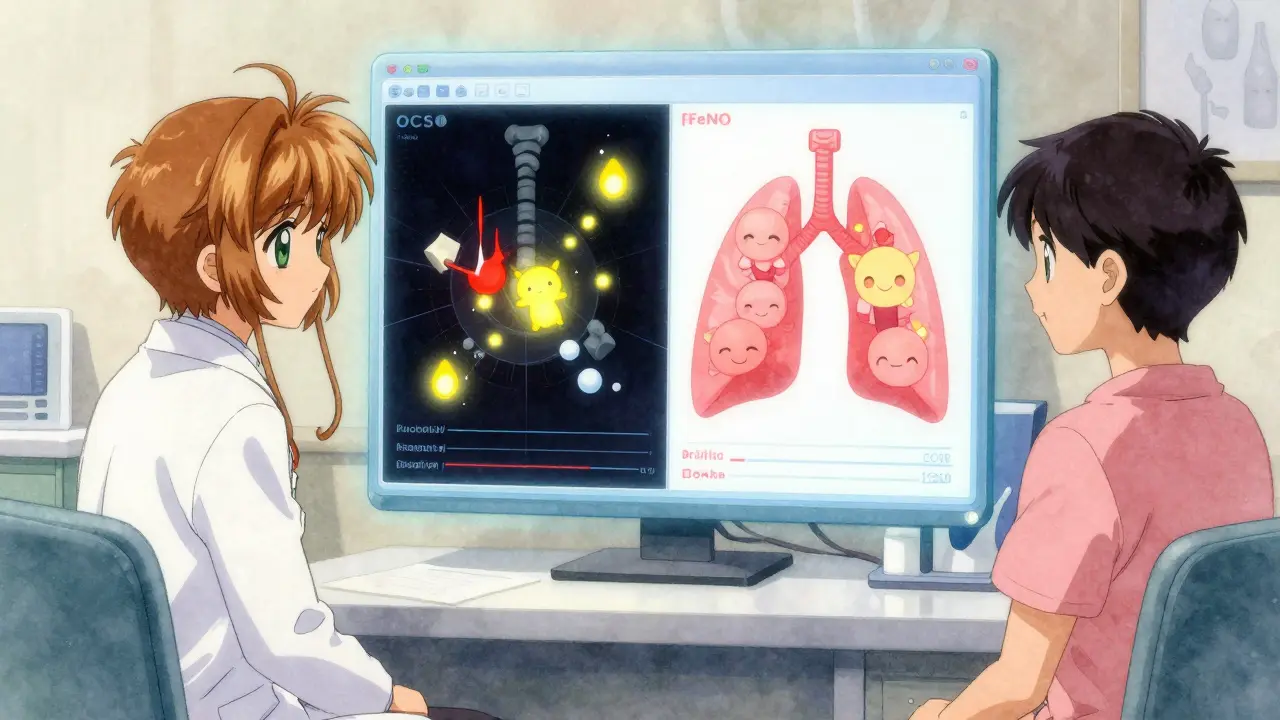
They work for about half to two-thirds of severe asthma patients - those with type 2 inflammation. That’s measured by blood eosinophils, FeNO levels, or IgE. Once identified, these patients respond dramatically. In one Italian study of 106 adults with uncontrolled asthma, mepolizumab cut OCS dependence from 79% to 31% in just over a year. Daily steroid doses dropped by nearly 5 mg. Exacerbations fell from 4.1 per year to 0.8. Hospitalizations dropped to almost zero.
Dupilumab showed similar results. The American Academy of Family Physicians confirmed it reduces both flare-ups and steroid use in patients who were previously dependent. These aren’t minor improvements. They’re life-changing. Patients report better sleep, more energy, fewer ER visits, and the ability to return to work or play with their kids.
Yes, biologics cost more upfront than a bottle of prednisone. But when you add up the hospital bills, the diabetes care, the bone density scans, the mental health support - the math flips. Biologics pay for themselves in savings and quality of life.
Why Aren’t More People Using Them?
Access is the biggest barrier. Insurance companies often require months of failed OCS use before approving a biologic. Some require multiple specialist visits, blood tests, and prior authorizations. In some states, patients wait six months or more to get started.
There’s also confusion among doctors. Not every provider knows how to test for type 2 inflammation. Some still think biologics are only for the "worst-case" patients. Others worry about side effects - though serious reactions are rare. The most common? Injection site reactions and mild headaches.
And then there’s cost. Even with insurance, copays can hit $1,000 a month. But here’s the twist: in June 2024, three major inhaler manufacturers capped out-of-pocket costs at $35 per month for inhalers - a huge win. But that cap doesn’t apply to biologics. And it doesn’t help people on Medicaid or Medicare. That gap is still wide.
Other Alternatives - What Works and What Doesn’t
Some patients ask about bronchial thermoplasty - a procedure where heat is applied to airway muscles to reduce tightening. It can help reduce flare-ups in very severe cases. But it’s invasive. You need a bronchoscope. And in the six weeks after, asthma symptoms often get worse before they get better. It’s not for everyone. Only considered after all other options fail.
Vitamin D? It sounds logical - low levels are common in asthma patients. But multiple studies, including one reviewed by the AAFP in 2021, found high-dose vitamin D supplements don’t prevent exacerbations or improve lung function. It doesn’t replace steroids. It doesn’t even help much as an add-on.
Other supplements - omega-3, magnesium, quercetin - have tiny, inconsistent studies. None are proven enough to recommend as alternatives. The only thing with solid, repeatable evidence? Biologics.

How to Start the Transition
If you’re on OCS and want to reduce or stop, here’s how to begin:
- Ask your doctor for a type 2 inflammation test - blood eosinophils, FeNO, or IgE. This tells you if you’re a candidate for biologics.
- Get a full review of your current asthma control. Are you using your inhaler correctly? Are you avoiding triggers? Sometimes better technique alone can reduce OCS needs.
- If you qualify, ask about starting a biologic. Don’t wait until you’re hospitalized. Early action prevents long-term damage.
- Work with your provider on a steroid taper plan. Never stop cold turkey. A slow, monitored reduction over weeks or months is safest.
- Track your symptoms, peak flows, and rescue inhaler use. This helps your team know if the biologic is working.
Some patients reduce OCS by 25% every 4 to 6 weeks. Others go slower. It depends on how long they’ve been on steroids and how stable their asthma is. The goal isn’t just to stop pills - it’s to keep breathing well without them.
The Future Is Here - But We Need to Use It
The science is clear. Biologics save lives. They reduce hospitalizations. They restore normal life. And they cut long-term costs. Yet, only a fraction of eligible patients are getting them.
It’s not because they don’t work. It’s because the system is slow to change. Doctors need better training. Insurance needs better policies. Patients need better access.
If you or someone you know is stuck on oral steroids for asthma, ask for help. Ask for testing. Ask for alternatives. You don’t have to live with the side effects. There’s a better way - and it’s already available.
Can you stop oral corticosteroids cold turkey if you’ve been on them for years?
No. Stopping oral corticosteroids suddenly after long-term use can cause adrenal insufficiency - a dangerous drop in cortisol that leads to fatigue, low blood pressure, nausea, and even shock. Always taper under medical supervision. A slow, personalized plan over weeks or months is required to let your body restart natural cortisol production safely.
Are biologics covered by insurance for severe asthma?
Many insurers cover biologics for severe asthma, but they often require prior authorization and proof of failure with other treatments - including OCS. Some require specific biomarker tests (like blood eosinophils) to confirm eligibility. Coverage varies by plan and state. Patient assistance programs from drug manufacturers can reduce out-of-pocket costs to $0 for qualifying individuals.
How do you know if you have type 2 inflammation?
Your doctor can test for it with a simple blood test for eosinophils, a breath test for FeNO (fractional exhaled nitric oxide), or a blood test for IgE. High levels in any of these suggest type 2 inflammation - the kind biologics target. About 50-70% of severe asthma patients have this subtype. Testing is quick, non-invasive, and essential before starting biologic therapy.
Do biologics cure asthma?
No. Biologics don’t cure asthma. But they can turn severe, life-disrupting asthma into a manageable condition. Many patients reduce or eliminate daily oral steroids, have fewer flare-ups, and avoid hospital visits. For some, it means finally being able to exercise, sleep through the night, or go back to work. It’s not a cure - but it’s the closest thing we have.
How long does it take for biologics to start working?
Most patients notice improvements in symptoms and reduced flare-ups within 3 to 6 months. Some feel better sooner - within weeks - especially with dupilumab or benralizumab. But the full benefit, including steroid reduction, often takes 6 to 12 months. Patience and consistency are key. Don’t stop treatment if you don’t see instant results.
Is bronchial thermoplasty a good alternative to oral steroids?
It’s an option for a small group - patients with severe, persistent asthma who’ve tried all other treatments without success. It reduces flare-ups long-term but worsens symptoms for the first 6 weeks after the procedure. It’s invasive, requires multiple bronchoscopies, and isn’t recommended for most. Biologics are safer, easier, and more effective for the vast majority of patients.
Manoj Kumar Billigunta
For years I watched my brother struggle with asthma and prednisone. The weight gain, the mood swings, the constant fatigue - it wasn’t just health, it was his identity slipping away. When he finally got on mepolizumab, it wasn’t magic. It was freedom. He started walking again. Played with his kids without gasping. That’s the real win. Not the cost. Not the bureaucracy. The ability to breathe without paying with your body.
Andy Thompson
Biologics? More like Big Pharma’s latest scam. 🤡 They’ve been pushing these expensive shots for years while hiding the real cause - air pollution from China and EV batteries. The government lets them charge $10K a dose because they know you’re desperate. Meanwhile, your local pharmacy sells $5 prednisone. Who’s really profiting here? Not you.
sagar sanadi
Oh wow, so now we’re supposed to believe a bunch of injections are better than a $2 pill? Next they’ll tell us to stop eating bread because gluten is a hoax. If steroids were so bad, why are they still used everywhere? Because they WORK. This whole biologic hype is just rich people’s medicine for people who can’t handle basic life.
kumar kc
Stop blaming doctors. You chose to rely on pills. Now pay the price.
thomas wall
The systemic neglect of severe asthma patients is not merely a clinical failure - it is a moral one. We have allowed a 1950s pharmacological stopgap to become the cornerstone of care for a chronic, life-altering condition. Biologics are not experimental. They are evidence-based, transformative, and yet access remains a privilege rather than a right. This is not healthcare. It is rationing dressed in white coats.
Paul Barnes
There’s a grammatical error in the article. It says "a 5-day course during an asthma flare" - "flare" should be pluralized as "flares" when used generically. Minor, but it undermines credibility. Also, the claim that biologics "pay for themselves" lacks a citation. Without data, it’s just rhetoric.
pragya mishra
I’ve been on OCS for 8 years. I tried to get biologics. My insurance denied me 3 times. My doctor said "just tough it out." I had to go to three different specialists, get 5 blood tests, and wait 11 months. When I finally got approved, I cried. Not because I was happy - because I realized how broken this system is. You don’t get better if you’re too poor to get help.
Renee Stringer
It’s sad how people still think steroids are harmless because they’re cheap. I’ve seen patients lose their jobs, their marriages, their dignity - all because we didn’t act sooner. Biologics aren’t perfect, but they’re the first real step toward treating asthma as a disease, not a nuisance.
Crystal August
Why is no one talking about how insurance companies force patients to fail on steroids first? It’s cruel. They don’t care if you end up in the ER. They care about quarterly profits. This isn’t medicine. It’s a financial audit with a stethoscope.
Courtney Carra
We’re all just trying to survive in a world that treats health like a luxury subscription. Biologics are the future - but only if we stop pretending that capitalism and compassion can coexist in healthcare. The body doesn’t care about your deductible. It just wants to breathe.
Thomas Varner
My cousin’s on dupilumab. She went from 3 ER trips a year to zero. No more sleepless nights. No more panic attacks before storms. She’s back to hiking. It’s not a cure. But it’s the closest thing to a second chance I’ve ever seen. If you’re on OCS and still breathing - ask for the test. Don’t wait until you can’t.