
Imagine a medication where a tiny shift in the dose-something as small as a few milligrams-could be the difference between a patient feeling healthy or ending up in the emergency room. This is the reality of Narrow Therapeutic Index is a classification of drugs where small differences in dose or blood concentration can lead to serious therapeutic failure or adverse drug reactions. Also known as NTI drugs, these medications leave almost no room for error, making the switch from a brand-name drug to a generic version a high-stakes gamble for some pharmacists.
For most medications, switching to a generic is a non-event. But for NTI generics, the margin of safety is razor-thin. While the FDA doesn't keep a single "master list" of these drugs, pharmacists rely on the Orange Book's Therapeutic Equivalence Evaluation Codes. When a drug is flagged with a "B" code, it's a red flag that substitution might be problematic. The core problem isn't that generics are "bad," but that the standard rules for generic approval might be too loose for these specific, sensitive chemicals.
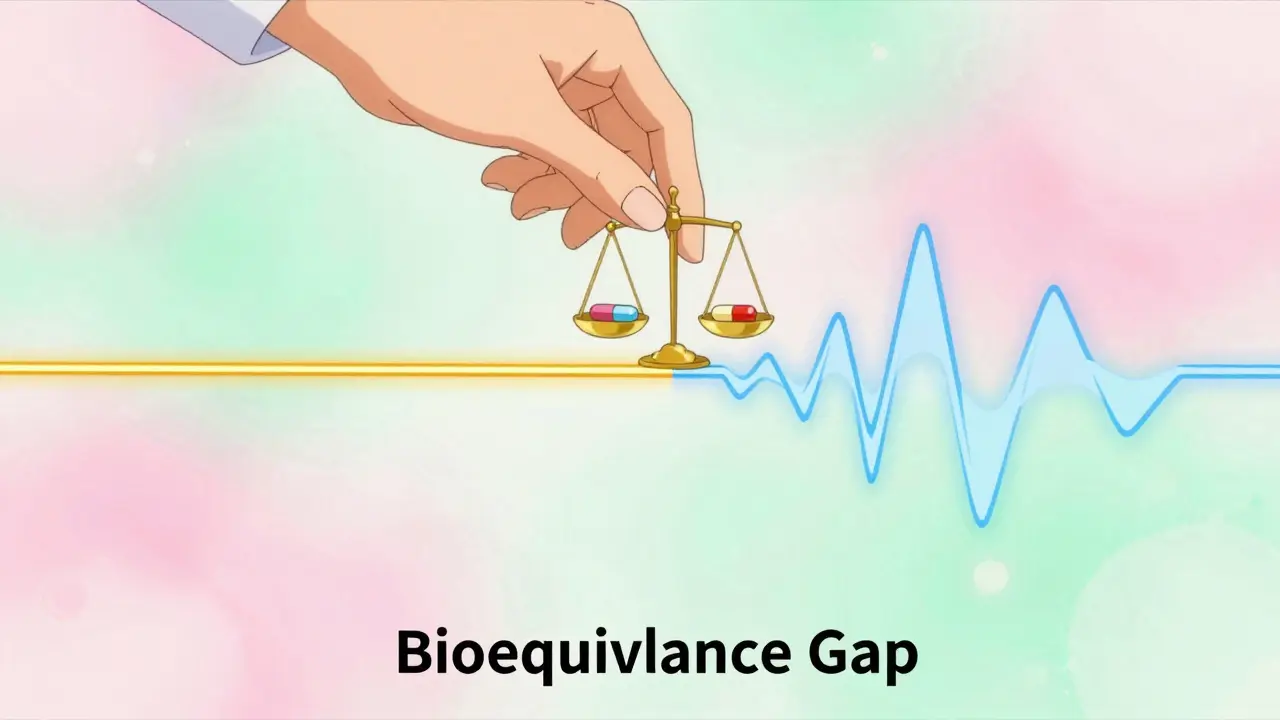
The Bioequivalence Gap: Why 80-125% Isn't Enough
To understand the pharmacist's anxiety, you have to look at the math. For a standard generic drug, the FDA generally accepts a bioequivalence range of 80% to 125% of the brand-name's pharmacokinetic parameters. For most drugs, that variation is clinically invisible. However, for an NTI drug, a 10% difference in how the body absorbs the medication can be the tipping point toward toxicity or treatment failure.
Because of this, the FDA recommends a much tighter window-usually 90% to 111%-for high-risk medications. Levothyroxine, used for hypothyroidism, is a classic example. A slight dip in bioavailability can send a patient back into a hypothyroid state, while a slight increase can cause heart palpitations. Other critical examples include Warfarin (a blood thinner) and Phenytoin (an anti-seizure medication). When these drugs are substituted, pharmacists aren't just changing a label; they are potentially altering the patient's internal chemistry.
| Feature | Standard Generics | NTI Generics |
|---|---|---|
| FDA Bioequivalence Range | 80% - 125% | Typically 90% - 111% |
| Substitution Risk | Low clinical impact | High risk of toxicity/failure |
| Monitoring Needs | Routine check-ups | Therapeutic Drug Monitoring (TDM) |
| Pharmacist Concern Rate | Low (approx. 8% avoid) | High (approx. 34% avoid) |
The "Manufacturer Switch" Nightmare
One of the biggest headaches for community and hospital pharmacists is the "generic-to-generic" switch. This happens when a pharmacy runs out of Generic A (made by Manufacturer X) and fills the prescription with Generic B (made by Manufacturer Y). On paper, both are FDA-approved generics. In reality, they may have slightly different absorption rates.
In a recent 2024 survey by the American Society of Health-System Pharmacists (ASHP), 68% of pharmacists reported concerns about this exact practice. Hospital pharmacists often see the fallout firsthand. For instance, a patient stable on one generic version of warfarin might suddenly experience INR fluctuations-meaning their blood is too thin or too thick-after a manufacturer switch, potentially leading to a hospital readmission. This is why many hospital systems now try to stick to a single source for NTI medications, a practice adopted by about 63% of systems to maintain stability.
The Hidden Burden of Monitoring
Managing NTI drugs requires more than just dispensing pills; it requires Therapeutic Drug Monitoring (TDM), which is the process of measuring drug levels in the blood to adjust dosages. This adds a massive layer of complexity to the pharmacist's job. According to a 2024 study by the American College of Clinical Pharmacy (ACCP), 78% of hospital pharmacists feel they need specialized training beyond their basic degree to handle this safely.
Pharmacists must stay alert for "red flags" during the transition. If a patient on an NTI generic starts reporting new side effects or their symptoms return, the pharmacist has to determine if the dose is wrong or if the generic formulation itself is the culprit. This level of vigilance is exhausting and increases the risk of professional burnout, especially when supply chain issues force frequent switches between different generic brands.

Supply Chain Fragility and Market Reality
It's a strange paradox: NTI drugs make up only about 6% of all generic prescriptions, yet they represent 22% of all pharmacist substitution concerns. They are small in volume but massive in impact. This impact is magnified by supply chain vulnerabilities. A significant portion of these drugs are finished in foreign countries, making the U.S. market susceptible to international disruptions.
The FDA reported that in 2024, nearly 17% of all drug shortages involved NTI medications. When a shortage hits, pharmacists are forced to switch patients to whatever is available, even if it means moving away from a trusted manufacturer. This "forced switching" exacerbates the instability and increases the likelihood of adverse events. Data from the FDA Adverse Event Reporting System (FAERS) between 2020 and 2024 showed over 1,200 adverse events linked specifically to NTI generic substitutions-far higher than the rate for non-NTI drugs.
Looking Ahead: Stricter Standards and Stewardship
There is some light at the end of the tunnel. The FDA announced a new bioequivalence framework in April 2025 that aims to implement even stricter standards for 12 high-priority NTI drugs by 2026. Pharmacists are cautiously optimistic, as this could reduce the variability between different generic versions.
We are also seeing a shift toward "pharmacist-led stewardship." Instead of just being the person who fills the bottle, pharmacists are becoming the primary gatekeepers of NTI stability. By 2027, nearly 74% of healthcare systems plan to implement formal NTI drug stewardship programs. This means pharmacists will have more authority to block automatic substitutions and work directly with doctors to ensure a patient stays on one specific manufacturer's product for the duration of their treatment.
What exactly is a Narrow Therapeutic Index (NTI) drug?
An NTI drug is a medication where the difference between a dose that works and a dose that is toxic is very small. Because of this narrow window, even a slight change in how the drug is absorbed or a small difference in dosage can lead to serious health complications or treatment failure.
Why are some pharmacists against automatic generic substitution for NTI drugs?
Pharmacists worry that different generic manufacturers may have slight variations in bioavailability. While these differences are within FDA limits, they can be clinically significant for NTI drugs, causing a patient's condition to destabilize when they switch from one generic brand to another.
Which drugs are commonly considered NTI?
Common examples include Warfarin (blood thinner), Levothyroxine (thyroid hormone), and Phenytoin (anti-seizure). These drugs often require blood tests to ensure the levels remain in a safe and effective range.
How can a patient tell if they are taking an NTI generic?
Patients can check the FDA Orange Book or ask their pharmacist. If the medication requires frequent blood monitoring (Therapeutic Drug Monitoring), it is likely an NTI drug. Patients should also note the manufacturer on their bottle to see if it changes between refills.
Does the FDA have an official list of NTI drugs?
The FDA does not maintain a single, official "NTI list." Instead, they provide guidance documents and use the Therapeutic Equivalence (TE) codes in the Orange Book to indicate which drugs may have narrower bioequivalence requirements.