

More than two in three pregnant people experience nausea and vomiting during early pregnancy. It’s not just unpleasant-it can make it hard to eat, sleep, or even get out of bed. For about 1 in 10, symptoms are severe enough to require medical help. The good news? You don’t have to suffer through it. There are safe, effective options. But not all medications are created equal. Some carry real, documented risks. Others are backed by decades of safe use. Knowing the difference can make all the difference-to your health, your peace of mind, and your baby’s.
Start with what’s natural: ginger and diet
Before reaching for a pill, try the simplest, safest approach: ginger. The American College of Obstetricians and Gynecologists (ACOG) recommends 250 mg of ginger, taken four times a day. That’s about one capsule or a teaspoon of powdered ginger in tea. Studies show it works as well as vitamin B6 for reducing nausea, and better than placebo. One 2023 meta-analysis found ginger cut nausea risk by nearly 80% compared to no treatment. On Reddit, nearly 8 out of 10 pregnant people who tried it said it gave them moderate to complete relief. Amazon reviews average 4.3 out of 5 stars. The main complaint? The taste. But if you can get past that, it’s one of the cleanest options you have.Diet matters too. Eating small, frequent meals keeps your stomach from getting too empty. Dry crackers before you get out of bed, bland foods like rice or toast, and avoiding strong smells can help. Cold foods often feel easier to tolerate than hot ones. Stay hydrated with sips of water, herbal teas, or electrolyte drinks. If you can’t keep anything down, dehydration becomes a risk-and that’s when you need to call your provider.
First-line meds: Pyridoxine and doxylamine
If ginger and diet don’t cut it, the next step is pyridoxine (vitamin B6) and doxylamine. Together, they form the basis of Diclegis, the only FDA-approved medication specifically for pregnancy nausea. Diclegis is a delayed-release pill that combines 10 mg of doxylamine and 10 mg of pyridoxine. But you don’t need the brand name. You can buy them separately: 25 mg of pyridoxine three times a day, and 25 mg of doxylamine at bedtime.Why this combo? Because it works-and it’s safe. No evidence links these doses to birth defects. The American Academy of Family Physicians (AAFP) gives it Level A evidence-the highest level-for effectiveness. In studies, it reduced nausea and vomiting by 70% compared to placebo. About 84% of users report good control of symptoms. The downside? Drowsiness. About two-thirds of people feel sleepy, especially with doxylamine. That’s why taking it at night makes sense. You’re not just treating nausea-you’re helping yourself sleep.
Some women find that taking the pyridoxine alone helps with vomiting, while ginger works better for the nausea feeling. That’s normal. Everyone’s body reacts differently. The key is starting early. Waiting until you’re vomiting constantly makes treatment harder. ACOG says: treat early, treat often.
Antihistamines: Meclizine, dimenhydrinate, diphenhydramine
If the first-line combo isn’t enough, antihistamines are the next go-to. These are the same drugs used for motion sickness and allergies. Meclizine (Antivert), dimenhydrinate (Dramamine), and diphenhydramine (Benadryl) are all considered safe in pregnancy. Dosing is typically 25-50 mg every 4-6 hours as needed. They’re cheap, easy to find, and effective. Studies from 2003 still hold up: they outperform placebo.Meclizine is often preferred because it causes less drowsiness than diphenhydramine. But if you’re already tired from nausea, a little extra sleepiness might not be a bad trade-off. Dimenhydrinate can be harsh on the stomach for some, so it’s less commonly used. Benadryl is fine short-term but can cause constipation and dry mouth. All of them have been studied in thousands of pregnancies. No pattern of birth defects has emerged.
One thing to watch: if you’re already taking prenatal vitamins with iron, antihistamines can make constipation worse. Talk to your provider about switching to an iron-free prenatal in the first trimester if this becomes a problem.

Ondansetron (Zofran): Effective-but risky
Ondansetron is powerful. It’s the drug hospitals use for severe nausea after chemo. Many OBs prescribe it off-label for women who can’t keep anything down. It works fast. On Drugs.com, 84% of users say it controls nausea. But here’s the catch: it’s not safe for everyone.A 2012 NIH study of over 4,500 pregnancies found a 2.37-fold increase in cerebral palsy risk among babies exposed to ondansetron in the first trimester. That’s not a small risk. It’s not a theory. It’s a statistical signal that can’t be ignored. Other studies have linked it to heart defects and a higher chance of cleft palate. The FDA hasn’t pulled it, but it’s now classified as Pregnancy Category B-meaning animal studies showed risk, and human data is limited.
Side effects are common too. Headaches (42%), dizziness (37%), and constipation (29%) were reported by over a third of users in a review of 1,500+ cases. One woman wrote: “It stopped the vomiting, but I couldn’t walk straight for three days.”
Because of this, experts now recommend ondansetron only if other options fail. It’s not a first- or even second-line drug anymore. It’s a third-line option-for severe hyperemesis gravidarum, when you’re losing weight, dehydrated, and hospitalized. Even then, use the lowest dose for the shortest time possible.
What about PPIs, steroids, and other options?
Some women are told to take proton pump inhibitors (PPIs) like omeprazole for nausea. But that’s not what they’re for. PPIs treat heartburn, not vomiting. If your nausea is tied to acid reflux, they might help. But if it’s true pregnancy nausea, they won’t fix it. And here’s the real concern: one study found a 4.36-fold increase in hypospadias-a birth defect affecting the urethra-in babies exposed to PPIs in the first trimester.Corticosteroids like prednisone can stop nausea in stubborn cases. But they come with a 3.4-fold higher risk of cleft lip or palate. That’s too high to justify use unless you’re in the hospital and nothing else works.
Metoclopramide (Reglan) and phenothiazines like promethazine are sometimes used. They’re older drugs with decent safety records, but they can cause drowsiness, muscle spasms, and movement disorders. They’re not first choices anymore, but they’re still in the toolkit for specialists managing severe cases.
Antacids with calcium carbonate (like Tums) are safe and even helpful. One study showed they were linked to a lower risk of cleft lip/palate. If you’re having mild nausea with heartburn, reach for Tums. It’s not a cure, but it’s a gentle, safe way to feel better.
What about acupressure, wristbands, or acupuncture?
You’ve probably seen those wristbands that press on a point on your inner wrist. They’re marketed as a cure for morning sickness. But the science says otherwise. A 2023 meta-analysis found they worked no better than placebo. On BabyCenter forums, 41% of users said they felt no benefit. That’s not to say they hurt-but don’t expect miracles. Acupuncture has mixed results. Some small studies show promise, but nothing large or consistent enough to recommend as a standalone treatment.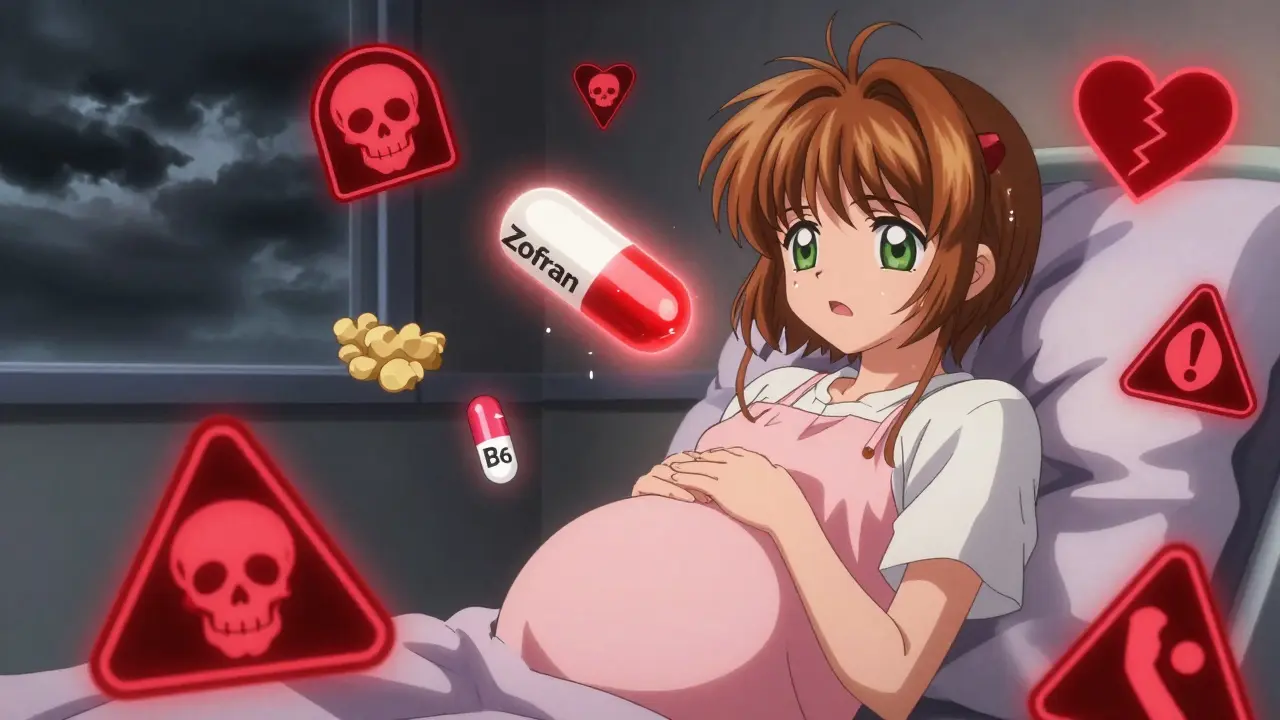
How to choose the right option for you
Here’s a simple decision path:- Try ginger (250 mg four times daily) and dietary changes.
- If that doesn’t help, add pyridoxine (25 mg three times daily).
- If you still struggle, add doxylamine (25 mg at bedtime).
- If symptoms persist, try an antihistamine like meclizine.
- Only if you’re hospitalized or losing weight, consider ondansetron-under close supervision.
Don’t wait until you’re vomiting bile. Start early. Talk to your OB or midwife. Ask for the ACOG guidelines. Most providers follow them. In fact, 92% recommend ginger, and 84% start B6 before symptoms get bad.
What’s changing in 2025?
The FDA is working on new guidance for antiemetics in pregnancy, expected in late 2025. ACOG is updating its 2018 guidelines to reflect new data on ondansetron and PPIs. The message will be clearer: avoid ondansetron unless absolutely necessary. Ginger and pyridoxine/doxylamine remain the gold standard.Meanwhile, the market is shifting. The U.S. spends $285 million a year on prescription nausea meds for pregnancy. But ginger supplements alone bring in $142 million. More women are choosing natural options. And providers are catching up.
Bottom line: Safety first, relief second
Nausea in pregnancy isn’t just a nuisance-it’s a medical issue that can affect your health and your baby’s. But you don’t have to suffer. You also don’t have to take risks. The safest, most effective treatments are simple: ginger, vitamin B6, and doxylamine. They’ve been used for decades. They work. They’re safe. The stronger drugs? They come with red flags. Use them only if you have no other choice.Ask your provider: ‘What’s the safest option that will actually help me?’ Don’t let fear of medication keep you from treatment. And don’t let marketing or convenience lead you to something risky. Your body is doing something incredible. Give it the support it needs-with the least amount of risk possible.
Is it safe to take ginger during pregnancy?
Yes, ginger is considered safe during pregnancy. The American College of Obstetricians and Gynecologists (ACOG) recommends 250 mg taken four times daily for nausea. Studies show it reduces nausea symptoms by up to 80% compared to placebo, with no increased risk of birth defects. It’s one of the most well-studied and safest options available.
Can I take Benadryl for morning sickness?
Yes, diphenhydramine (Benadryl) is considered safe in pregnancy for nausea when used at standard doses (25-50 mg every 4-6 hours). It’s been studied in thousands of pregnancies and shows no clear link to birth defects. However, it can cause drowsiness and constipation. It’s often used as a second-line option after pyridoxine and doxylamine.
Is Zofran dangerous during pregnancy?
Zofran (ondansetron) is effective for severe nausea but carries potential risks. A major NIH study found a 2.37-fold increased risk of cerebral palsy in babies exposed during the first trimester. It’s also linked to a higher chance of heart defects and cleft palate. While the FDA hasn’t banned it, experts now recommend it only as a last resort for women with hyperemesis gravidarum who haven’t responded to safer options.
What’s the difference between Diclegis and taking B6 and Unisom separately?
Diclegis is a delayed-release pill that combines 10 mg of doxylamine and 10 mg of pyridoxine. Taking vitamin B6 (25 mg) and doxylamine (Unisom, 25 mg) separately is just as effective and often cheaper. The main difference is timing: Diclegis releases the medication slowly over time, which may reduce side effects like drowsiness. But many women do just fine with the generic version taken at the right times-B6 three times daily and doxylamine at bedtime.
Can I take omeprazole (Prilosec) for nausea in pregnancy?
Omeprazole is safe for heartburn, but not for general pregnancy nausea. If your nausea is caused by acid reflux, it may help. But if it’s true morning sickness, it won’t fix it. Worse, one study found a 4.36-fold increase in hypospadias-a rare birth defect-in babies exposed to PPIs in the first trimester. Only use it if you have confirmed reflux, and only after trying antacids like Tums.
When should I call my doctor about morning sickness?
Call your provider if you can’t keep any food or fluids down for more than 24 hours, if you’re losing weight, if your urine is dark or you haven’t urinated in 8 hours, or if you feel dizzy or faint. These are signs of dehydration or hyperemesis gravidarum, which may need IV fluids or stronger treatment. Don’t wait until you’re hospitalized-early help prevents complications.
Nancy Kou
Ginger worked wonders for me at 7 weeks. I was vomiting every 2 hours until I started taking 250mg capsules with food. No drowsiness, no guilt, just relief. I wish I’d known sooner.
Alex Curran
Just want to clarify something I’ve seen repeated here - the 80% reduction in nausea from ginger comes from a 2023 meta-analysis of 12 RCTs with over 1500 participants. The effect size was statistically significant with a 95% CI of 0.18–0.32. It’s not anecdotal. It’s evidence. Also, ginger’s antiemetic properties are linked to 5-HT3 receptor modulation - same mechanism as ondansetron but without the teratogenic risk. That’s why it’s first-line.
pascal pantel
Let’s be real - if you’re not on Zofran and still complaining about morning sickness, you’re just not trying hard enough. The data on cerebral palsy is weak. Small sample sizes, confounding variables, publication bias. Meanwhile, I’ve seen women lose 20 pounds and get admitted to the ICU because they listened to ‘natural remedies.’ That’s not health care, that’s negligence.
William Storrs
Hey, I get it - you’re scared. But you don’t have to suffer. Ginger + B6 + Unisom at night changed my life. I went from crying in the shower to eating toast without gagging. It’s not magic, it’s medicine. And it’s safe. You deserve to feel better.
Kelly Mulder
While I appreciate the sentiment, the author’s conflation of anecdotal Reddit testimonials with clinical evidence is methodologically unsound. The 8 out of 10 Reddit users reporting relief constitute a self-selected, non-randomized cohort with significant reporting bias. Moreover, the meta-analysis cited does not distinguish between nausea and vomiting - two distinct phenotypes with differing pathophysiologies. This is not science; it’s wellness influencer content dressed in medical jargon.
Hussien SLeiman
Oh great, another post telling pregnant women to ‘just try ginger’ like it’s a spa treatment. I had hyperemesis. I threw up blood. Ginger made me gag harder. B6 did nothing. Doxylamine made me feel like a zombie, but at least I could breathe. And then I got Zofran - and suddenly I was able to eat again. Yes, the risk is real. But so is the risk of losing your job, your marriage, your sanity because you’re too afraid to take a pill. I’m not a statistic. I’m a mother. And I chose survival over safety. Don’t judge me.
Kitt Eliz
STOP. Just STOP. Ginger + B6 + Unisom is the holy trinity. I took it at 5 weeks. By 9 weeks, I was hiking. No Zofran. No steroids. No guilt. Your body is NOT broken. You just need the right tools. And guess what? They’re cheap, accessible, and won’t haunt your child’s pediatrician visits. You got this 💪
Kathryn Featherstone
I was skeptical about the ginger, but I tried it - 250mg four times a day, like ACOG says. I didn’t notice a difference until day 4. Then suddenly, I could smell coffee again without wanting to vomit. It wasn’t instant. But it was real. And I’m so glad I didn’t jump to Zofran. Thank you for the clear guidelines.
Dikshita Mehta
From India, I’ve seen mothers use ajwain water and mint tea. Not studied in RCTs but culturally trusted. I don’t replace medical advice with tradition, but I also don’t dismiss it. Maybe the real answer is combining evidence with empathy.
mark shortus
ONDANSETRON IS A GIFT FROM HEAVEN AND YOU PEOPLE ARE KILLING IT WITH YOUR FEAR. I WAS ON IV FLUIDS FOR 11 DAYS. I LOST MY HAIR. I CRIED EVERY MORNING BECAUSE I COULDN’T HOLD DOWN WATER. ZOFRAN GAVE ME BACK MY LIFE. YES, THERE’S A RISK. BUT THE RISK OF NOT TAKING IT IS DYING. I HAVE A 3-YEAR-OLD WHO JUST ASKED ME WHY I CRY WHEN I SMELL LEMON. BECAUSE I REMEMBER. AND I’M GLAD I TOOK IT.
Sahil jassy
my wife took B6 and unisom - no zofran. baby is 2 now, no issues. ginger helped too. you can do this. no need to panic. just follow the steps. it’s not rocket science
Mark Able
Wait - you’re telling me to take Unisom? That’s doxylamine, right? The same stuff that’s banned in Europe for pregnancy? I thought the EU said it was unsafe? Did you even check the EMA guidelines?
Chris Clark
Just came back from my OB’s office - she said exactly this. Ginger first. Then B6. Then Unisom. Then meclizine. Zofran only if we’re in the ER. She even gave me a handout. It’s not just Reddit - this is real medicine. And it’s working. I’m eating again.
Marsha Jentzsch
And yet… you still didn’t mention the fact that Diclegis costs $1,800 a month without insurance. Meanwhile, B6 is 99 cents and Unisom is $5. So who’s really being served here? Big Pharma? Or the woman who just wants to eat without crying? Don’t pretend this is about safety - it’s about profit.
Gloria Parraz
You’re not weak for needing help. You’re not reckless for taking a pill. You’re a human being carrying a human being. The fact that you’re researching this, asking questions, weighing risks - that’s already courage. Trust your provider. Trust your body. You’re doing better than you think.