

Methadone Cardiac Risk & ECG Frequency Estimator
Your Estimated Risk Level: Low
Recommended ECG Frequency:
Every 6 Months
What Exactly is QT Prolongation?
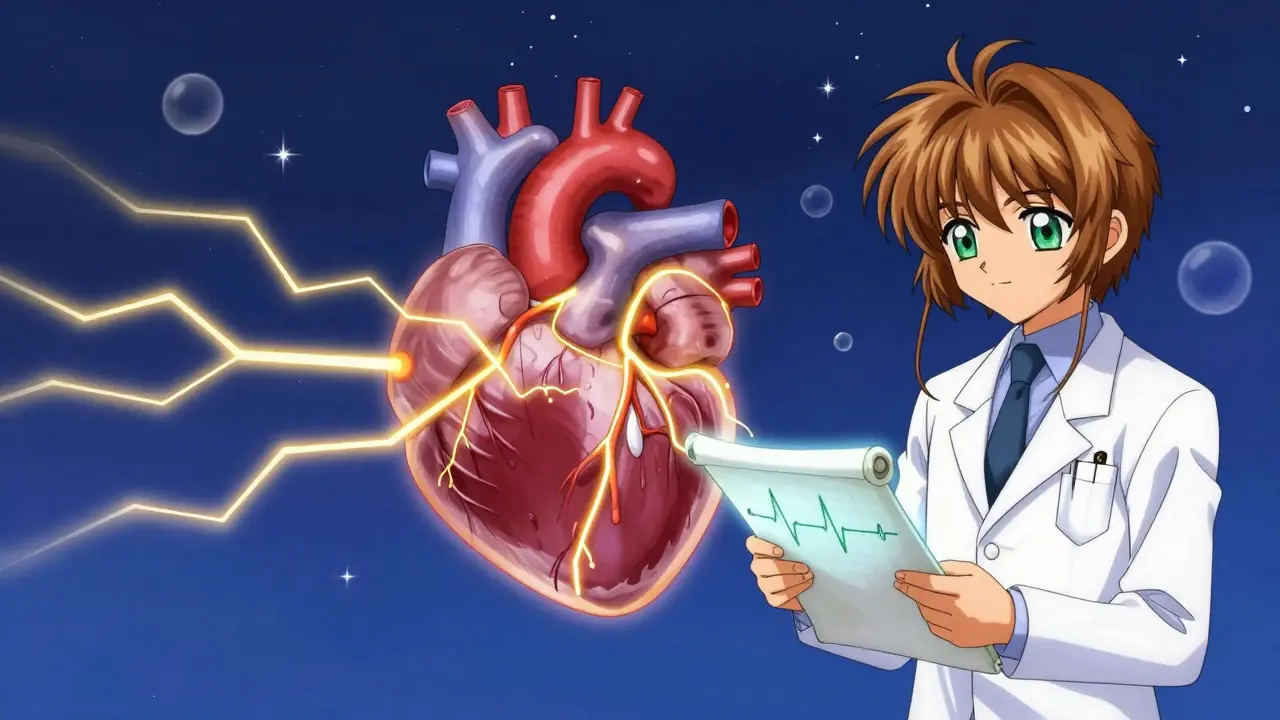
To understand the risk, you first have to understand how your heart beats. Your heart uses electrical impulses to contract and relax. The "QT interval" is the time it takes for your heart's ventricles to electrically recharge after a beat. Methadone is a long-acting synthetic opioid agonist used primarily for opioid dependence and chronic pain. While it stops cravings, it also interferes with the heart's electrical system.
Specifically, methadone blocks the hERG potassium channels. Think of these channels as the "reset button" for your heart. When methadone blocks them, the reset takes longer. In medical terms, this is QT prolongation. If the reset takes too long, the heart can slip into a chaotic rhythm called Torsades de Pointes (TdP), which can cause a sudden collapse or death.
The Safety-Efficacy Paradox
There is a frustrating reality with methadone: the more of it you need to feel stable and avoid withdrawal, the higher the risk to your heart becomes. This is known as the safety-efficacy paradox. Higher doses generally lead to a longer QTc (the corrected QT interval), which is the measurement doctors use to account for your heart rate.
For most people, a small increase in QTc isn't a crisis. However, when the QTc crosses certain thresholds, the risk of a fatal arrhythmia spikes. For example, research shows that once the QTc reaches 500 milliseconds, the risk of sudden cardiac death increases four-fold. It's a narrow tightrope between staying clean and staying safe.
Who Is at Higher Risk?
Not everyone who takes methadone will experience heart issues. However, certain factors make the "reset button" even slower. If you fall into these categories, ECG monitoring becomes a non-negotiable part of your care:
- Gender and Age: Women are about 2.5 times more likely to experience QT prolongation than men. Those over 65 are also at higher risk.
- Electrolyte Imbalances: Your heart needs potassium and magnesium to function. Low potassium (below 3.5 mmol/L) or low magnesium (below 1.5 mg/dL) makes the heart much more unstable.
- Existing Heart Issues: If you have heart failure (specifically an ejection fraction below 40%) or a history of bradycardia (a resting heart rate below 50 bpm), your baseline risk is already higher.
- Other Medications: Some drugs act as "force multipliers." Tricyclic antidepressants, certain antipsychotics like haloperidol, and antibiotics like moxifloxacin can all prolong the QT interval.
- Drug Interactions: Certain medications, such as fluconazole or the SSRI fluvoxamine, inhibit the Cytochrome P-450 3A4 enzyme. This enzyme is responsible for breaking down methadone. When it's blocked, methadone levels in your blood can jump by 50%, drastically increasing cardiac toxicity.
ECG Monitoring Guidelines: When and How Often?
You shouldn't just guess if your heart is okay; you need a baseline and a plan. Standard clinical practice involves an initial ECG before you start methadone, followed by another measurement once the drug reaches a "steady state" in your system (usually 2 to 4 weeks after starting or changing your dose).
Monitoring isn't one-size-fits-all. Doctors typically use a risk-stratified approach to decide how often you need a new ECG:
| Risk Level | QTc Threshold (Men/Women) | Other Factors | Monitoring Frequency |
|---|---|---|---|
| Low | <450ms / <470ms | No other risk factors | Every 6 months |
| Moderate | 450-480ms / 470-500ms | 1-2 risk factors | Every 3 months |
| High | >480ms / >500ms | ≥3 risk factors | Monthly |
If your QTc ever exceeds 500ms or jumps by more than 60ms from where you started, it's time for immediate action. This usually involves a dose reduction, checking your electrolytes, and a consultation with a cardiologist. In some cases, your doctor might suggest switching to Buprenorphine, which is generally much safer for the heart.

Real-World Dangers and Overlooked Factors
One of the biggest problems in the clinic is the "overdose assumption." When a person on methadone dies suddenly, it is often written off as an overdose. However, the FDA has warned that many of these deaths are actually caused by heart arrhythmias. This means some patients are at risk without knowing it because their previous "near-misses" weren't diagnosed as cardiac events.
Another overlooked factor is Sleep Apnea. About half of people in methadone maintenance therapy struggle with sleep apnea. This causes intermittent drops in oxygen (hypoxia), which puts additional stress on the heart and can trigger the very arrhythmias that QT prolongation makes possible.
Practical Steps for Patients
If you are on methadone, don't be passive about your heart health. Many patients report inconsistent monitoring across different clinics, but those who stay on top of their ECGs report feeling much more confident in their treatment. Here is a simple checklist to manage your risk:
- Ask for your baseline: Ensure you have a recorded ECG from before you started your current dose.
- Track your meds: Give your doctor a full list of everything you take, including over-the-counter supplements and antidepressants.
- Watch your diet: Eat foods rich in potassium and magnesium (like spinach, bananas, and almonds) or ask for a blood test to check your levels.
- Screen for sleep apnea: If you snore loudly or wake up gasping, tell your provider. Treating apnea can protect your heart.
- Demand regular checks: If you are on a high dose (over 100mg daily), push for the regular ECG checks mentioned in the table above.
Implementing these structured protocols isn't just bureaucracy-it works. Data shows that structured QT monitoring can reduce serious cardiac events by as much as 67% compared to standard, inconsistent care. Your heart is the engine that keeps your recovery going; make sure it's tuned correctly.
Is it common to have a long QT interval on methadone?
It is more common than most people think. Some studies have found that between 9% and 88% of patients experience some level of QT prolongation, depending on the dose and individual risk factors. While a slightly long interval isn't always dangerous, it is a warning sign that needs to be tracked.
Can I stop taking methadone if my ECG is abnormal?
Do not stop methadone abruptly, as this can trigger severe withdrawal. Instead, talk to your doctor about a managed dose reduction or transitioning to an alternative like buprenorphine, which has a lower risk of affecting the heart's electrical system.
What is the difference between QT and QTc?
The QT interval changes based on how fast your heart is beating. The QTc (Corrected QT) is a mathematical formula that adjusts the measurement to a standard heart rate. This allows doctors to tell if the prolongation is actually caused by the medication regardless of whether your heart is beating fast or slow.
Do I need an ECG if I'm on a low dose?
If you are taking less than 100mg per day and have no other risk factors (like kidney issues or other heart medications), some guidelines suggest you may not need frequent ECGs. However, a baseline is still recommended to know where you start.
What are the warning signs of Torsades de Pointes?
The most common signs include sudden dizziness, fainting (syncope), palpitations, or shortness of breath. Because these can happen instantly and lead to cardiac arrest, they should be treated as medical emergencies.