
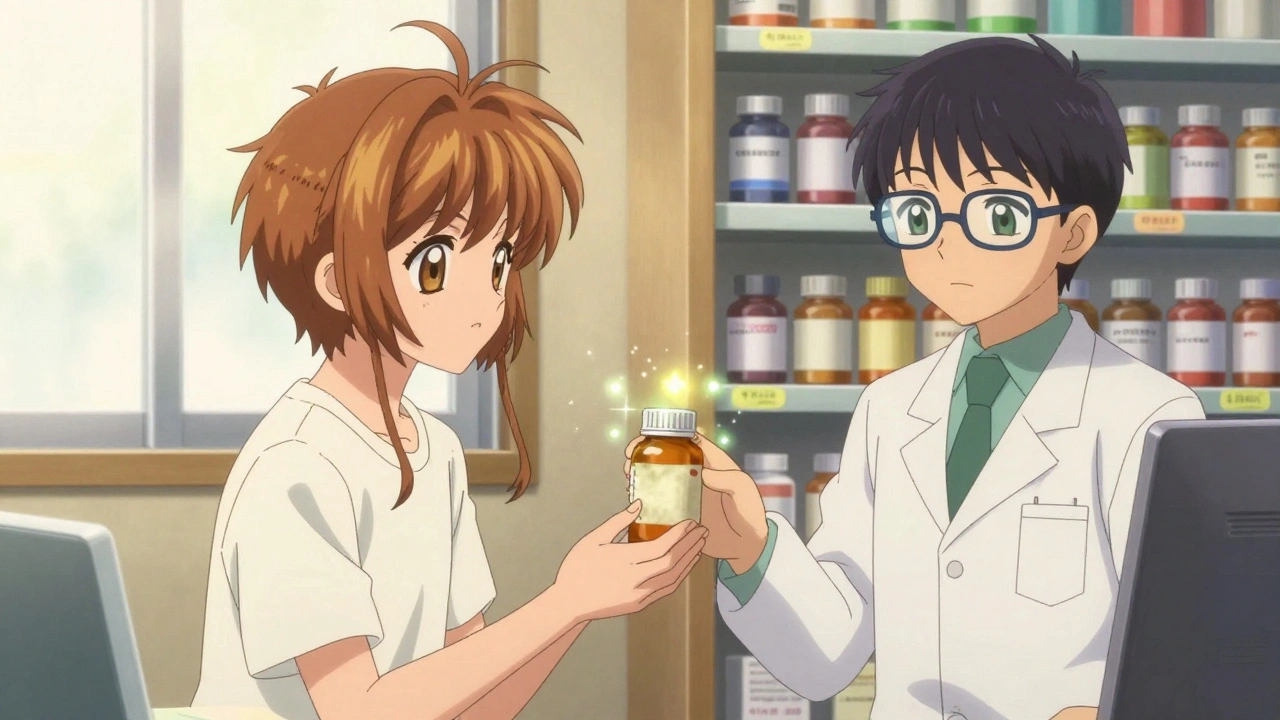
It’s happened to almost everyone: you find an old bottle in the back of your medicine cabinet, maybe ibuprofen from last winter or your anxiety pills from a flare-up last year. The date on the label has passed. You stare at it. Do you take it? Is it still good? Is it dangerous? You don’t want to waste money, but you also don’t want to risk your health. Talking to your pharmacist about expired drugs isn’t awkward-it’s smart. And they’re trained to help you make the right call.
Most Expired Drugs Don’t Turn Toxic-But They Do Lose Power
The biggest myth about expired medications is that they become poisonous. That’s not true. The FDA says most expired drugs don’t turn harmful. Instead, they slowly lose strength. A tablet of ibuprofen or acetaminophen that expired six months ago might still work, but it might not work as well. If you’re taking it for a headache, you might not get full relief. If you’re using it to manage chronic pain, you could be under-treating your condition without even realizing it.
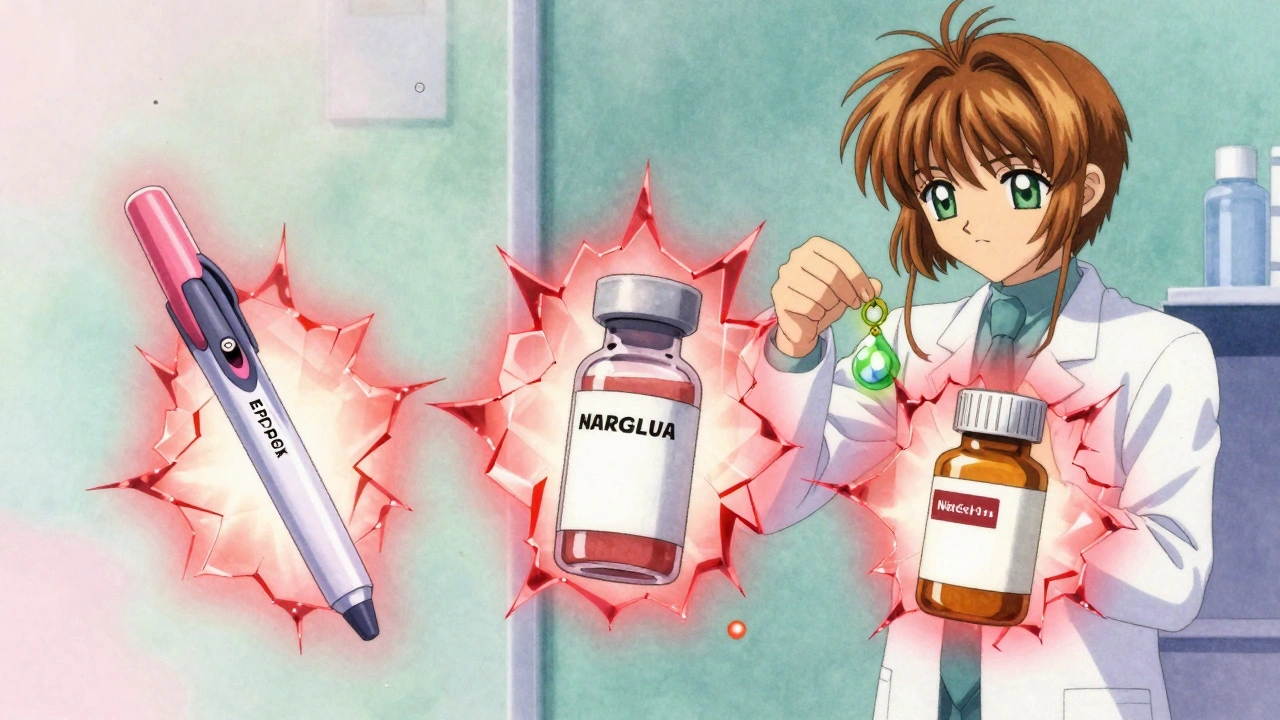
But here’s the catch: not all drugs behave the same. Solid pills-tablets and capsules-tend to hold up better over time. Liquids, creams, and injectables? They degrade faster. Insulin, epinephrine pens, nitroglycerin for chest pain, and seizure medications like phenytoin can become dangerously ineffective. If your epinephrine pen doesn’t work during an allergic reaction, it’s not just inconvenient-it’s life-threatening. The same goes for insulin: if it’s lost potency, your blood sugar could spike unpredictably.
These Medications Are Never Safe After Expiration
Some drugs are too risky to gamble with. Pharmacists agree: never use these past their expiration date, no matter how old they are or how well they’ve been stored:
- Insulin - Even a few weeks past expiration can mean poor blood sugar control
- Epinephrine auto-injectors (EpiPens) - If it fails during anaphylaxis, you could die
- Nitroglycerin tablets - Used for heart attacks; if they’ve degraded, they won’t relieve chest pain
- Antibiotics - Sub-potent antibiotics don’t kill all the bacteria. That’s how resistant superbugs form
- Seizure medications - Missing a dose or getting weak doses can trigger seizures
- Liquid antibiotics and eye drops - Bacteria can grow in them after expiration
- Tetracycline - This antibiotic can become toxic when expired, causing kidney damage
If you’re unsure whether your medication falls into this group, don’t guess. Ask your pharmacist. Bring the bottle with you. They’ll know exactly which ones are high-risk.
What to Say When You Walk Into the Pharmacy
You don’t need to feel embarrassed. Pharmacists hear this question every day. Here’s how to make the conversation clear and productive:
- Hand them the bottle - Don’t just describe it. Show them the label. The expiration date, the name, the strength-all matter.
- Ask: “Is this still safe to use?” - Not “Can I take it?” but “Is it safe?” That shifts the focus from convenience to risk.
- Explain why you’re asking - “I can’t afford a refill yet,” or “I’m traveling and ran out,” or “I’m not sure if this is still good.” They’ll tailor their advice.
- Ask about your condition - “I take this for high blood pressure. If it’s weaker, could that hurt me?”
- Ask about storage - “I kept it in the bathroom. Does that make a difference?” - It does. Heat and moisture destroy drugs faster.
Pharmacists don’t just look at the date. They look at the drug type, how it was stored, how long it’s been expired, and what it’s being used for. A bottle of aspirin that expired 18 months ago? Probably fine for occasional use. A prescription for warfarin that expired last month? Don’t risk it. Blood thinners need exact potency.
Storage Matters More Than You Think
Expiration dates are based on how the drug performs under ideal conditions: cool, dry, dark. But most people store meds in the bathroom, near the stove, or in a hot car. That’s a problem.
Humidity turns pills into mush. Heat breaks down chemicals. Light degrades liquid medications. If your insulin was left in a car on a 90-degree day, it’s ruined-even if the date is still good. Your pharmacist can tell you what “ideal storage” means for your specific drug. For most, that means a bedroom drawer, not the medicine cabinet above the sink.
Some pharmacies now use color-coded stickers on bottles to show expiration years. It’s a small trick, but it helps you spot what’s about to expire before you need it.
When It’s Okay to Use an Expired OTC Drug
For over-the-counter meds like ibuprofen, acetaminophen, antihistamines, or antacids, the risk is usually low if they’re only a few months past expiration and stored properly. The FDA’s Shelf Life Extension Program found that 88% of military stockpiled drugs remained effective years after their expiration date. That doesn’t mean you should use every old bottle-but it does mean you’re not always in danger.
Still, check for signs of damage:
- Changed color (yellowed pills, cloudy liquid)
- Unusual smell (rancid, chemical, moldy)
- Crumbly, sticky, or broken tablets
- Liquid that’s separated or has particles
If you see any of these, throw it out. No exceptions.
What to Do If You’ve Already Taken an Expired Drug
If you took something expired and feel fine? You’re probably okay. But if you’re treating something serious-like an infection, high blood pressure, or asthma-and it didn’t work like usual, contact your pharmacist or doctor. You might need a new prescription or a check-up.
And if you took expired antibiotics and your infection didn’t clear up? That’s a red flag. Incomplete treatment leads to antibiotic-resistant bacteria. In the U.S., over 35,000 people die each year from infections that no longer respond to standard drugs. Don’t let an expired pill contribute to that problem.
How to Avoid This Problem Next Time
The best way to handle expired drugs is to never let them expire in the first place.
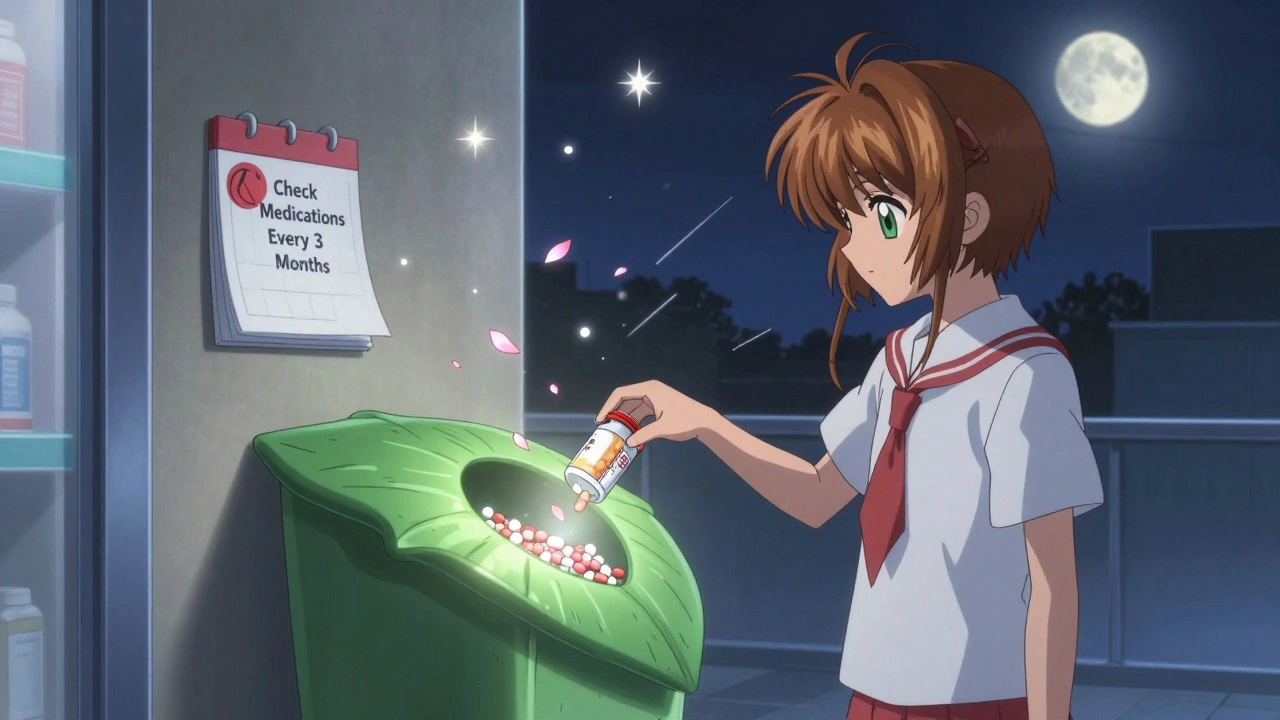
- Check your cabinet every 3 months - Set a calendar reminder. Pull out everything and check dates.
- Use the “first in, first out” rule - Put new bottles behind old ones. Use the oldest first.
- Refill before you run out - Don’t wait until your last pill is gone. Call your pharmacy two weeks before you need a refill.
- Ask for smaller quantities - If you only use a medication occasionally, ask if you can get a 30-day supply instead of 90. Less waste.
- Buy OTC meds in advance - Stock up on pain relievers and allergy meds before cold season. Don’t wait until you’re sick.
Some pharmacies now send automated alerts when your prescription is about to expire. Ask if yours does. It’s free and could save your life.
How to Safely Dispose of Expired Medications
Never flush pills down the toilet. Never throw them in the trash with the label still readable. Both are dangerous for the environment and your privacy.
Here’s what to do instead:
- Use a take-back program - Over 9,000 pharmacies in the U.S. have drop-off kiosks. Walgreens, CVS, and many local pharmacies offer them. No questions asked.
- Use a mail-back envelope - Some pharmacies send these for free. Just seal the bottle, drop it in the mail.
- If no take-back is available - Mix pills with coffee grounds or cat litter in a sealed bag. Scratch out your name and prescription number on the bottle. Throw it in the trash.
Pharmacies collected over 900 tons of expired meds during the 2022 National Take Back Day. You’re not alone in this. And you’re doing the right thing by asking how to dispose of them properly.
Cost Is a Real Concern-But Expired Drugs Aren’t the Answer
If you’re skipping refills because of cost, talk to your pharmacist. They know about patient assistance programs, generic alternatives, and discount cards. A $5 generic version of your medication might be available. Some drug manufacturers offer free samples. Pharmacies can help you apply.
Using an expired heart medication, insulin, or blood thinner because you can’t afford a refill? That’s not saving money. That’s risking hospitalization, long-term damage, or worse. Your pharmacist wants you healthy-not just cheaper.
Is it dangerous to take expired medicine?
Most expired medications don’t become toxic, but they often lose potency. Some, like insulin, epinephrine, and antibiotics, can become dangerously ineffective. Taking them might not work-or could cause serious harm. Always check with your pharmacist before using anything past its expiration date.
How long after expiration are pills still good?
There’s no universal answer. Solid pills like ibuprofen or aspirin may retain effectiveness for 1-2 years past expiration if stored properly. But liquids, injectables, and critical medications like insulin or nitroglycerin should never be used after the date. Storage conditions matter more than the calendar date.
Can I use expired antibiotics?
No. Expired antibiotics may not kill all the bacteria, leading to incomplete treatment. This is one of the main causes of antibiotic-resistant infections. In the U.S., over 35,000 people die each year from these resistant infections. Never use expired antibiotics-even if you feel better.
Do pharmacies take back expired drugs?
Yes. Over 90% of Walgreens and CVS locations have free take-back kiosks. Many independent pharmacies do too. You can drop off any expired or unused medications-no receipt needed. This is the safest and most environmentally friendly way to dispose of them.
Why do drugs have expiration dates if they still work?
Expiration dates are set by manufacturers based on FDA-required stability testing. They guarantee the drug will work as labeled up to that date. After that, potency isn’t guaranteed. Some drugs last longer, but manufacturers aren’t required to test beyond the labeled date. The date is a safety benchmark-not a “use-by” deadline.
Final Thought: Your Pharmacist Is Your Ally
You don’t need to feel guilty or embarrassed about asking. Pharmacists see this every week. They’re not there to judge you-they’re there to keep you safe. Whether you’re worried about cost, convenience, or just didn’t realize your meds had expired, they can help. Bring the bottle. Ask the questions. Get the right advice. It’s the simplest way to protect your health-and maybe even save a life.
Benjamin Sedler
I took expired Xanax last month and woke up feeling like a god. Seriously. The label said 2022, but my soul said 2024. I think expiration dates are just Big Pharma’s way of keeping us docile. Also, my cat licked my old insulin bottle and now she meditates every morning. Coincidence? I think not.
Carolyn Ford
You say 'most expired drugs don’t turn toxic'-but have you ever checked the FDA’s fine print? The ‘stability testing’ they use? It’s funded by the same companies that make the drugs. And let’s not forget: the Shelf Life Extension Program? That’s for MILITARY STOCKPILES. Not your bathroom cabinet. You’re not a soldier. You’re a guinea pig with a CVS loyalty card.
Pavan Kankala
The real question isn’t whether expired meds work-it’s why we’re still allowed to own them. Who decided that chemicals in plastic bottles should dictate our health? We’re being programmed to rely on corporate pills instead of fasting, sunlight, and ancestral wisdom. My grandfather used honey and prayer. He lived to 98. You? You’re on a 90-day supply cycle.
Yasmine Hajar
I just walked into my pharmacy with a 3-year-old bottle of amoxicillin and the pharmacist hugged me. She said, 'I’m so glad you asked.' We talked for 20 minutes. She gave me a free sample of the generic, a coupon for my thyroid med, and a sticker that says 'I Asked My Pharmacist.' You’re not alone. We’re all just trying not to die while juggling rent and insurance. Thank you for normalizing this conversation.
Karl Barrett
From a pharmacokinetic standpoint, the degradation kinetics of solid dosage forms follow first-order decay models, with activation energies typically ranging between 50–100 kJ/mol. However, environmental stressors-particularly hygroscopic absorption and thermal lability-can induce non-linear degradation pathways, especially in polymeric excipients. The FDA’s 88% efficacy statistic is statistically valid but contextually misleading without accounting for storage variance. Bottom line: potency ≠ safety. And safety ≠ convenience.
Jake Deeds
I mean… it’s cute that you think pharmacists are ‘allies.’ But let’s be real-they’re salespeople with white coats. They get bonuses for pushing generics. They’re not there to save you. They’re there to keep the inventory turning. And if you’re using expired meds because you can’t afford the new ones? That’s not a system failure. That’s a moral failure. You chose this. Don’t make it sound noble.
George Graham
I used to stash all my meds in the bathroom until my mom told me her arthritis pill turned to powder after a steamy shower. Now I keep everything in a Tupperware in the closet. Best $5 I ever spent. Also, I check dates every season. It’s like spring cleaning, but for not dying. Small habits > big regrets.
Augusta Barlow
I read somewhere that the government secretly tests expired drugs in underground labs and then releases the data in encrypted PDFs only accessible via quantum key. I don’t trust the expiration date because I don’t trust the system. My neighbor’s nephew’s coworker’s cousin works at a pharmacy and says they burn expired meds in the back and sell the ‘refurbished’ versions to rural clinics. I’m not saying it’s true. I’m just saying… why do they need so many take-back bins?
Jenny Rogers
The notion that expired pharmaceuticals are ‘generally safe’ is a dangerous oversimplification. The regulatory framework governing shelf-life determinations is predicated upon statistically significant stability data under controlled conditions-not anecdotal user experiences. To conflate prolonged efficacy with acceptable risk constitutes a fundamental misapprehension of pharmacovigilance principles. One does not gamble with bioactive compounds as if they were lottery tickets.
Rachel Bonaparte
I’ve been using expired insulin for 5 years. My blood sugar’s perfect. I’ve got a whole YouTube channel about it. People say I’m crazy. But my glucose monitor doesn’t lie. And I’ve saved over $12,000. The FDA doesn’t want you to know this. They want you buying new pens every month. I’ve got 17 expired EpiPens in my sock drawer. One of them saved me last winter. Coincidence? I think not.
Ollie Newland
Mate, I had a bottle of paracetamol that expired in 2020. Took it for a headache last week. Worked fine. My mum’s been doing this since the '80s. She’s 82 and still gardening. Maybe the real issue isn’t the drugs-it’s that we’ve forgotten how to trust our own bodies. And our grandmas.
Rebecca Braatz
If you’re scared to ask your pharmacist, just say this: ‘I’m trying to be responsible but I’m stretched thin.’ They’ve heard it a thousand times. They’ll help you. I’m a nurse. I’ve seen people skip meds because they’re ashamed. Don’t be. Your health isn’t a luxury. And your pharmacist? They’re your secret weapon.
Michael Feldstein
I used to think expired meds were fine until I took a 4-year-old antibiotic for a sinus infection and ended up in the ER with MRSA. That’s when I learned: some risks aren’t worth the $12. Now I ask my pharmacist about everything-even OTC stuff. They’ve saved me from bad decisions more than once. Just show up. Bring the bottle. Say the words.
jagdish kumar
Life is temporary. Medicine is temporary. Why fight it?
zac grant
I keep a little notebook in my wallet with all my meds and their expiration dates. I update it every time I refill. It’s dumb, but it’s saved me twice. Also, my pharmacist gives me free samples if I’m low on cash. Just ask. They’re not robots. They’re people who want you to live.
Dematteo Lasonya
I asked my pharmacist about expired ibuprofen. She said, 'If it looks, smells, and feels normal, it’s probably fine.' Then she handed me a bottle of the same brand, unexpired, and said, 'Here, take this one. I’ve got extras.' I cried. Not because I was sick. Because someone cared.