
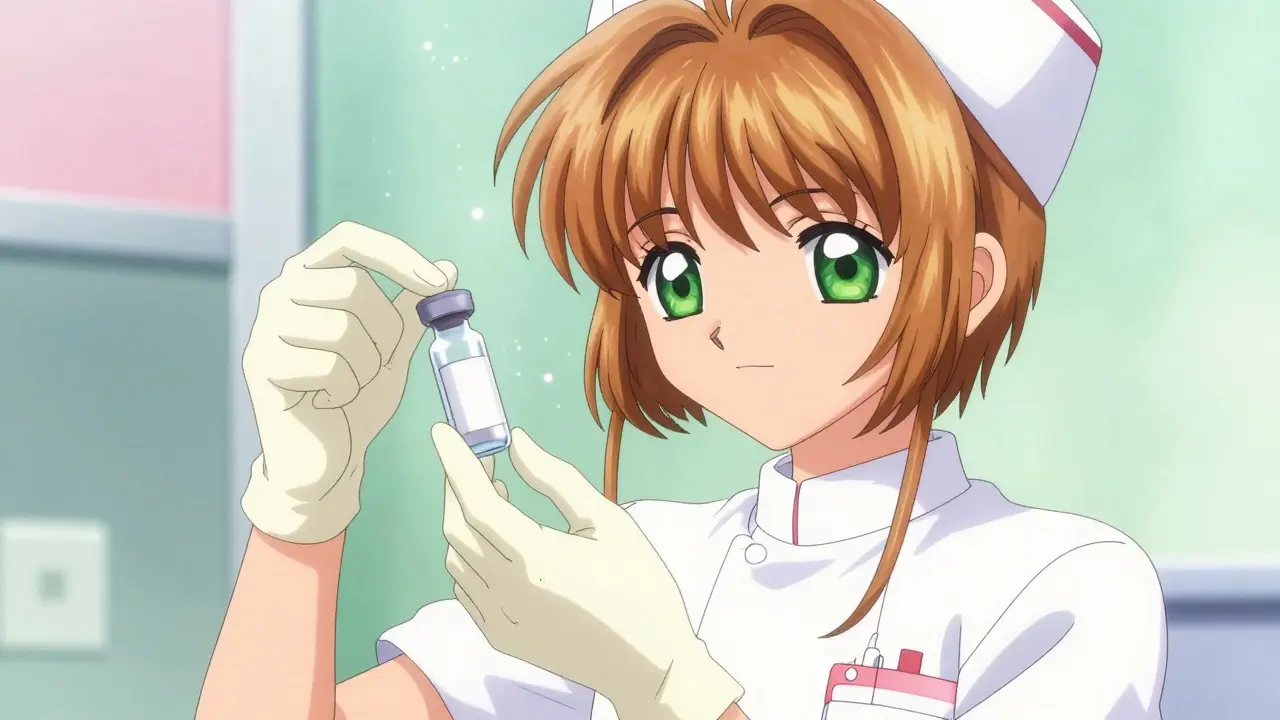
Imagine a tiny decimal point in the wrong place. In most cases, it's a typo. In a hospital, when dealing with potent drugs, that one misplaced dot can be the difference between a life-saving treatment and a fatal overdose. This is why healthcare providers don't just "double check" certain drugs-they use a rigorous process called independent verification. The goal isn't just to be careful; it's to create a safety net that catches human error before the medication ever touches the patient.
What Makes a Medication "High-Alert"?
Not every drug in a pharmacy requires a second pair of eyes. high-alert medications is a category of drugs that bear a heightened risk of causing significant patient harm when used in error. These aren't necessarily the most dangerous drugs in existence, but they are the ones where a mistake is most likely to lead to a catastrophe. For example, a small error in a standard vitamin dose is annoying; a small error in a potent blood thinner can cause internal bleeding.
The Institute for Safe Medication Practices (ISMP) is the primary authority that defines these lists. They look at how often errors happen and how easy it is to reverse the effects of those errors. If a drug is hard to reverse and highly potent, it goes on the high-alert list. This ensures that nurses and pharmacists are on high alert exactly when they need to be, rather than treating every single pill with the same extreme caution, which would lead to burnout and inefficiency.
The Heavy Hitters: Which Drugs Require Extra Checks?
While every hospital might have a slightly different list based on their specific patient needs, there are a few "heavy hitters" that almost always require dual verification. If you're working in a clinical setting, you'll see these most often:
- Insulin: Because it controls blood sugar, too much can cause immediate, severe hypoglycemia.
- Heparin and Anticoagulants: These blood thinners can cause uncontrollable bleeding if the dose is wrong.
- Opioids (IV, Epidural, Intrathecal): These can suppress breathing to a dangerous level if administered incorrectly.
- Chemotherapy: Antineoplastic agents are designed to kill cells; if they hit the wrong area or the dose is off, the damage is often irreversible.
- Potassium Chloride Concentrate: Injecting this too quickly or in too high a dose can stop a heart instantly.
In specialized areas, the rules get even tighter. In a Neonatal Intensive Care Unit (NICU), almost every high-alert drug is double-checked because a baby's system cannot handle even a microscopic dosing error. Similarly, cardiac medications for pediatric patients under 18 usually trigger an automatic request for a second witness.
How an Independent Double Check Actually Works
There is a huge difference between a "double check" and an independent double check (IDC). In a standard check, one person says, "I'm giving 5mg of Drug X," and the second person says, "Yep, looks right." That is a failure. It creates confirmation bias-the second person is just agreeing with the first.
A true IDC requires the second professional to perform the entire process from scratch. They don't look at the first person's calculations. They look at the order, calculate the dose themselves, and verify the drug name and concentration independently. Only after both have reached the same conclusion do they proceed. They must verify the "Nine Rights":
- Right patient (using at least two identifiers)
- Right drug
- Right dose
- Right route (IV, PO, etc.)
- Right time
- Right documentation
- Right reason
- Right response
- Right to refuse
For high-stakes treatments like chemotherapy, the American Society of Clinical Oncology (ASCO) mandates that practitioners verify the physical integrity of the drug and the expiration date before signing off on the Medication Administration Record (MAR).
| Method | How it Works | Main Weakness | Best Use Case |
|---|---|---|---|
| Joint Checking | Two people look at the label together. | Confirmation bias. | Low-risk medications. |
| Independent Double Check | Second person calculates from scratch. | Time-consuming/Staffing shortages. | Complex dosing, high-potency drugs. |
| Barcode Scanning | Digital scan matches drug to patient ID. | "Work-arounds" (scanning a printed label). | Fast-paced ward administration. |
The Tension Between Safety and Workflow
If independent double checks are so great, why isn't every single drug checked twice? Because humans have a breaking point. When a nurse is caring for six critical patients and is short-staffed, finding a second qualified professional to stand by for five minutes can feel like an eternity. This leads to "check fatigue," where the process becomes a bureaucratic box-ticking exercise rather than a safety measure.
Recent data shows that a staggering number of nurses-some reports say over 60%-have skipped required double checks during high-workload periods. This is the paradox of safety: by mandating too many checks, hospitals can accidentally make the environment *less* safe because staff start cutting corners to keep up with the workload. This is why the ISMP now suggests that IDCs should be strategically placed at the most vulnerable points rather than applied as a blanket rule.
Moving Toward Tech-Driven Safety
We are seeing a shift away from purely manual checks toward integrated technology. Bedside barcode scanning is a prime example. By scanning the patient's wristband and the medication packaging, the system provides an instant, objective verification that is far more reliable than a tired human eye.
Another emerging trend is autoverification, where the Electronic Health Record (EHR) integrates with the pharmacy system to bypass manual pharmacist verification for certain routine orders. While this sounds risky, it actually frees up pharmacists to spend more time on the truly complex, high-risk medications that actually need a human expert's judgment.
The future isn't about replacing humans with computers, but about using computers to handle the boring, repetitive checks so that the "independent double check" is reserved for the moments where human intuition and clinical judgment are indispensable-like calculating a complex chemotherapy drip or managing a crashing patient in the ICU.
Who is allowed to perform a double check for controlled substances?
Not just any employee can witness a double check. Typically, only licensed professionals such as nurses, prescribers (MD, DO, ARNP, PA), and pharmacists are permitted to serve as the second witness for controlled substances or high-alert medications.
What is the difference between a double check and an independent double check?
A standard double check often involves one person showing their work to another. An independent double check (IDC) requires the second person to perform the calculation and verification without seeing the first person's results, eliminating the risk of confirmation bias.
Why aren't all medications considered high-alert?
If every drug required a dual-witness check, the healthcare system would grind to a halt. By focusing on a specific list of high-alert medications-those with the highest potential for catastrophic harm-hospitals can allocate their limited staffing resources to where they are most needed.
Can barcode scanning replace the need for a second person?
In many cases, yes. Barcode scanning is often more reliable for verifying the right patient and the right drug. However, for complex tasks like programming an infusion pump or preparing a custom chemotherapy mix, a manual independent double check is still the gold standard.
What happens if a double check is skipped?
Skipping a verification step is a significant breach of safety protocol and can lead to medication errors. Most institutions track these occurrences as "near misses" or sentinel events to identify where workflow failures are occurring and how to fix them.